
6 min read
Your basement flooded in a storm: what to do in NY and NJ
By the Strauss Cleaners crew·Updated September 2, 2026
One night of heavy rain from a tropical storm remnant or a nor'easter puts water in basements from Newburgh to Hoboken. Here is what to do in the first hours, what to leave alone, and how the cleanup goes.
Short answer
Stay out of a flooded basement until the power to it is off. Photograph the water line and everything it touched before you move anything. Call for extraction the same day. Rising water from outside usually falls under flood coverage rather than a standard homeowners policy, and sewer backups are often a separate rider, so ask your agent which applies to you.
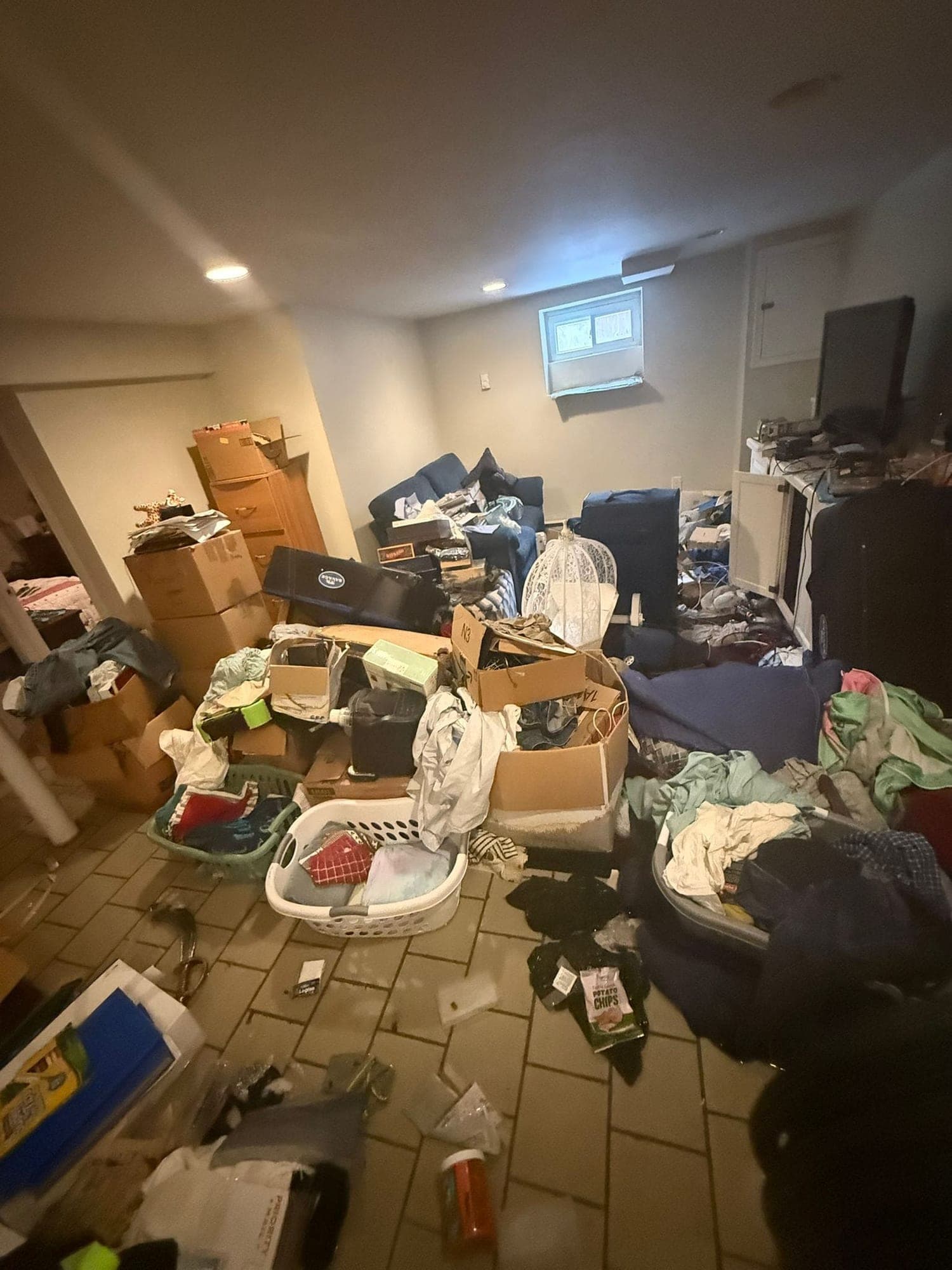
Before you go down the stairs
If the water reached outlets, power strips, or the panel, the floor may be live. If the electrical panel is in the basement and the water is anywhere near it, do not wade to it. Call the utility and ask them to cut power at the meter, or have an electrician do it. If the panel is upstairs or the water is well away from it, switch off every breaker that feeds the basement before you step in.
Two more checks. If you smell gas, leave the house and call the gas company from outside. A flooded furnace or water heater can put out its pilot and the gas keeps flowing. And if a floor drain or toilet backed up along with the rain, the water on the floor is contaminated. Treat it as sewage, keep children and pets out, and read our sewage backup guide before you touch anything.
Photograph everything before you move anything
This is the step people skip because they want the water gone. Take the pictures first. Your phone puts a time stamp on each one, and that record is what an adjuster works from.
- The high-water line on the walls, on the stairs, and on the furnace and water heater.
- Every room, from the doorway, then close-ups of floors, baseboards, and anything stored on the floor.
- Each damaged item where it sits: furniture, boxes, appliances, the contents of closets.
- The sump pit, the window wells, and the outside grade and downspouts. These show where the water came from.
- A slow video walkthrough narrating what you see. It takes two minutes and catches what the photos miss.
Which policy the storm water usually falls under
Standard homeowners policies generally exclude flood, meaning surface water or groundwater that rises from outside and comes in through walls, floors, or window wells. That kind of loss usually belongs to a flood policy through the National Flood Insurance Program or a private flood carrier, if you carry one. Sewer backup and sump pump failure are a separate endorsement on many homeowners policies. Wind-driven rain that comes in through a roof the storm damaged is often handled as a homeowners claim. Which of these your policy includes is a question only your insurer can answer.
The source of the water is what your insurer looks at first, so document it and call your agent the same day. We work with carriers and bill them directly on covered water losses, and plenty of storm cleanups are paid by the homeowner without a claim at all. Either way the job starts the same.
What the crew does, in order
First the water comes out. Truck-mounted or portable extraction pulls standing water and the water held in carpet and pad. Then the wet porous materials go: carpet pad, soaked boxes and cardboard, and drywall cut to a set height above the water line so the framing behind it can dry. Hard floors and concrete are cleaned. Where the water was contaminated, everything it touched gets an antimicrobial treatment.
Then the drying. Air movers push air across every wet surface and dehumidifiers pull the moisture out of the room. We take moisture readings every day and stop when the framing and slab read dry, not when the surface looks dry. EPA guidance is to get materials dry within 24 to 48 hours to head off mold. In a warm September basement that window closes fast, which is why same-day extraction matters more than anything else on this list.
Where it happens in our area
Tropical Storm Ida on September 1, 2021 is the recent reference point. The Passaic River basin towns, Passaic, Paterson, Clifton, and Wayne, took river flooding and sewer backups. The Ramapo came up at Suffern, Pascack Brook through Spring Valley, the Saw Mill and Bronx River valleys in Yonkers. In Hoboken and Jersey City the combined sewers surcharged and garden-level units flooded from below. None of that is unusual for a big rain event here.
If you live near one of those watercourses, or your street has flooded before, treat a storm forecast as a reason to move stored items off the basement floor and test the sump pump before the rain, not after.
After the water is gone
The fixes that stop the next one are not complicated: a battery backup on the sump pump, downspouts that discharge well away from the foundation, covers on the window wells, and grading that slopes away from the house. Our guide on how to prevent basement flooding walks through each one.
If the water is in the basement now, call. Same-day emergency response, six days a week, and the inspection is free.
Related service
Storm Damage Cleanupin the Hudson Valley & North Jersey →Storm water intrusion cleanup: roof leaks, wind-driven rain, and flash flooding. Emergency extraction, drying, soaked-material removal, and photos of how the water got in, which is what your insurer will ask about.
Not sure what you're looking at?
Same-day emergency response for active water, Sundays included.