
5 min read
Mold vs. mildew: what you're looking at, and when it matters
By the Strauss Cleaners crew·Updated July 28, 2026
A lot of the 'mold emergencies' we inspect turn out to be a wipeable film on bathroom paint. Some of the 'little mildew spots' turn out to be the visible corner of a problem inside the wall. Here's how to tell the difference, and where the line is for handling it yourself.
Short answer
Mildew is a mild surface mold: flat, powdery, gray or white, and it wipes off with household cleaner. Small bathroom patches are a DIY job. Growth that's fuzzy, bigger than a few square feet, inside walls or HVAC, or that returns after cleaning needs containment and remediation.
The short answer: mildew is a shallow mold
Biologically, mildew isn't a separate thing; it's the everyday name for mold growing flat on a surface. The distinction that matters to your house is depth. Mildew lives on surfaces (the soap film on grout, the condensation zone on a bathroom ceiling, the paint on a cold closet wall) and wipes away because it hasn't gotten into anything. Mold worth worrying about has grown into the material. It's rooted in drywall, wood, or insulation, and wiping the surface doesn't remove it.
How to tell what you're looking at
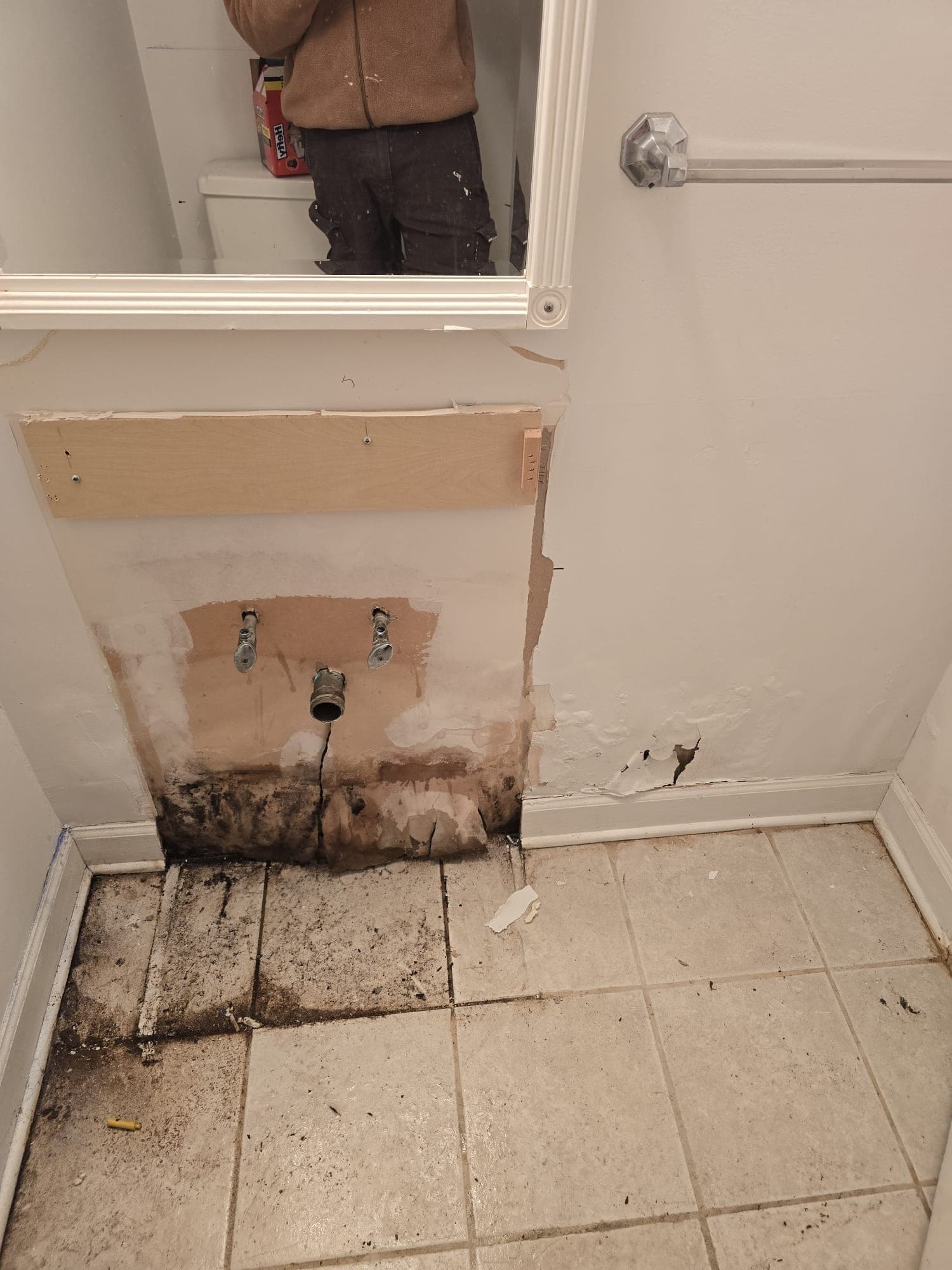
A close look usually settles it. Mildew sits flat, powdery or slightly slimy, gray, white, or dull black, in the places where humidity condenses, and it comes off with household cleaner and a cloth, leaving intact paint or grout underneath. Deeper growth looks fuzzy or speckled and spreading. It stains into the material rather than sitting on it, often rings a known water event, and if you wipe it, the discoloration is still in the surface.
Several things that aren't mold fool people constantly, too. Efflorescence, the white crystalline deposit on block and concrete, is minerals left behind by evaporating moisture, not growth. Ghosting (soot and dust tracking along cooler framing lines) leaves dark stripes on walls and ceilings. Old water stains are tan-brown rings that don't spread. If you're not sure what you have, a mold inspection settles it with meters and a look, and 'that's not mold' is a common answer.
When DIY is fine
The line, consistent with EPA guidance: small areas of surface growth on hard, non-porous surfaces are a homeowner job. Rule of thumb, a patch under about ten square feet, roughly three feet by three. Bathroom ceilings, tile and grout, window sills, shower caulk: clean with detergent or a household mildew cleaner, dry the surface, and improve the ventilation that let it grow.
A few rules while you do it: wear gloves and consider an N95 if you're scrubbing overhead, never mix bleach with ammonia or other cleaners, and don't dry-scrub or sand a moldy surface, which mostly sends spores into the air. And know that bleach on porous materials is cosmetic. It lightens the stain while the roots stay in the material, which is why the same spot returns a few months later looking like the cleaner 'didn't work.'
Pair the cleanup with the fix or it comes back next season: run the bath fan during every shower and for twenty minutes after, open the window when weather allows, and squeegee the worst of the water off tile and glass. A mildew-prone bathroom is almost always an under-ventilated one.
When it stops being a DIY job
The line gets crossed in a few specific ways, and any one of them is enough:
- The growth is on or in porous materials like drywall, insulation, carpet, or ceiling tile. Colonized porous material generally needs removal, not cleaning.
- The area is larger than a few square feet, or it keeps reappearing after cleaning, which means moisture is still coming from somewhere you can't see.
- It's inside the HVAC system or showing at multiple supply registers. Running the system spreads whatever is in it through the house.
- There's a musty odor with no visible source, or the growth traces back to a known leak, flood, or chronically damp space.
- Someone in the home has asthma, mold allergies, or a weakened immune system, which is reason to act sooner; see our guide on mold health facts.
Why containment matters
What separates professional mold remediation from aggressive cleaning is containment. Disturbing established growth releases spores, and scrubbing a colonized wall in an open house spreads them into every room the air reaches. Remediation seals the work area in plastic, runs HEPA-filtered negative air so airflow moves into the zone instead of out of it, removes colonized porous materials in sealed bags, and HEPA-vacuums and damp-wipes everything that stays.
It's also worth asking about before you hire anyone. Spraying and painting over a wall of growth, with no containment and no repair to the moisture source, delays the problem instead of solving it.
Either way, it's a moisture problem
Mildew on a bathroom ceiling usually means the fan is undersized, unused, or venting into the attic instead of outside. Growth on a closet's exterior wall usually means condensation, warm indoor air meeting a cold surface with no circulation. A patch that keeps coming back at a baseboard usually means a leak. Fix the moisture and both mildew and mold stop growing. Leave it, and no cleaner on any shelf will keep the spot gone.
Still not sure which side of the line you're on? Send us a photo or have us come look. The inspection is free, and if the answer is a cleaning tip and a better bath fan, that's what you'll get.
Related service
Mold Inspection & Testingin the Hudson Valley & North Jersey →Moisture-first mold inspections: visual assessment, meter and thermal-imaging moisture mapping, and clear advice on when lab sampling is worth the money and when it isn't.
Not sure what you're looking at?
The inspection is free. We bill insurers directly on covered claims, and you don't need a claim to hire us.