
6 min read
Wet carpet: save it or replace it? The water decides
By the Strauss Cleaners crew·Updated July 28, 2026
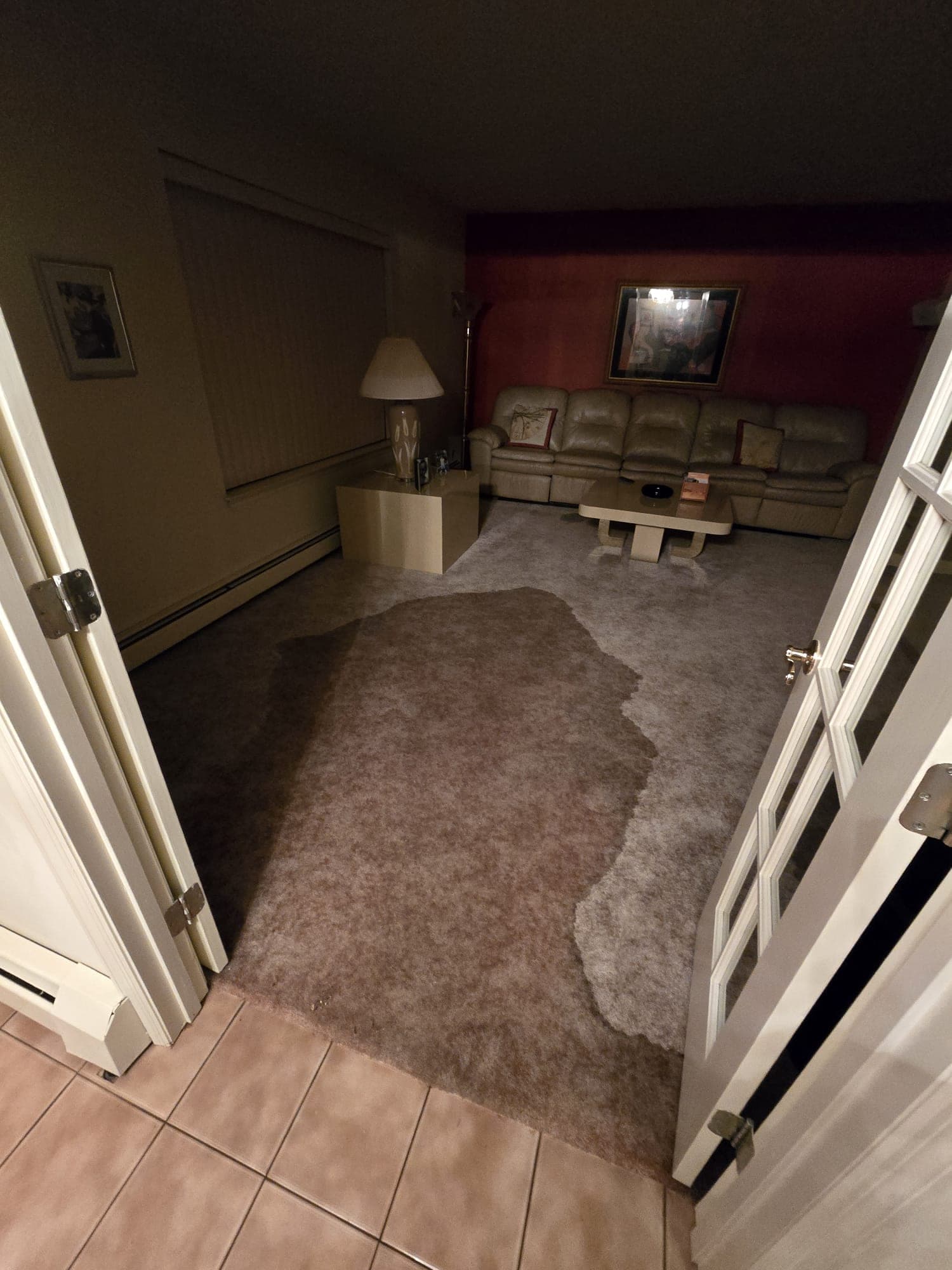
Everyone asks the same question standing on wet carpet: is this ruined? The answer depends on what kind of water soaked it and how long ago. Here's how we make the save-or-replace call, including why the pad usually comes out either way.
Short answer
Clean-water losses caught within a day or two are usually savable with prompt extraction and drying. Contaminated water, like sewage or rising floodwater, means carpet and pad both come out. The pad gets replaced either way, because it holds water like a sponge and costs less to replace than to dry.
Start with the water
Restoration work sorts water into three categories, and the category decides more than any other factor. Category 1 is clean water from a sanitary source: a supply line, a failed water heater, a tub overflow. Category 2 is significantly contaminated, like washing machine discharge or dishwasher overflow. Category 3 is grossly contaminated: sewage backups and water that rose in from outside, carrying whatever the ground and the street were holding.
The same carpet, soaked to the same depth, gets three different answers depending on which of those soaked it. That's the IICRC standard the industry works to, and it exists because contamination gets into porous materials where surface cleaning can't reach it.
Category 1: usually savable if you act fast
Clean water on a reasonably new carpet, extracted the same day, usually gets saved. The work: truck-mounted extraction with a weighted tool to pull water up through the pile, the pad dealt with (more on that below), then air movers and dehumidifiers until moisture meters show the carpet, tack strip, and subfloor are dry.
Category 1 water doesn't stay Category 1. Sitting in carpet and pad, it picks up contamination and moves toward Category 2, and the carpet's own construction starts to fail. Time matters as much as the source does.
How long it sat matters too
Two deadlines run at once. The first is mold: per EPA guidance, growth can start on wet materials in as little as 24 to 48 hours, and carpet over a wet pad is an ideal host. The second is the carpet itself: prolonged saturation can delaminate the backing. The latex holding the layers together lets go, the carpet wrinkles and bubbles, and no cleaning reverses it.
Carpet soaked yesterday can usually be saved. Carpet that's been wet since last week is usually a loss even if the water was clean, and whatever is growing underneath becomes the bigger issue. The full first-day steps are in our guide to the first 24 hours after water damage.
Categories 2 and 3: where the call gets simple
Category 2 is a judgment call that leans toward removal. The pad goes, and the carpet can sometimes be saved with hot-water extraction and proper cleaning, depending on what was in the water and how long it sat. We'll tell you which side of the line you're on and why.
Category 3 is not a judgment call. Sewage-soaked or floodwater-soaked carpet and pad come out, period. Porous materials that absorbed grossly contaminated water can't be reliably disinfected, and every credible standard says remove them. Shampooing sewage out of wall-to-wall carpet leaves the contamination in your floor. That kind of loss needs sewage cleanup protocols: containment, protective gear, removal, and disinfection of the hard surfaces that stay.
Why the pad almost always goes
Even in a clean-water loss where the carpet is fully savable, we usually replace the pad. Carpet pad is open-cell foam, so it holds water against the subfloor long after the carpet above it feels dry. Drying pad in place is possible in narrow cases, but it's slow and uncertain, and pad is among the cheapest materials in the whole loss.
So the usual sequence is: extract, pull the wet pad, dry the carpet and subfloor, then relay the original carpet over new pad. You keep the expensive part and replace the cheap one. If an insurance claim is involved, the removed pad gets photographed and itemized like everything else.
When saving it is the wrong call
Some carpet shouldn't be saved even when it technically could be. Carpet near the end of its life before the loss, carpet showing delamination or seam failure after drying, carpet on its second or third soaking in a flood-prone basement: drying these costs more than the carpet is worth, and we'll say so. Same for glued-down carpet where the adhesive has released. It rarely re-lays flat.
The reverse happens too. A good wool or newer synthetic carpet, extracted the same day after clean water, usually comes back fully and often looks better than before once it's cleaned after drying. Carpet cleaning is in-house, so that finishing step doesn't mean hiring a second company.
What we do when we show up
The on-site version of this article takes about twenty minutes: identify the water category, meter the carpet, pad, and subfloor, check the backing, and tell you what we think and why. Save, replace, or save the carpet and replace the pad. If it's savable we can usually start extraction the same visit; structural drying with daily readings finishes the job, and the drying log goes in your file. If it can't be saved, the same visit documents that too: photos in place, a cut sample of carpet and pad, and the measurements an adjuster will ask for.
If the floor is wet right now, call. Same-day water damage restoration response, six days a week: (845) 262-6530.
Related service
Water Damage Restorationin the Hudson Valley & North Jersey →Full-service water damage restoration: emergency water removal, mitigation and structural drying verified with moisture meters, cleanup, and complete build-back. IICRC-certified, same-day response, and we bill your insurance directly.
Water Damage in your town
Not sure what you're looking at?
Same-day emergency response for active water, Sundays included.