
Same-Day Emergency Response
Basement Flood Cleanup & Drying
Pumped out, dried, and explained: you'll know why it flooded before we leave.
Serving Orange, Rockland, Westchester & Dutchess counties in NY and Bergen, Passaic, Essex & Hudson counties in North Jersey.
At a glance
Basements flood a few ways: a sump pump that failed, groundwater seeping through the walls or slab, or a storm that overwhelmed the drainage. We pump out the same day, triage a finished space room by room (save what can be saved, document what can't), and dry it with dehumidifiers sized for a below-grade space.
Content reviewed July 2026.
Call between 8am and 6pm, Sunday through Friday, and a person picks up. Closed Saturdays for Shabbat.
- IICRC Certified
- Licensed
- Bonded
- Insured
- Eco-Conscious Products
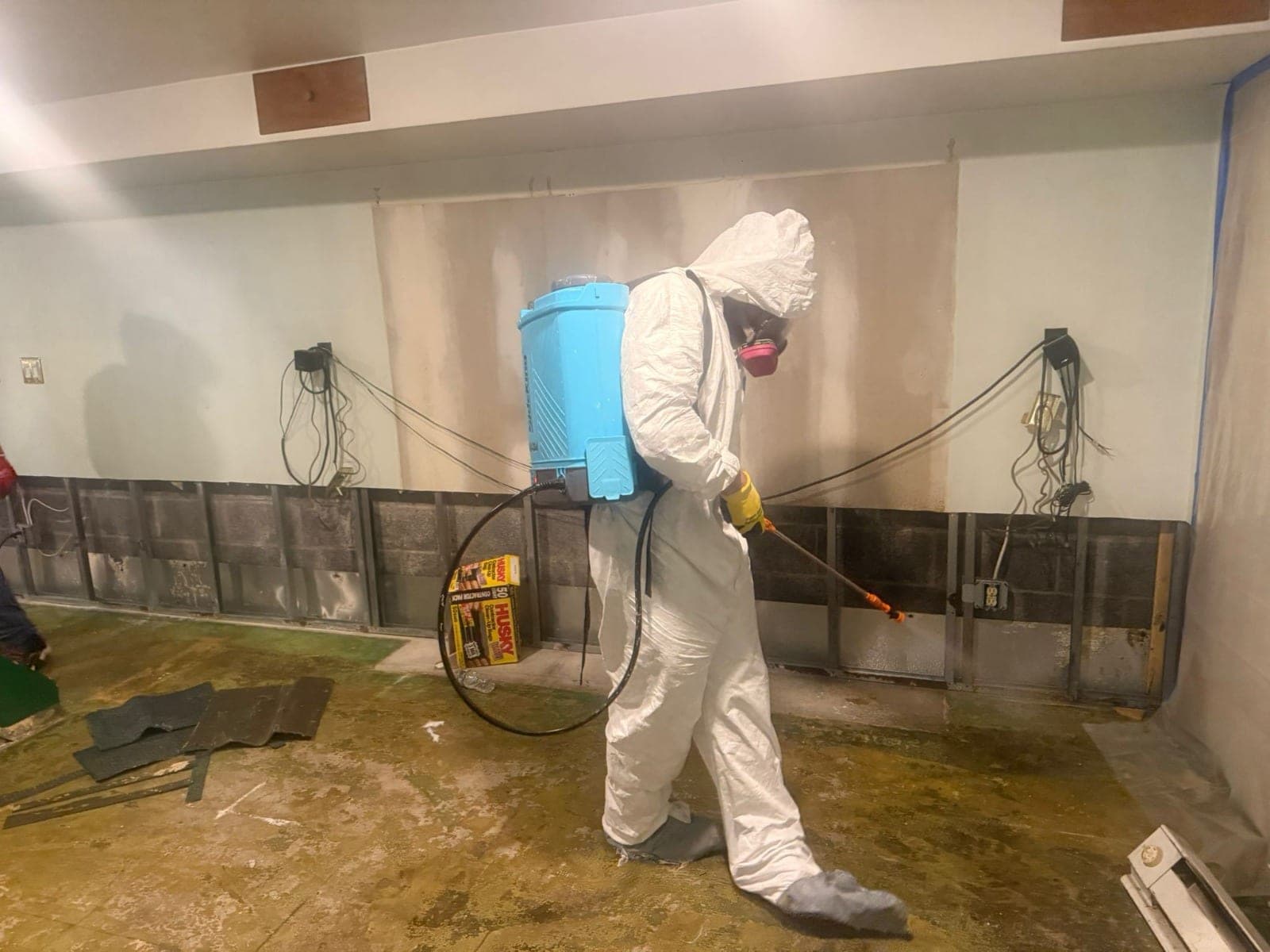
Same-day emergency response
Response promise
8 counties
NY & NJ service area
Since 2019
Locally owned & operated
IICRC Certified
Certification
Heavy rain in the forecast
Before and after a storm
We schedule crews around the rain forecast. A few things done before the storm save a basement, and a few things done right after save the insurance claim.
Before the rain
- Move stored boxes, rugs, and anything you care about off the basement floor.
- Test the sump pump by pouring a bucket of water into the pit. If it does not run, that is the problem to fix before the rain.
- Clear the window wells and the downspout outlets. Know where the main water shutoff and the electrical panel are.
If water gets in
- Do not go into standing water until the power to that area is off.
- Photograph the water line and everything it touched before you move or throw anything out.
- Call for extraction the same day. Wet drywall and carpet pad grow mold within days.
Full walkthrough: what to do when your basement floods in a storm. Water in the house now? Call (845) 262-6530. Same-day emergency response, six days a week.
The work
What's included
Basement flood cleanup for finished and unfinished spaces: pump-out, contents triage, drying sized for below-grade rooms, and a straight answer about the sump, grading, or gutter problem that caused it.
- Sump pump failures, groundwater seepage, and storm-driven flooding
- Submersible pumps for anything from an inch to a few feet of water
- Water category assessed first, since groundwater and sewage backup are different jobs
- Finished basements triaged piece by piece: carpet, drywall, and contents itemized
- Dehumidification sized for below-grade spaces that never air out on their own
- We identify the cause (sump, grading, gutters) so it doesn't happen again
Process
What happens after you call.
- 01
Pump-out
We check depth, source, and electrical safety first. If water is near the panel or outlets, that gets handled before anyone goes in. Then submersible pumps run until the water is down to a film we can extract.
- 02
Assess the water category
Clean supply water, groundwater, and sewage backup each have different handling rules under IICRC standards. We identify which one you have before deciding what can be cleaned and what has to be removed, because that call changes the whole scope.
- 03
Triage the contents
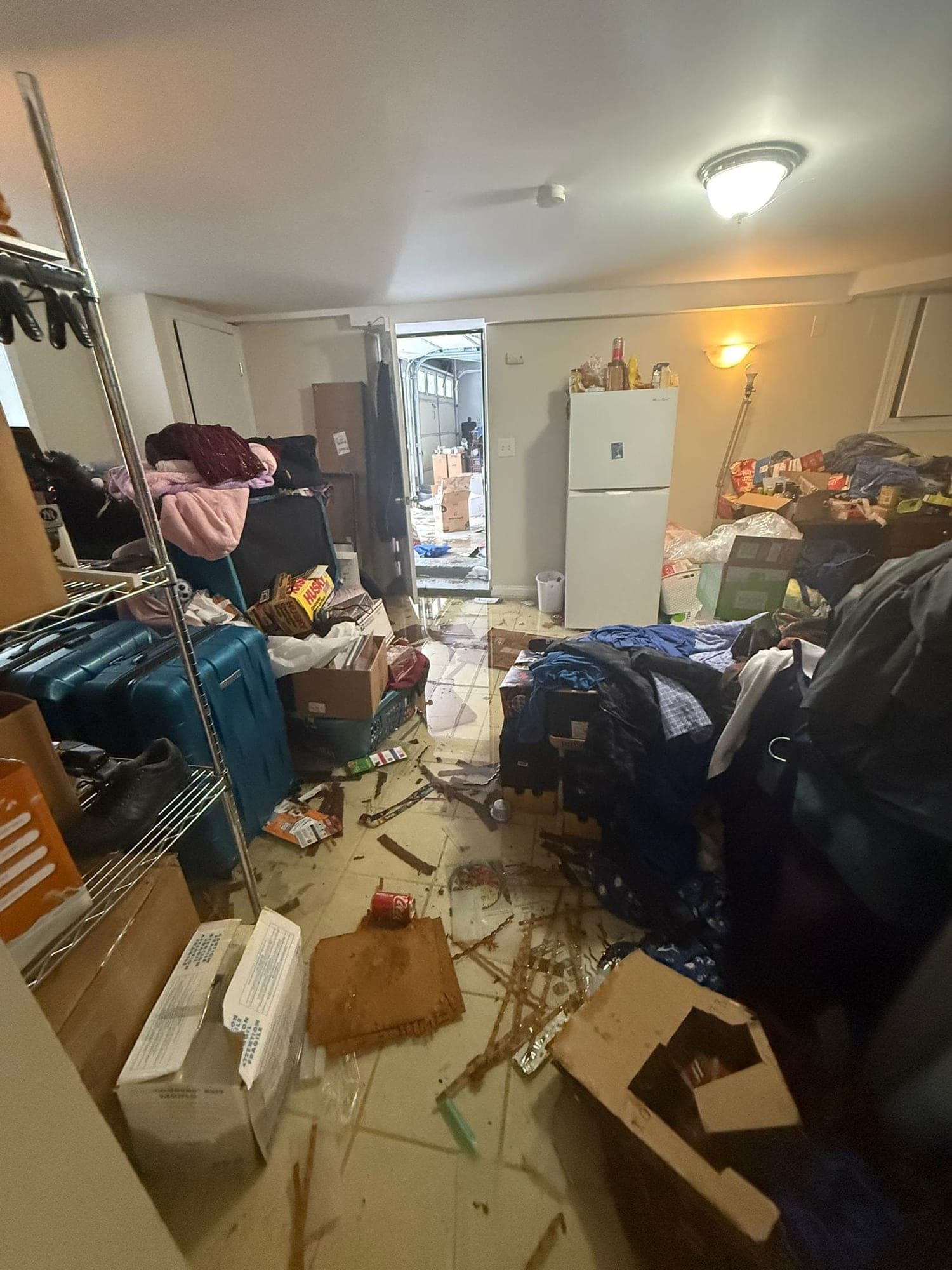
Furniture, storage boxes, and keepsakes: what's saveable gets moved and dried, and what isn't gets photographed and itemized for the insurance claim before disposal. You decide what to keep, and we tell you what's likely to survive.
- 04
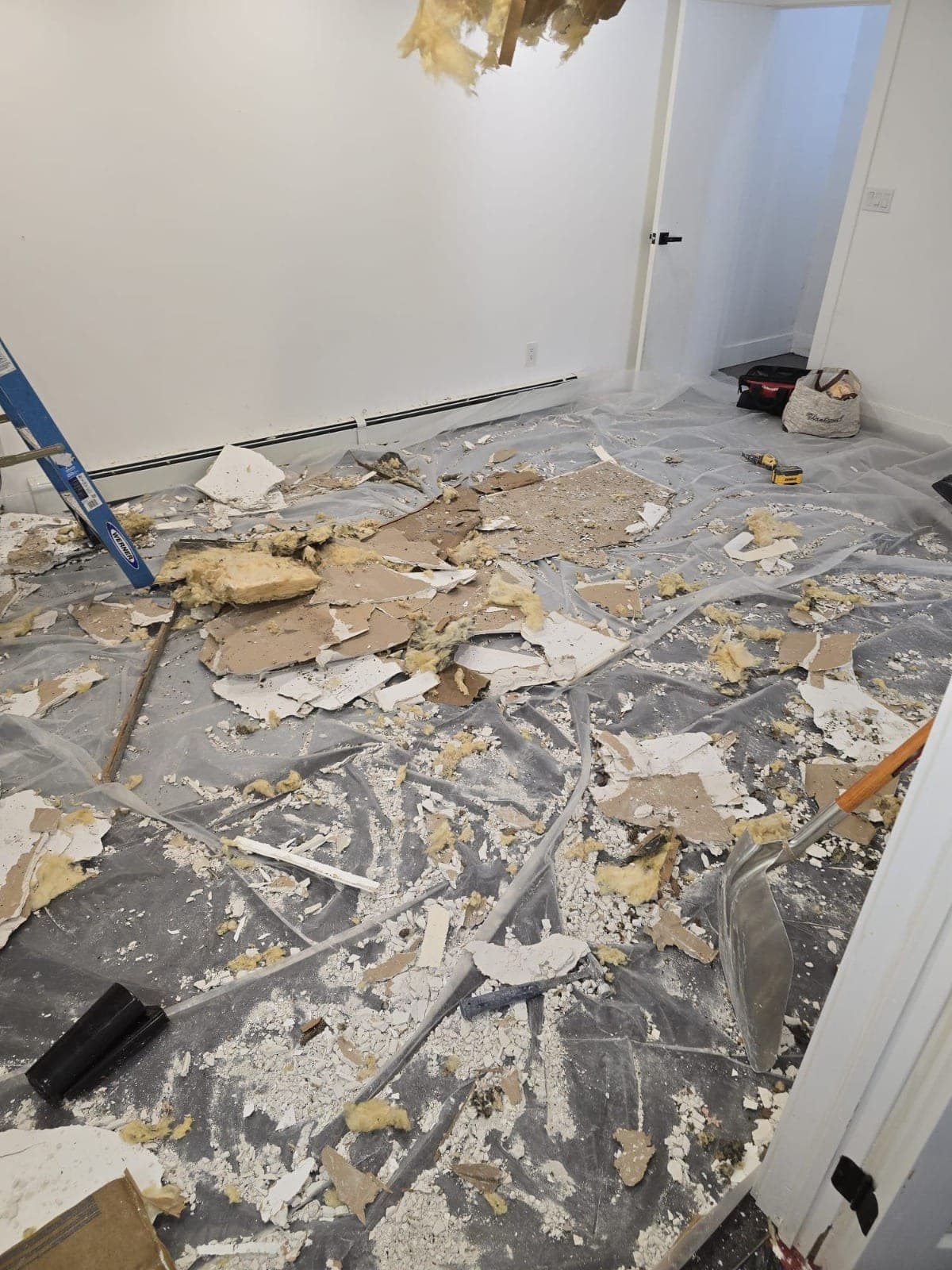
Strip & clean
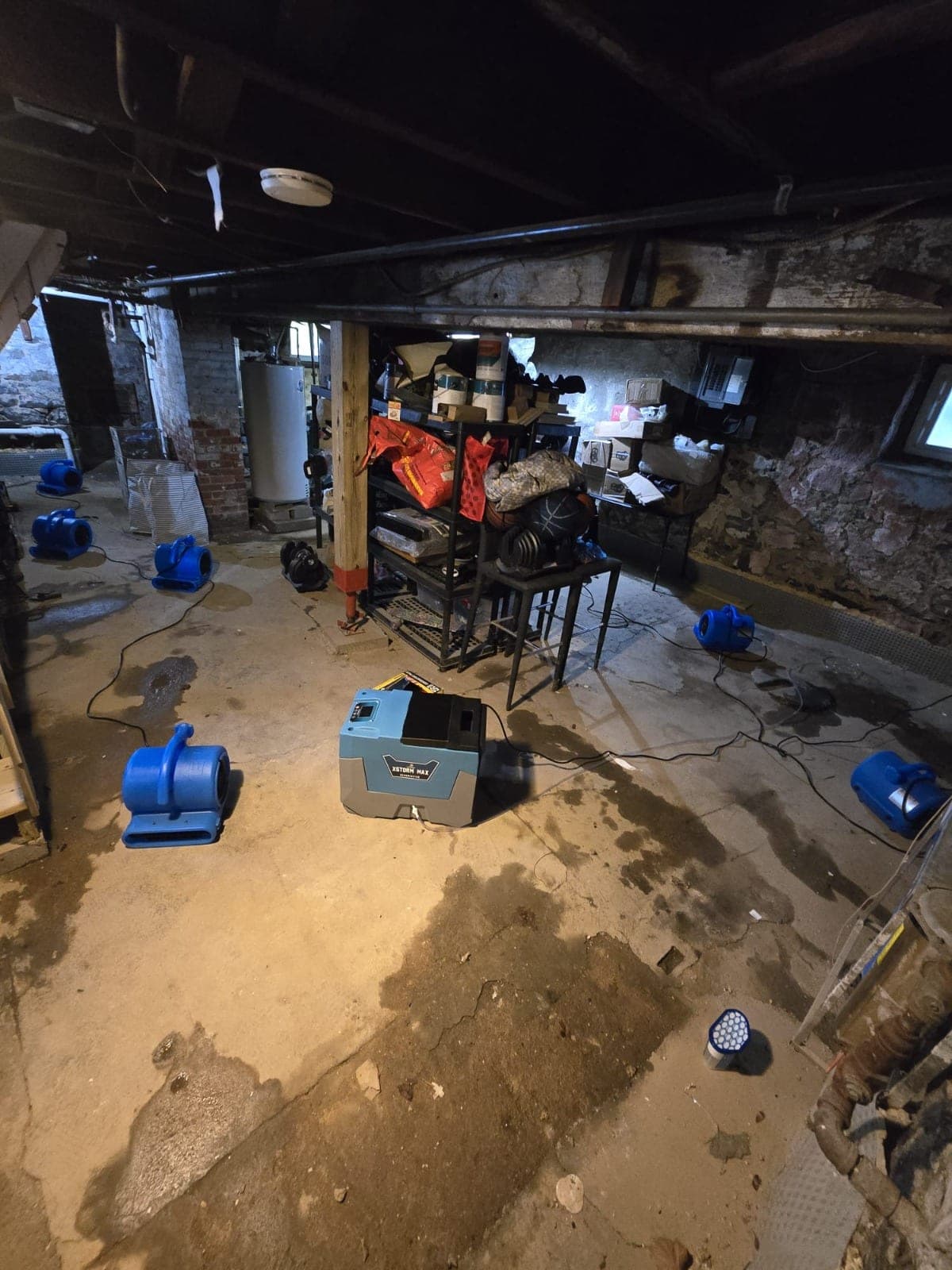
Soaked pad and carpet come up, wet drywall gets cut above the water line, and affected surfaces are cleaned, with antimicrobial treatment where the water category calls for it.
- 05
Dry & verify
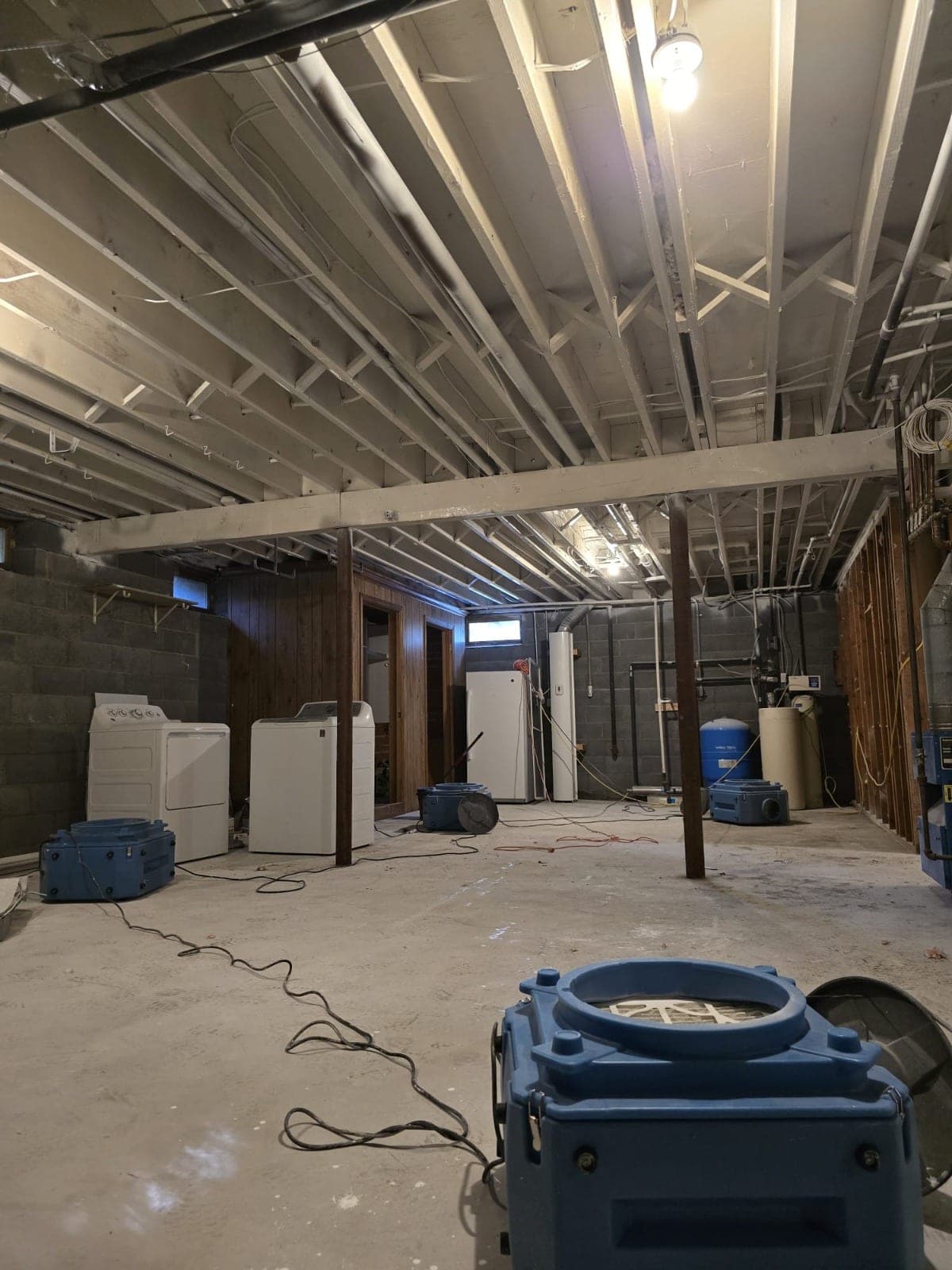
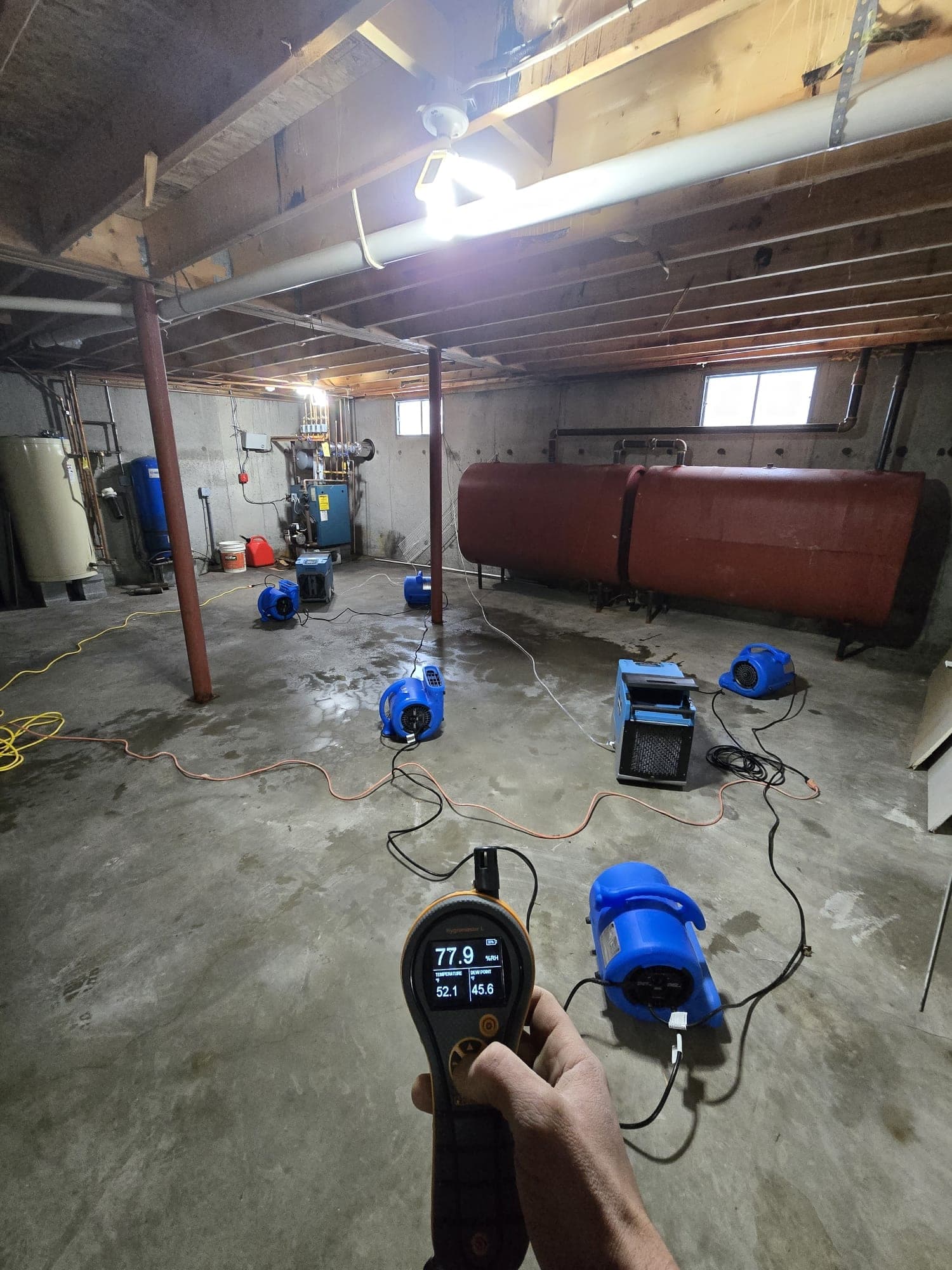
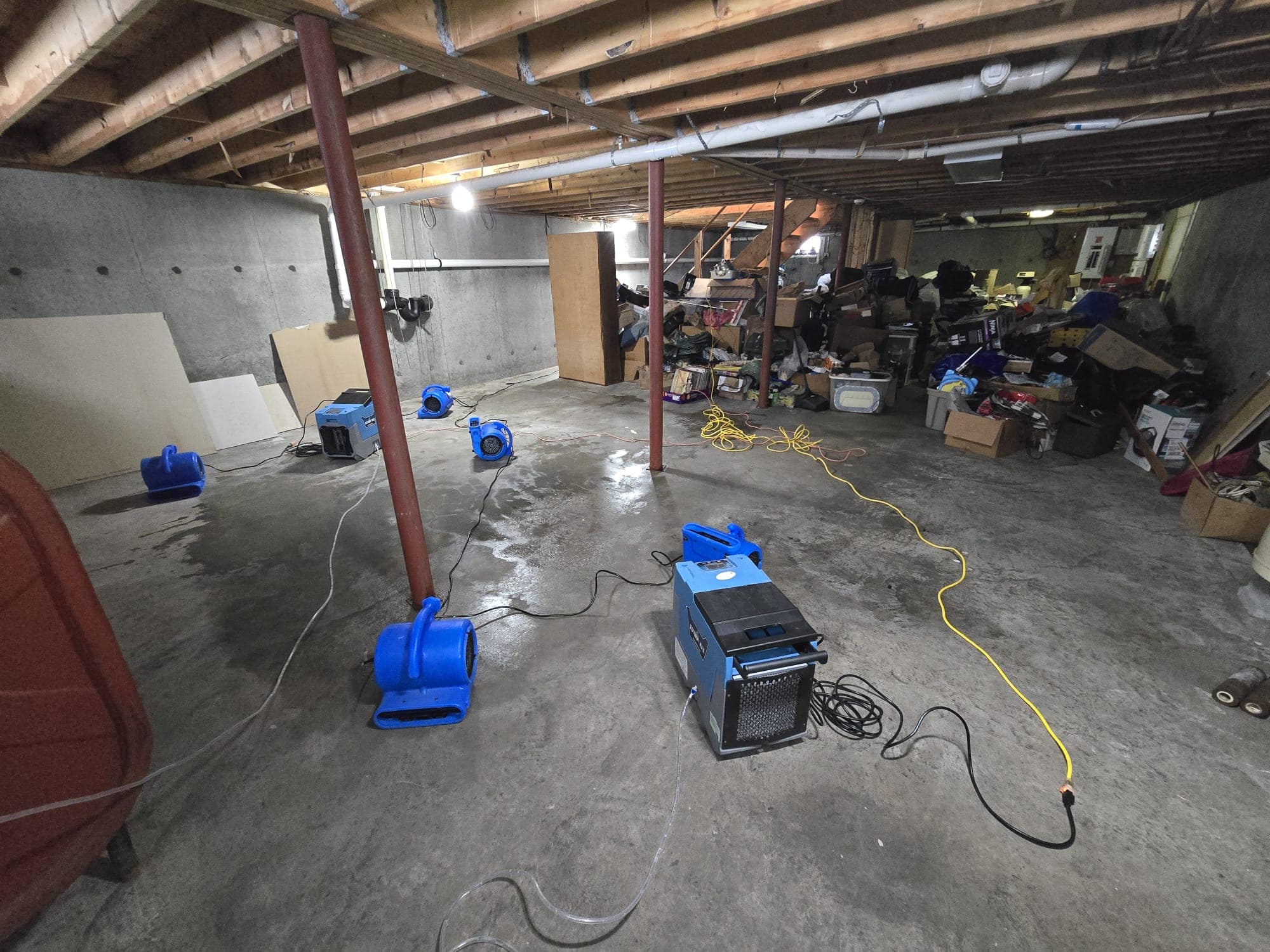
Below-grade spaces trap humidity, so we run commercial dehumidifiers and air movers with daily meter readings until walls, slab, and framing hit dry standard — then show you the numbers.
Insurance
We work with your insurance, and we bill them directly
- 01
Call us
We answer, ask what happened, and get a crew moving. Same-day emergency response on active water.
- 02
We document everything
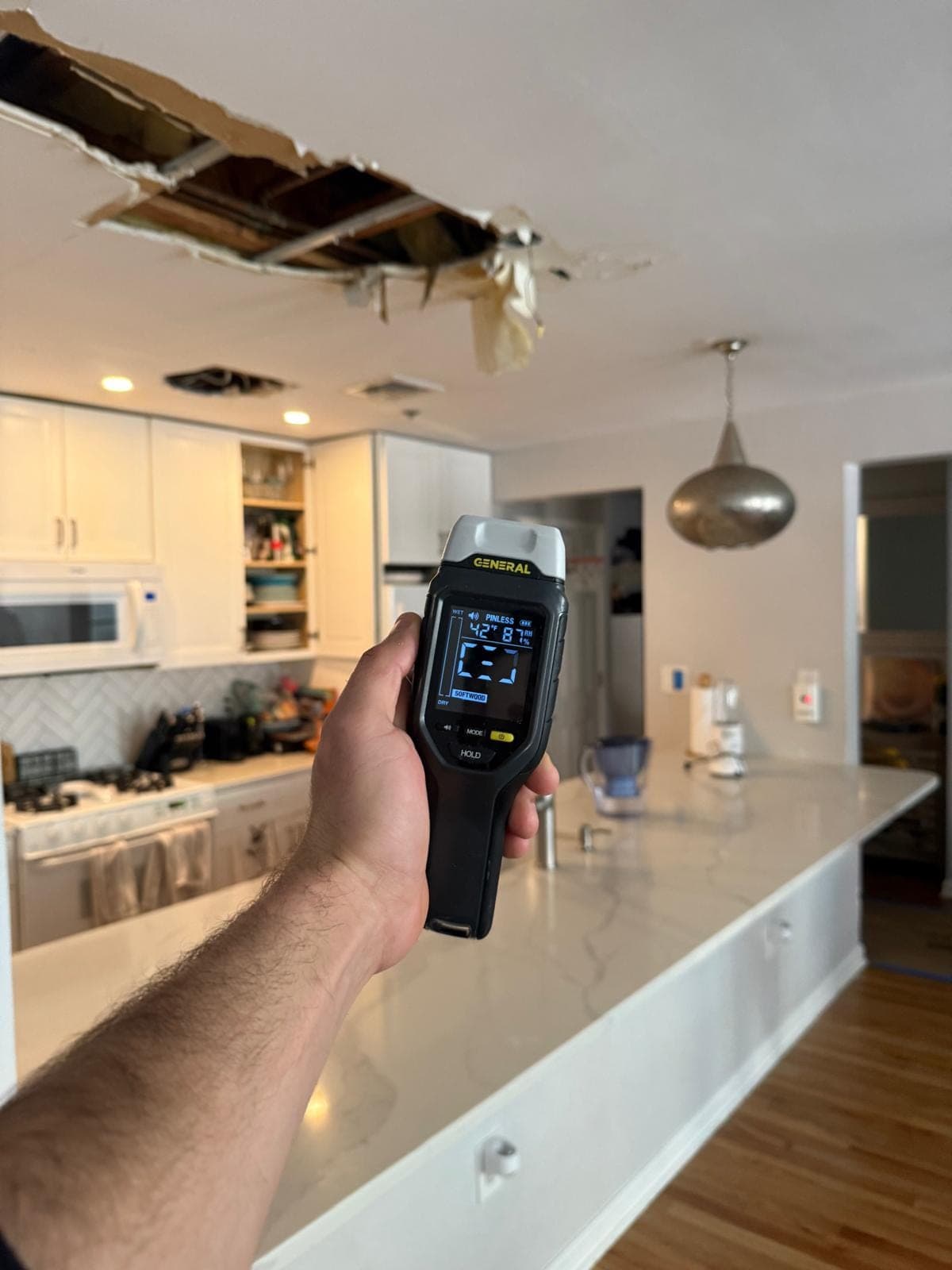
We take moisture readings and photos and write up a scope of work before drying starts, so your adjuster has the file from day one.
- 03
We bill your insurer directly
We work directly with your insurance company on covered water and mold claims, so you're not fronting the full cost and chasing reimbursement.
Your deductible is still yours to cover, and we'll tell you that number before any work starts rather than after. You also don't need a claim to hire us. Plenty of our jobs are paid directly by the homeowner, and after the free inspection we'll say which way makes more sense for the damage you have.
Common problems
What we get called about most.
Sump pump died in the middle of a storm
The most common basement flood we see, since the pump fails exactly when it's needed most. We pump out, dry the space, and recommend a pump replacement and a battery backup so the next outage isn't a repeat.
Finished basement with soaked carpet and swollen trim
This is the expensive version. We meter the walls to see how high the water rose in them, cut drywall only as high as the damage, and give you a realistic call on the carpet. Pad soaked with groundwater almost never survives, and we'll tell you that up front.
Water comes in every heavy rain
Recurring seepage is a drainage problem, not a one-time flood. We clean up the water, and we show you where it gets in and what's upstream of it: gutters, grading, or a footing drain. Fixing that part is what stops the next one.
The musty smell never left after the last flood
That usually means the last cleanup dried the air but not the structure, and moisture is still in the framing, slab, or wall cavities. We meter it, find what's wet, and if it has turned into mold, we'll tell you and explain what remediation involves.
Who's showing up
Local and independent since 2019.
The person on the phone is the one planning your job, and the scope and moisture readings come from the crew that does the work.
- IICRC Certified
- Licensed
- Bonded
- Insured
- Eco-Conscious Products
Related services
More of our water damage services.
Part of our Water Damage Restoration service — see the full picture →
Emergency Water Removal →
Standing water pumped and extracted the same day, usually within hours of your call.
Sewage Cleanup →
Sewage backups handled to IICRC Category 3 standards, with containment and full protective gear.
Burst Pipe Cleanup →
Burst pipe, frozen line, or a failed appliance hose: stop the water, then dry what it soaked.
Storm Damage Cleanup →
Roof leaks, wind-driven rain, and flash flooding, cleaned up after the storm passes.
Structural Drying & Dehumidification →
Dehumidifiers, air movers, and daily moisture readings until the structure hits dry standard.
Restoration Repairs & Build-Back →
From dried-out studs to a room you'd never know flooded.
FAQ
Questions we get most.
Does homeowners insurance cover water damage?
Usually, yes, as long as the damage was sudden and accidental: a burst pipe, a failed water heater, a washing machine hose that split. Policies generally exclude gradual damage, like a slow leak that ran for months or deferred maintenance, and they exclude flooding from outside, which needs a separate flood policy. When we inspect, we document the cause of loss carefully, because that's the first thing the adjuster looks at.
What should I do in the first few hours after water damage?
Stop the water if you safely can, at the main shut-off or the fixture valve. If water is near outlets, cut power to that area at the breaker, but never stand in water to do it. Move what you can off wet floors, and don't run a household vacuum on standing water. Then call (845) 262-6530; the sooner extraction starts, the more we can save.
What should I do if my basement floods during a storm?
Stay out of the water until the power to that area is off. Photograph the water line and everything it touched before you move anything. Then call (845) 262-6530. We schedule crews around the rain forecast and respond the same day, six days a week. Rising water from outside is usually a flood policy rather than homeowners insurance, and a sewer backup is often a separate rider, so note where the water came in. Our storm flooding guide walks through the first hours step by step.
Is it safe to stay in the house during water damage?
Often yes. Clean water from a supply line, contained to one area, usually doesn't mean leaving home. Clear out or stay away when there's sewage or outside floodwater, electricity in contact with water, or a sagging ceiling that could come down. During drying our equipment is loud but safe to live around, and at inspection we'll tell you plainly which situation you're in.
Can my carpet be saved after water damage?
It depends on the water and how long it sat. Clean supply water extracted quickly usually means the carpet survives, though the pad underneath typically gets replaced, since it holds water like a sponge and costs less to replace than to dry. Water that sat for days, sewage, or outside floodwater means the carpet comes out, because that's contamination rather than a drying problem. We'll tell you which one you have at the inspection.
What do Category 1, 2, and 3 water mean?
It's the industry scale for how contaminated the water is. Category 1 is clean water from a supply line or water heater, the easiest case. Category 2 is "gray" water with some contamination: washing machine discharge, dishwasher overflow, tub water. Category 3 is "black" water, meaning sewage and outside flooding, and it's treated as contaminated no matter how clear it looks. The category decides what can be dried and saved and what has to come out.
Will mold grow after water damage?
It can. Growth can start on wet materials within 24 to 72 hours, which is why drying should start the same day. If everything dried fast and completely, verified with moisture readings, mold is unlikely. If materials stayed damp inside walls or under floors, that's where growth shows up. A musty smell weeks after a leak usually means something didn't fully dry, and it's worth a look.
Our work
Emergency? Call first
If water is on the floor, skip the form.
Call (845) 262-6530. We'll ask what happened, tell you what to do right now, and get a crew moving. The line is answered six days a week. Use the form for anything that can wait.
Same-Day Emergency Response. Closed Saturdays for Shabbat.