
Same-Day Emergency Response
Storm & Flood Damage Cleanup
Roof leaks, wind-driven rain, and flash flooding, cleaned up after the storm passes.
Serving Orange, Rockland, Westchester & Dutchess counties in NY and Bergen, Passaic, Essex & Hudson counties in North Jersey.
At a glance
Materials stay wet long after the rain stops. We respond same-day, seal the entry point so more water doesn't come in, dry the structure, and photograph how the water got in before cleanup erases the evidence. How it entered decides how the claim is covered, so those photos matter.
Content reviewed July 2026.
Call between 8am and 6pm, Sunday through Friday, and a person picks up. Closed Saturdays for Shabbat.
- IICRC Certified
- Licensed
- Bonded
- Insured
- Eco-Conscious Products
Same-day emergency response
Response promise
8 counties
NY & NJ service area
Since 2019
Locally owned & operated
IICRC Certified
Certification
Heavy rain in the forecast
Before and after a storm
We schedule crews around the rain forecast. A few things done before the storm save a basement, and a few things done right after save the insurance claim.
Before the rain
- Move stored boxes, rugs, and anything you care about off the basement floor.
- Test the sump pump by pouring a bucket of water into the pit. If it does not run, that is the problem to fix before the rain.
- Clear the window wells and the downspout outlets. Know where the main water shutoff and the electrical panel are.
If water gets in
- Do not go into standing water until the power to that area is off.
- Photograph the water line and everything it touched before you move or throw anything out.
- Call for extraction the same day. Wet drywall and carpet pad grow mold within days.
Full walkthrough: what to do when your basement floods in a storm. Water in the house now? Call (845) 262-6530. Same-day emergency response, six days a week.
The work
What's included
Storm water intrusion cleanup: roof leaks, wind-driven rain, and flash flooding. Emergency extraction, drying, soaked-material removal, and plain-English guidance on how storm claims get covered.
- Roof leak intrusion, wind-driven rain, and flash flood cleanup
- Same-day emergency response, six days a week
- Tarping and board-up coordinated while permanent repairs are scheduled
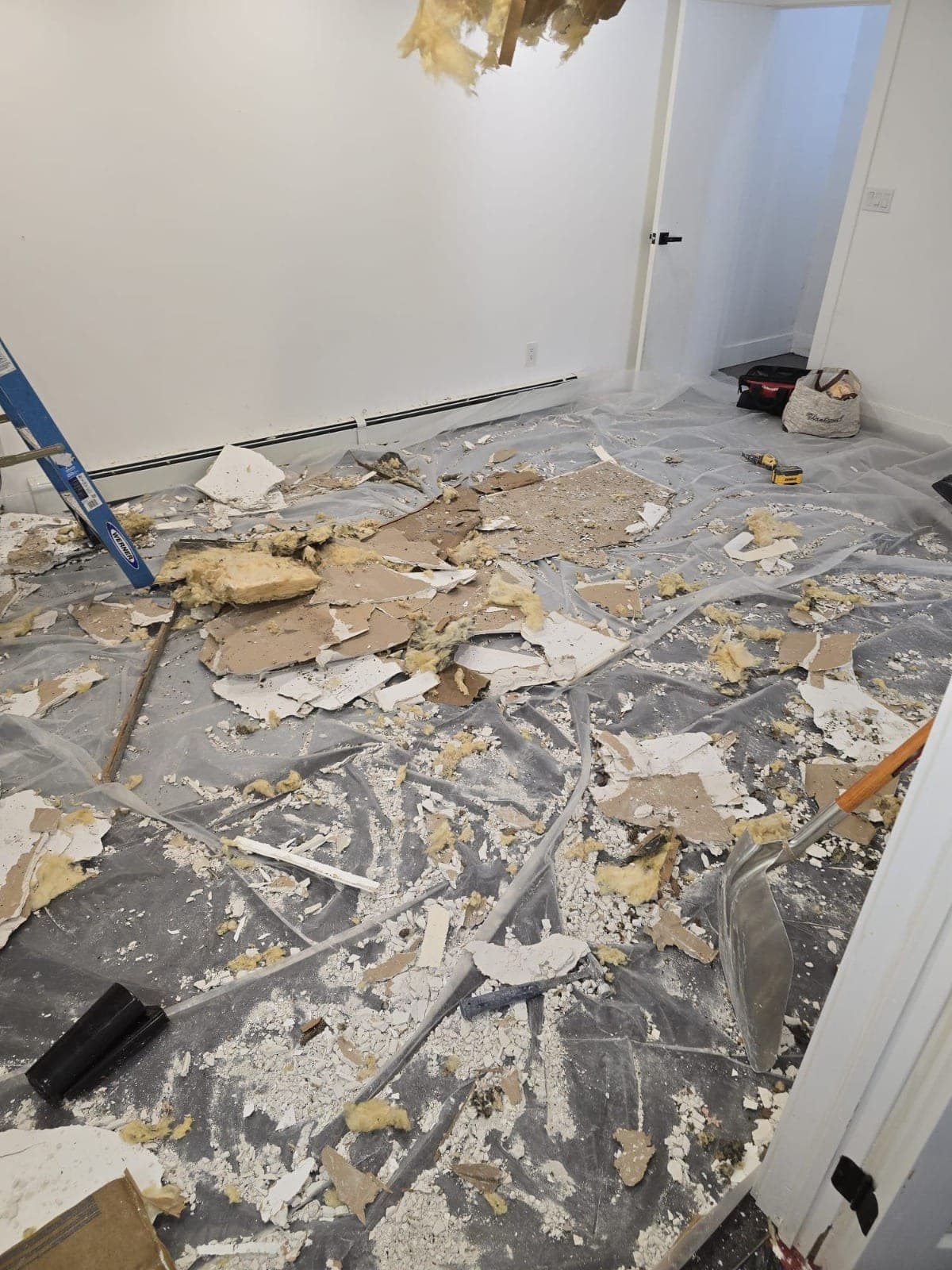
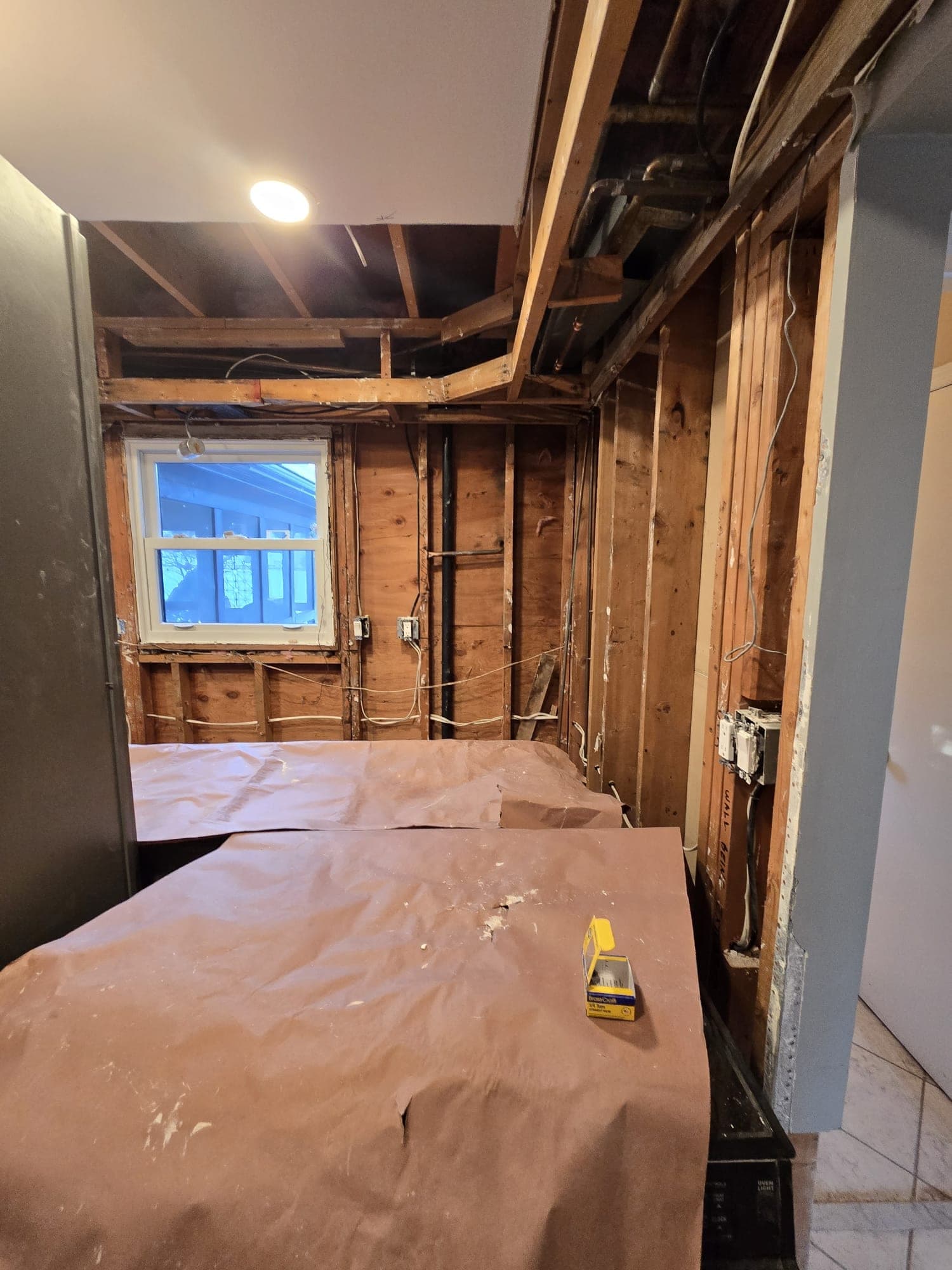
- Ceilings, insulation, and walls dried and rebuilt after roof leaks
- Storm water and rising floodwater are covered differently, and we explain which you have
- Soaked materials removed and itemized so the claim matches the loss
Process
What happens after you call.
- 01
Triage call
Where the water came in, whether it's still coming, and what's sitting wet. We sort out on the phone what needs a crew now and what can wait, and dispatch accordingly, storm days included.
- 02
Stop the intrusion
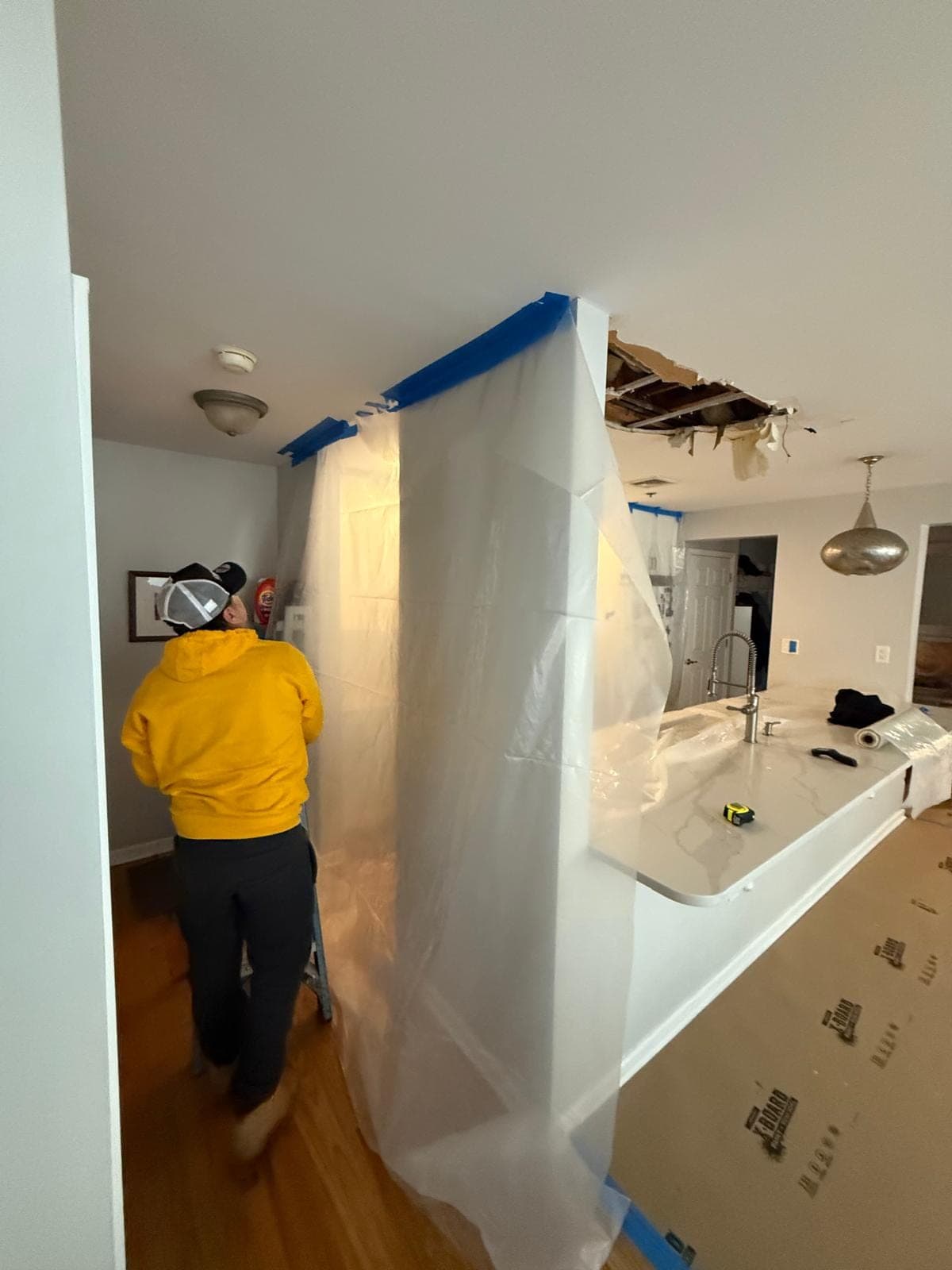
Drying a room under an open roof leak is pointless. We coordinate temporary protection (tarping, board-up, sealing the entry point) so the repair clock starts and the damage stops compounding.
- 03
Extract & remove
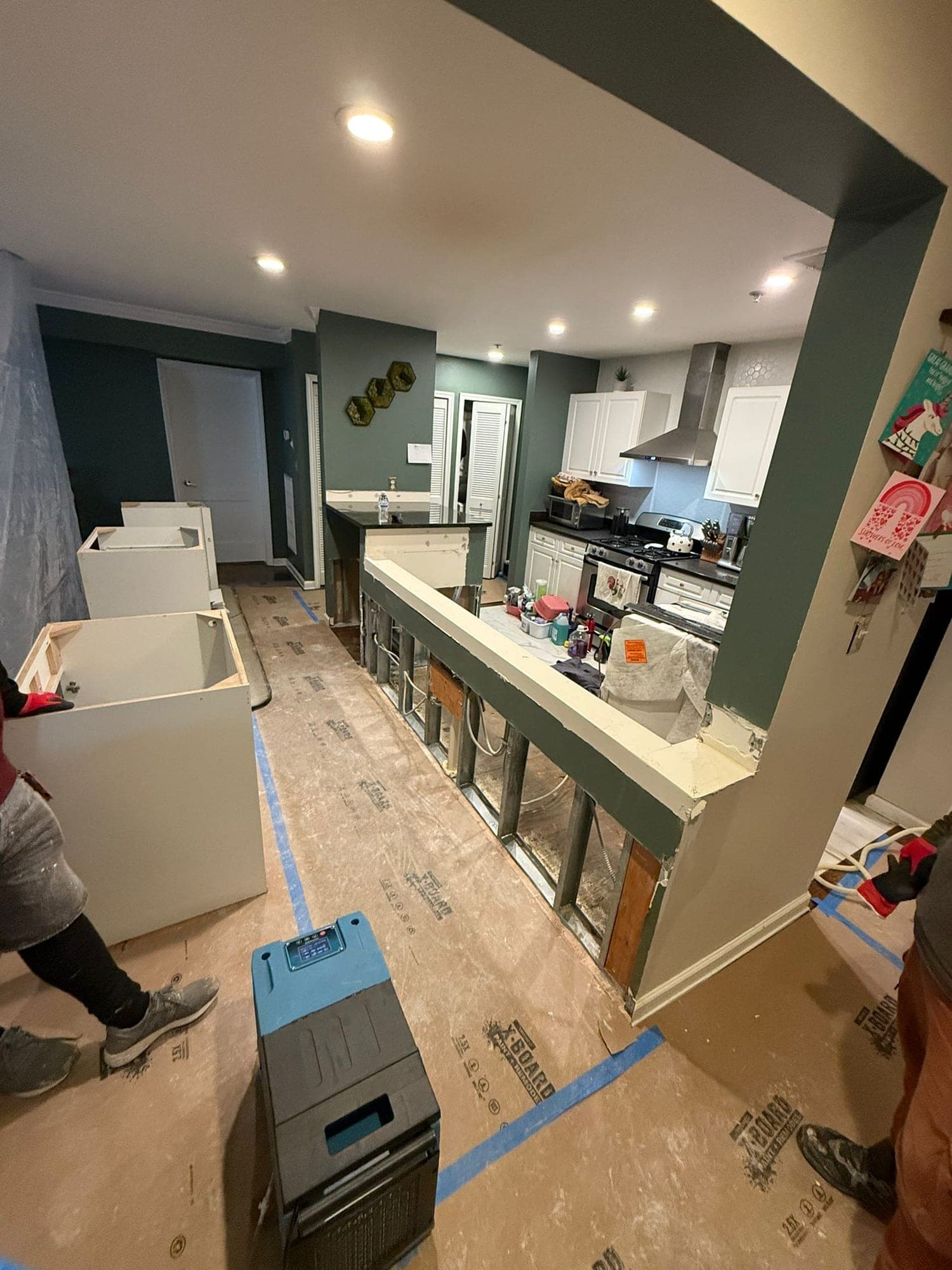
Standing water out, saturated insulation and ceiling material down, wet contents sorted. In storm losses the worst damage is often in the attic or the wall cavities the water passed through, so we meter all of it.
- 04
Dry & monitor
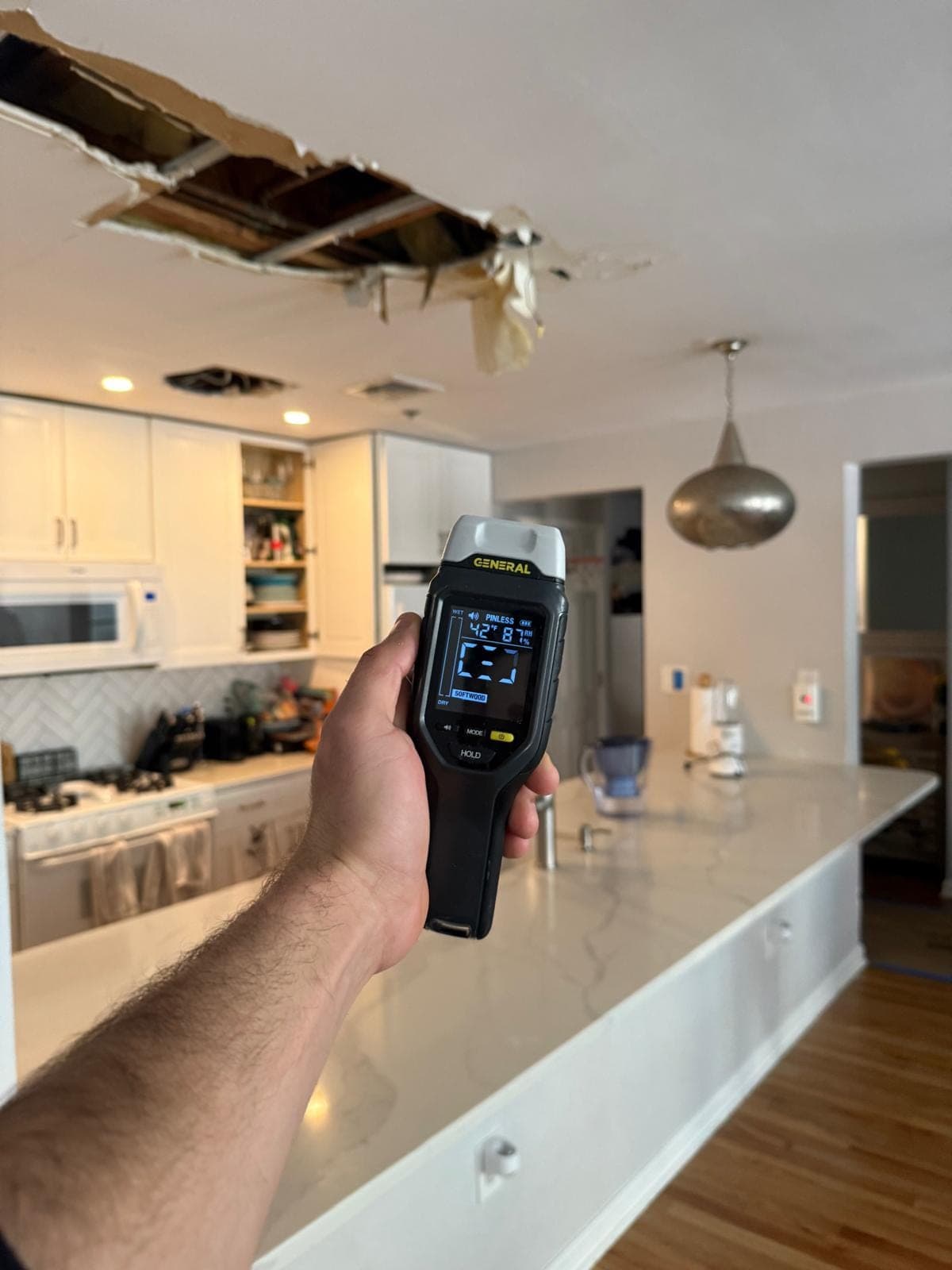
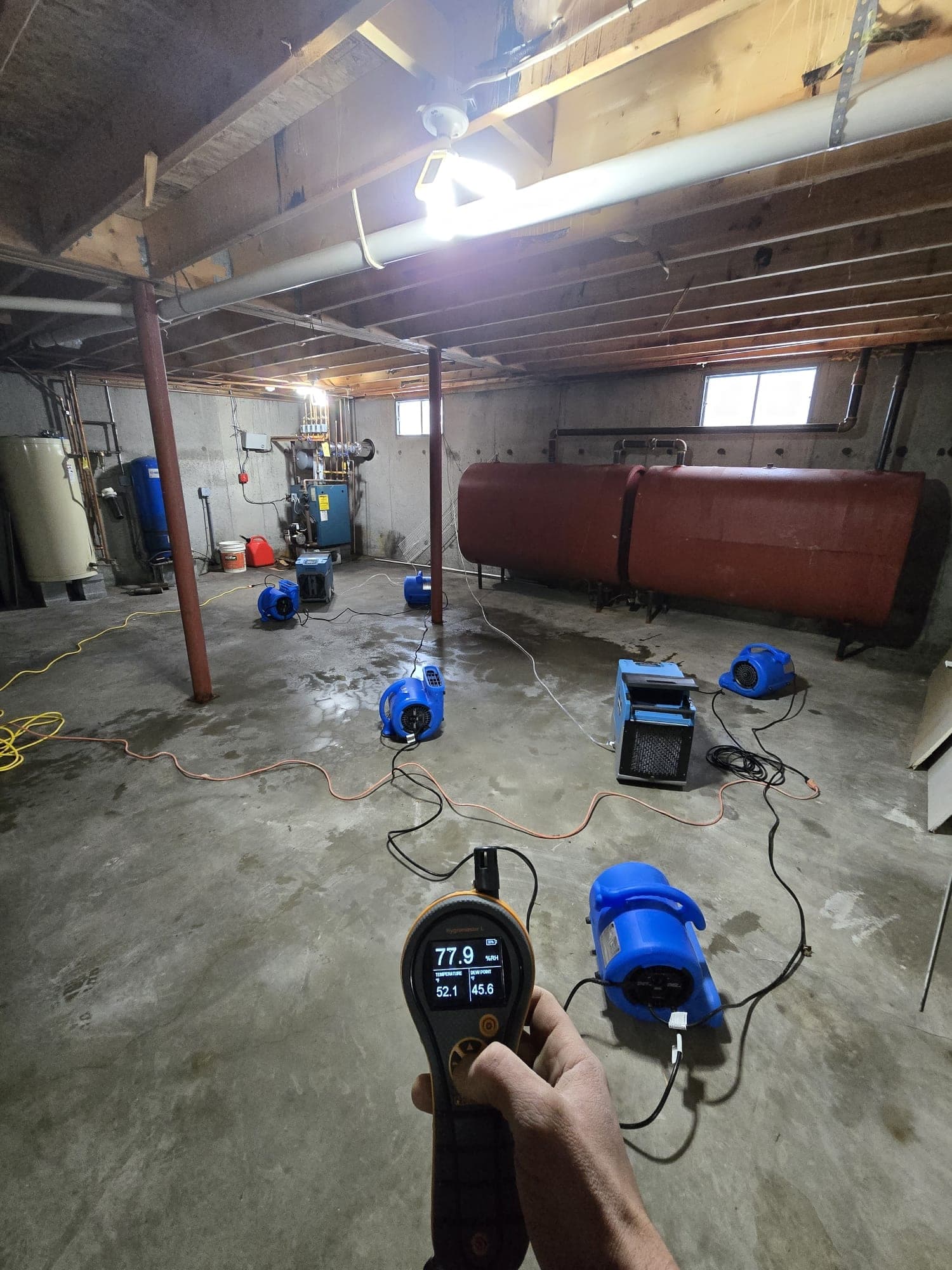
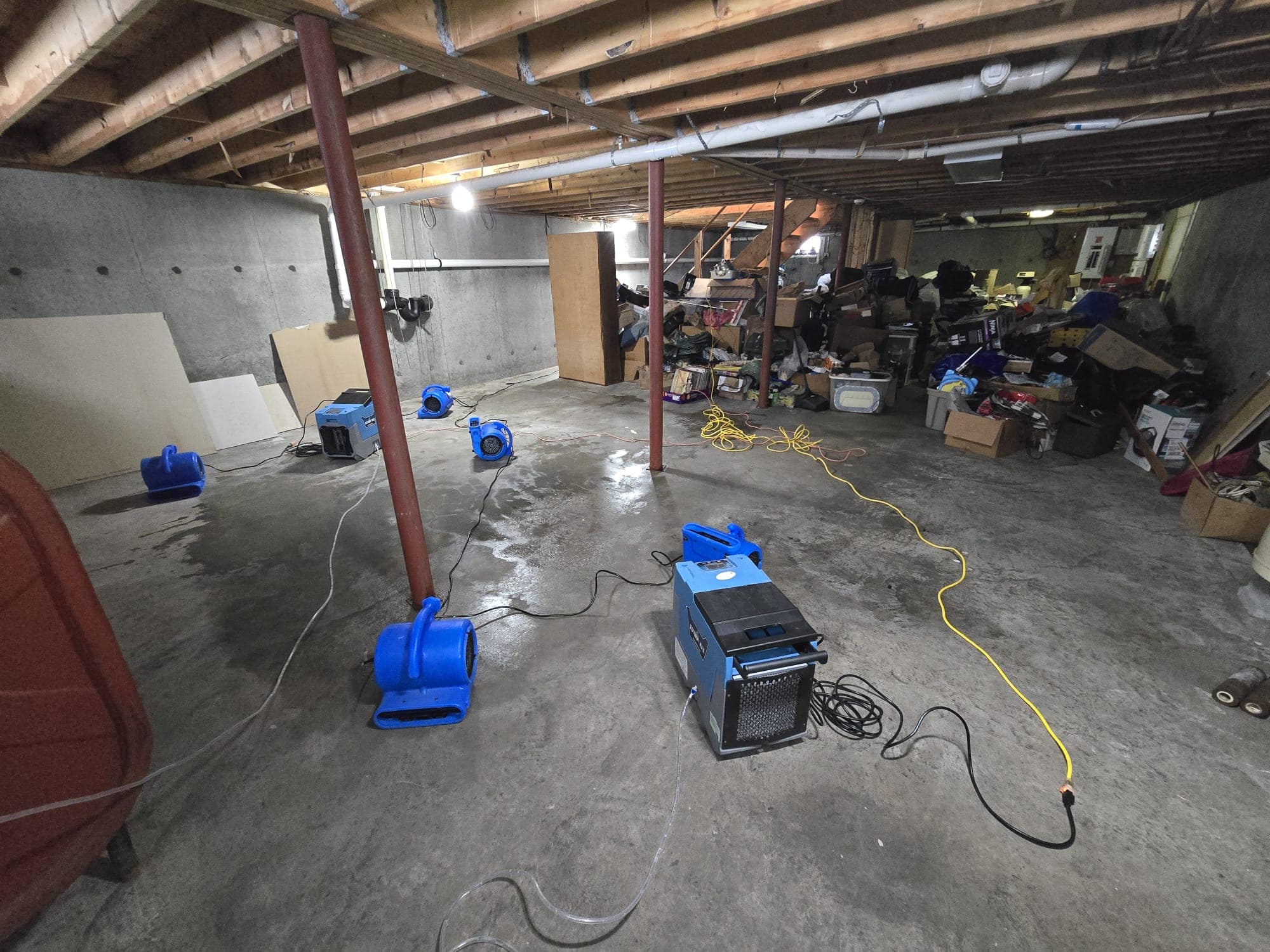
Dehumidification and directed airflow with daily readings, the same measured structural drying we run on any water loss, until framing and drywall hit dry standard.
- 05
Document & rebuild
Storm claims turn on documentation of what came in and from where. Our photos, moisture logs, and itemized scope make that case. We bill the carrier directly on covered claims, and the build-back crew closes the job out.
Insurance
We work with your insurance, and we bill them directly
- 01
Call us
We answer, ask what happened, and get a crew moving. Same-day emergency response on active water.
- 02
We document everything
We take moisture readings and photos and write up a scope of work before drying starts, so your adjuster has the file from day one.
- 03
We bill your insurer directly
We work directly with your insurance company on covered water and mold claims, so you're not fronting the full cost and chasing reimbursement.
Your deductible is still yours to cover, and we'll tell you that number before any work starts rather than after. You also don't need a claim to hire us. Plenty of our jobs are paid directly by the homeowner, and after the free inspection we'll say which way makes more sense for the damage you have.
Common problems
What we get called about most.
Rain came in around the flashing during a nor'easter
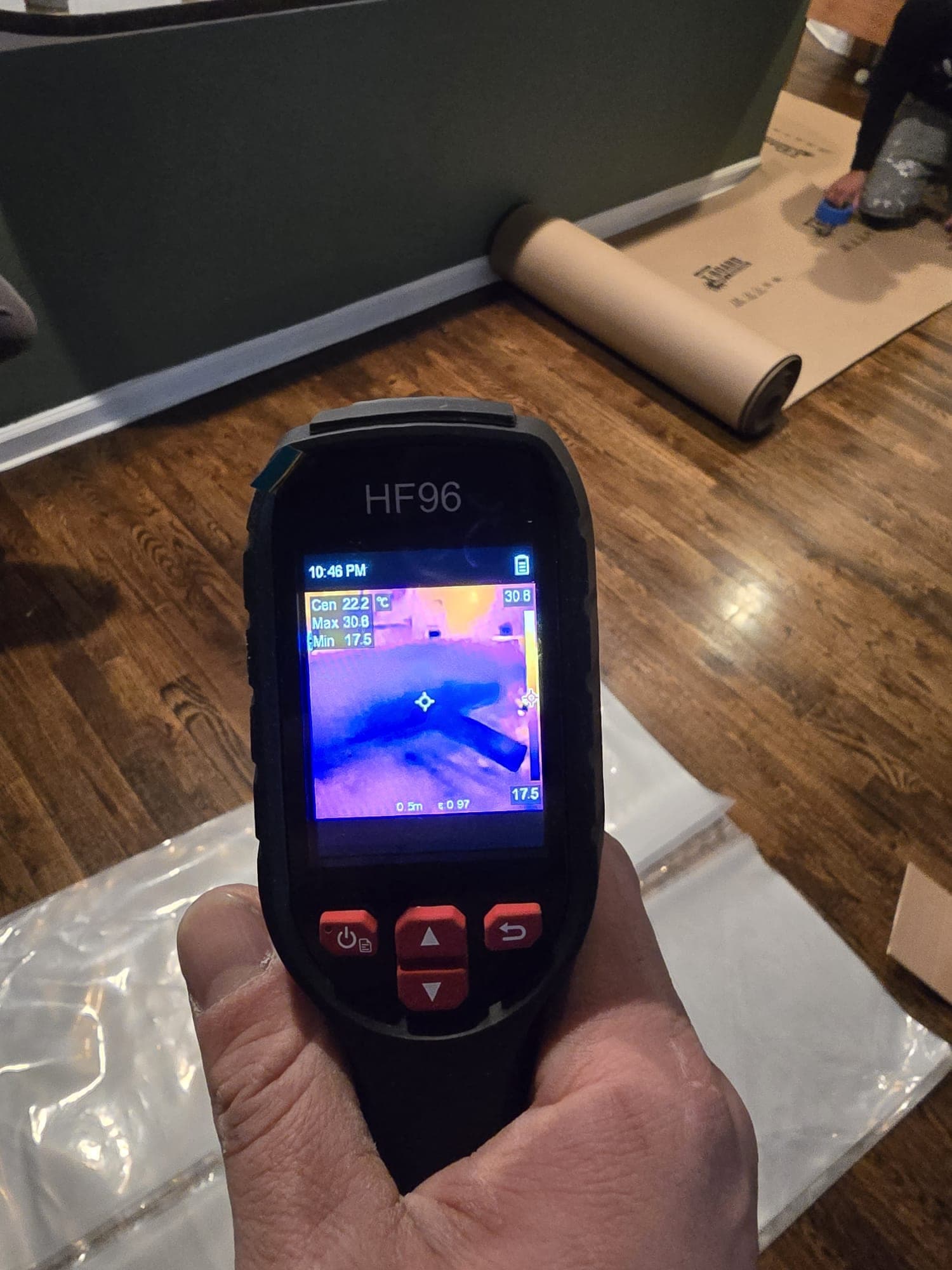
Wind-driven rain gets through gaps that ordinary weather never reaches, then runs along framing and shows up as a ceiling stain rooms away. Thermal imaging traces it back to the entry point so the roofer fixes the right spot, and we dry everything in between.
A flash flood pushed water through the basement windows
Surface water that enters at grade is handled like a basement flood: pump-out, category assessment, and careful triage of the finished space. One thing to know before you file: rising surface water usually falls under flood coverage rather than a standard homeowners policy.
The adjuster says flood, the policy says storm, and you're in between
How the water entered decides which coverage applies, and the evidence disappears fast once cleanup starts. We photograph entry points and water lines before we touch anything, so the file shows where it came from rather than leaving it to memory.
Another storm is coming and the first mess isn't dry
Back-to-back storms are common here. We prioritize sealing the entry point and getting drying equipment running before the next front arrives, because materials that get soaked a second time usually can't be saved.
Who's showing up
Local and independent since 2019.
The person on the phone is the one planning your job, and the scope and moisture readings come from the crew that does the work.
- IICRC Certified
- Licensed
- Bonded
- Insured
- Eco-Conscious Products
Related services
More of our water damage services.
Part of our Water Damage Restoration service — see the full picture →
Emergency Water Removal →
Standing water pumped and extracted the same day, usually within hours of your call.
Basement Flood Cleanup →
Pumped out, dried, and explained: you'll know why it flooded before we leave.
Sewage Cleanup →
Sewage backups handled to IICRC Category 3 standards, with containment and full protective gear.
Burst Pipe Cleanup →
Burst pipe, frozen line, or a failed appliance hose: stop the water, then dry what it soaked.
Structural Drying & Dehumidification →
Dehumidifiers, air movers, and daily moisture readings until the structure hits dry standard.
Restoration Repairs & Build-Back →
From dried-out studs to a room you'd never know flooded.
FAQ
Questions we get most.
Does homeowners insurance cover water damage?
Usually, yes, as long as the damage was sudden and accidental: a burst pipe, a failed water heater, a washing machine hose that split. Policies generally exclude gradual damage, like a slow leak that ran for months or deferred maintenance, and they exclude flooding from outside, which needs a separate flood policy. When we inspect, we document the cause of loss carefully, because that's the first thing the adjuster looks at.
What if my claim gets denied?
You can push back. Denials usually argue the damage was gradual or maintenance-related, and a re-inspection with our documentation (photos, moisture readings, notes on the cause of loss) sometimes changes the outcome. If the denial stands, we'll walk you through what the work requires and what can safely wait. The inspection and estimate cost nothing either way.
Should I wait for the adjuster before you start work?
No, and your policy almost certainly agrees. Insurers require you to take reasonable steps to prevent further damage, so extraction and drying should start promptly instead of several days later, once materials have soaked through and mold has had time to start. We photograph and document everything before and during mitigation, so the adjuster sees what condition the property was in.
How fast can you get here in an emergency?
Same day, usually within hours. When you call, a person answers, asks what happened, and gives you an arrival window based on where you are and what's already on the schedule. The truck comes loaded for extraction and drying, so work starts as soon as we're in the door.
Is it safe to stay in the house during water damage?
Often yes. Clean water from a supply line, contained to one area, usually doesn't mean leaving home. Clear out or stay away when there's sewage or outside floodwater, electricity in contact with water, or a sagging ceiling that could come down. During drying our equipment is loud but safe to live around, and at inspection we'll tell you plainly which situation you're in.
What do Category 1, 2, and 3 water mean?
It's the industry scale for how contaminated the water is. Category 1 is clean water from a supply line or water heater, the easiest case. Category 2 is "gray" water with some contamination: washing machine discharge, dishwasher overflow, tub water. Category 3 is "black" water, meaning sewage and outside flooding, and it's treated as contaminated no matter how clear it looks. The category decides what can be dried and saved and what has to come out.
Our work
Emergency? Call first
If water is on the floor, skip the form.
Call (845) 262-6530. We'll ask what happened, tell you what to do right now, and get a crew moving. The line is answered six days a week. Use the form for anything that can wait.
Same-Day Emergency Response. Closed Saturdays for Shabbat.