
Same-Day Emergency Response
Sewage Backup Cleanup
Sewage backups handled to IICRC Category 3 standards, with containment and full protective gear.
Serving Orange, Rockland, Westchester & Dutchess counties in NY and Bergen, Passaic, Essex & Hudson counties in North Jersey.
At a glance
A backed-up main line or an overflow that reached finished space is not a mop-and-bleach job. Sewage carries bacteria and viruses that soak into porous materials, so we contain the area, remove what can't be disinfected, and clean what can, in full protective gear and to IICRC standards.
Content reviewed July 2026.
Call between 8am and 6pm, Sunday through Friday, and a person picks up. Closed Saturdays for Shabbat.
- IICRC Certified
- Licensed
- Bonded
- Insured
- Eco-Conscious Products
Same-day emergency response
Response promise
8 counties
NY & NJ service area
Since 2019
Locally owned & operated
IICRC Certified
Certification
Heavy rain in the forecast
Before and after a storm
We schedule crews around the rain forecast. A few things done before the storm save a basement, and a few things done right after save the insurance claim.
Before the rain
- Move stored boxes, rugs, and anything you care about off the basement floor.
- Test the sump pump by pouring a bucket of water into the pit. If it does not run, that is the problem to fix before the rain.
- Clear the window wells and the downspout outlets. Know where the main water shutoff and the electrical panel are.
If water gets in
- Do not go into standing water until the power to that area is off.
- Photograph the water line and everything it touched before you move or throw anything out.
- Call for extraction the same day. Wet drywall and carpet pad grow mold within days.
Full walkthrough: what to do when your basement floods in a storm. Water in the house now? Call (845) 262-6530. Same-day emergency response, six days a week.
The work
What's included
Sewage backups and overflows cleaned to IICRC Category 3 standards: protective equipment, containment, removal of contaminated porous materials, EPA-registered disinfection, and lawful disposal.
- IICRC Category 3 (black water) protocols from the first minute on site
- Full PPE and plastic containment so contamination stays in the work zone
- Contaminated porous materials removed: carpet, pad, and affected drywall
- Hard surfaces cleaned, then treated with EPA-registered disinfectants at full dwell time
- HEPA air scrubbers running for the duration of the work
- Lawful bagging and disposal of contaminated debris, itemized for insurance
Process
What happens after you call.
- 01
Keep people and pets out
From the first phone call: stay out of the affected area, don't run water into that drain line, and keep kids and pets away. Sewage exposure is a health risk, which is why the crew with the protective gear handles it.
- 02
Contain the area
Plastic containment and controlled airflow keep the affected zone isolated from the rest of the house, so cleanup doesn't spread what the backup already deposited.
- 03
Remove what can't be saved
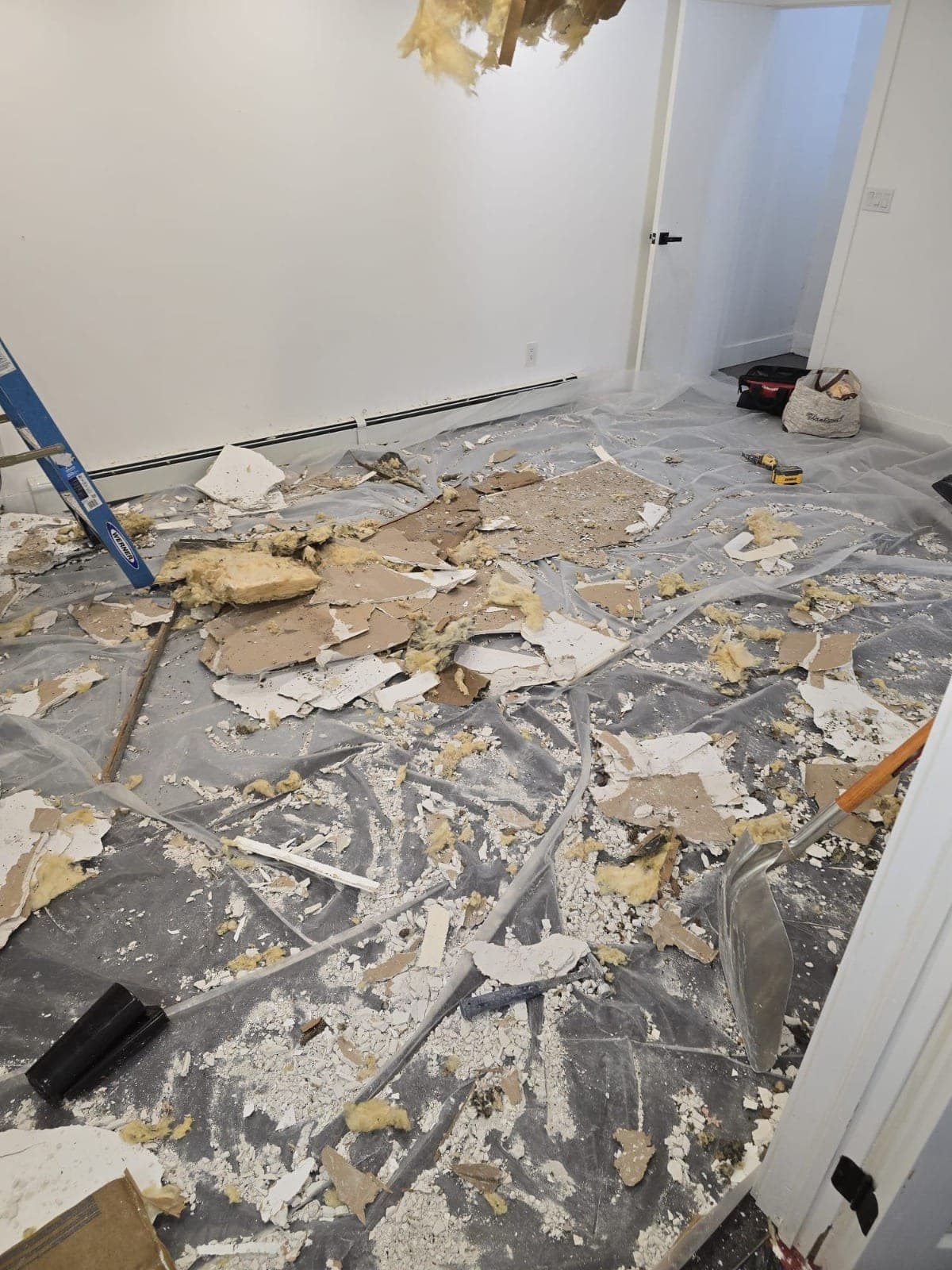
Porous materials that absorbed sewage (carpet, pad, upholstered items, affected drywall) cannot be reliably disinfected, so under IICRC standards they come out. Everything is photographed and itemized for the claim before it's bagged.
- 04
Clean, then disinfect
Hard surfaces get physically cleaned first, then treated with EPA-registered disinfectants at the labeled dwell time. Disinfectant applied over soil doesn't work, so the cleaning has to come first.
- 05
Dry & verify
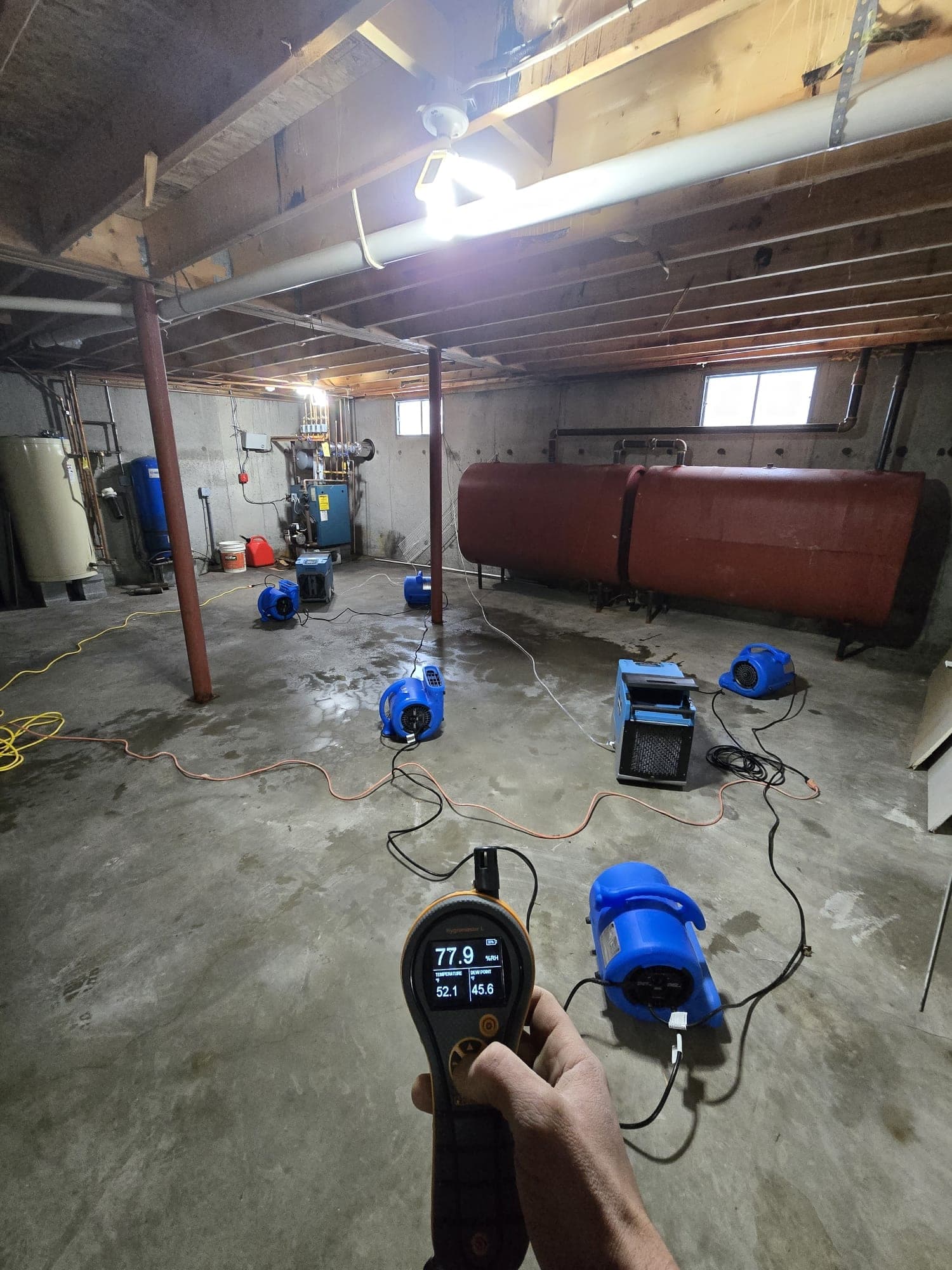
The area is dried to standard with dehumidification and HEPA air scrubbing, moisture readings confirm it, and only then is it ready for build-back. You get the documentation for every step.
Insurance
We work with your insurance, and we bill them directly
- 01
Call us
We answer, ask what happened, and get a crew moving. Same-day emergency response on active water.
- 02
We document everything
We take moisture readings and photos and write up a scope of work before drying starts, so your adjuster has the file from day one.
- 03
We bill your insurer directly
We work directly with your insurance company on covered water and mold claims, so you're not fronting the full cost and chasing reimbursement.
Your deductible is still yours to cover, and we'll tell you that number before any work starts rather than after. You also don't need a claim to hire us. Plenty of our jobs are paid directly by the homeowner, and after the free inspection we'll say which way makes more sense for the damage you have.
Common problems
What we get called about most.
Main line backed up into a finished basement
Roots, grease, or a surge in the municipal line all end the same way: Category 3 water across finished space. We contain the area, remove the contaminated porous materials, disinfect the rest, and document all of it for the claim.
Toilet overflowed and ran into the room below
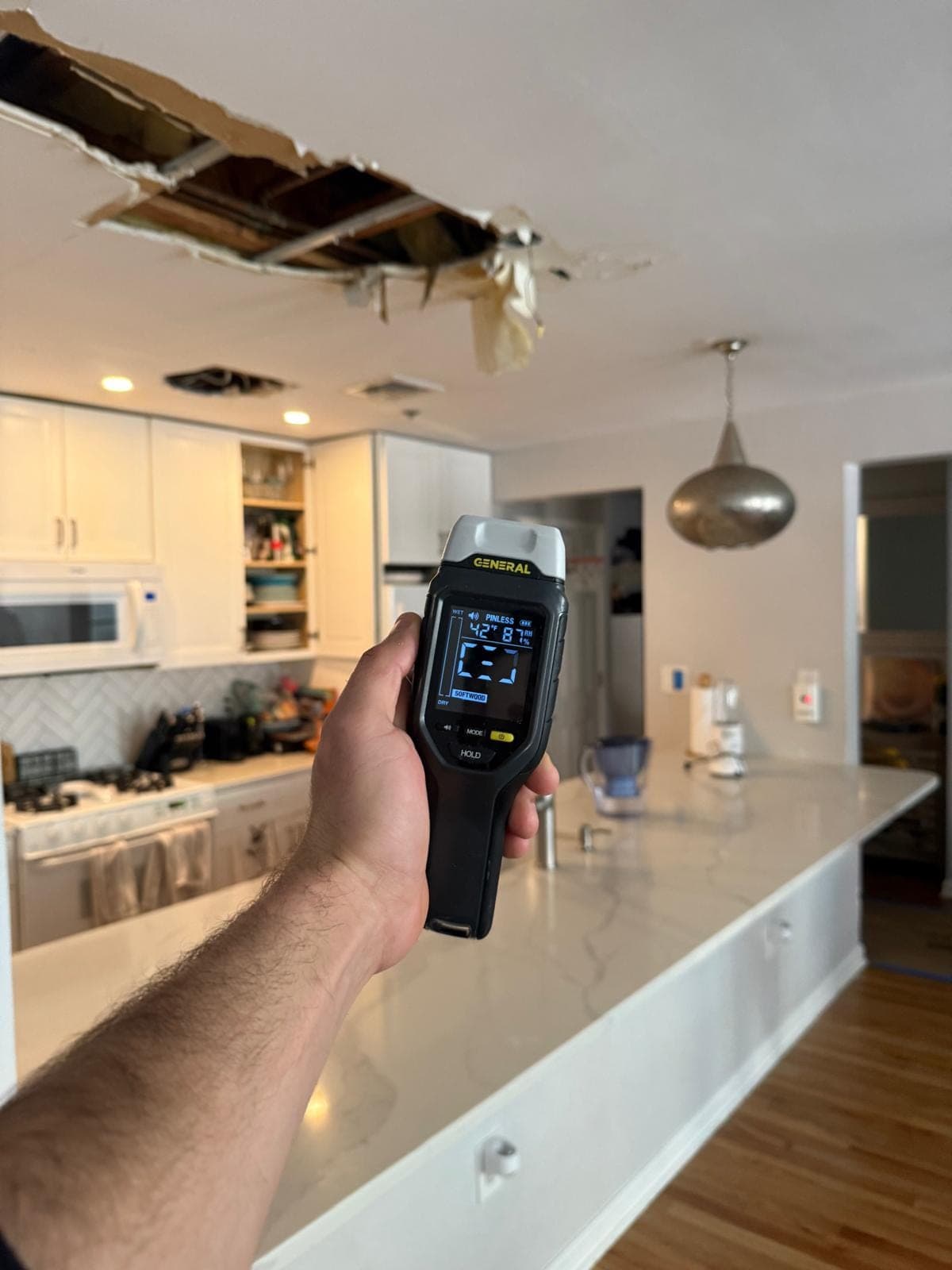
Water that passed through a floor system spreads inside the cavity. We open the ceiling only as far as the contamination reached, treat the framing, and dry the cavity before anything gets closed up over wet insulation.
You're tempted to clean it up yourself
For a cup of clean water from the toilet tank, that's fine. Sewage is different: it carries bacteria, viruses, and parasites, and household gloves with bleach on a porous floor won't reach any of it. This is the one job we'd tell you not to take on yourself.
The smell is still there after the visible mess is gone
Odor after a backup means contamination is still there: inside a wall base, under flooring, or in a floor drain trap that dried out. We trace it to the source and clean that, because the smell won't fade on its own.
Who's showing up
Local and independent since 2019.
The person on the phone is the one planning your job, and the scope and moisture readings come from the crew that does the work.
- IICRC Certified
- Licensed
- Bonded
- Insured
- Eco-Conscious Products
Related services
More of our water damage services.
Part of our Water Damage Restoration service — see the full picture →
Emergency Water Removal →
Standing water pumped and extracted the same day, usually within hours of your call.
Basement Flood Cleanup →
Pumped out, dried, and explained: you'll know why it flooded before we leave.
Burst Pipe Cleanup →
Burst pipe, frozen line, or a failed appliance hose: stop the water, then dry what it soaked.
Storm Damage Cleanup →
Roof leaks, wind-driven rain, and flash flooding, cleaned up after the storm passes.
Structural Drying & Dehumidification →
Dehumidifiers, air movers, and daily moisture readings until the structure hits dry standard.
Restoration Repairs & Build-Back →
From dried-out studs to a room you'd never know flooded.
FAQ
Questions we get most.
Does homeowners insurance cover water damage?
Usually, yes, as long as the damage was sudden and accidental: a burst pipe, a failed water heater, a washing machine hose that split. Policies generally exclude gradual damage, like a slow leak that ran for months or deferred maintenance, and they exclude flooding from outside, which needs a separate flood policy. When we inspect, we document the cause of loss carefully, because that's the first thing the adjuster looks at.
What documentation does an insurance claim need?
Four things: photos of the damage before work starts, moisture readings from every affected material, daily drying logs, and an itemized scope of what was done and why. We produce all of it as we work, and you get copies whether or not you file. If a failed part caused the loss, like a supply line or a burst hose, keep it, because adjusters often ask to see it.
How fast can you get here in an emergency?
Same day, usually within hours. When you call, a person answers, asks what happened, and gives you an arrival window based on where you are and what's already on the schedule. The truck comes loaded for extraction and drying, so work starts as soon as we're in the door.
Is it safe to stay in the house during water damage?
Often yes. Clean water from a supply line, contained to one area, usually doesn't mean leaving home. Clear out or stay away when there's sewage or outside floodwater, electricity in contact with water, or a sagging ceiling that could come down. During drying our equipment is loud but safe to live around, and at inspection we'll tell you plainly which situation you're in.
What do Category 1, 2, and 3 water mean?
It's the industry scale for how contaminated the water is. Category 1 is clean water from a supply line or water heater, the easiest case. Category 2 is "gray" water with some contamination: washing machine discharge, dishwasher overflow, tub water. Category 3 is "black" water, meaning sewage and outside flooding, and it's treated as contaminated no matter how clear it looks. The category decides what can be dried and saved and what has to come out.
Our work
Emergency? Call first
If water is on the floor, skip the form.
Call (845) 262-6530. We'll ask what happened, tell you what to do right now, and get a crew moving. The line is answered six days a week. Use the form for anything that can wait.
Same-Day Emergency Response. Closed Saturdays for Shabbat.