
5 min read
Sewage backup in the basement: why it needs professional cleanup
By the Strauss Cleaners crew·Updated September 2, 2026
A sewage backup is the one water loss where cleaning it up yourself creates a second problem. The water carries bacteria and viruses, and what it soaks into usually has to leave the house. Here is what to do, and what not to.
Short answer
Stop running water anywhere in the house. Keep people and pets out of the area. Do not use a household vacuum or shop vac on it. Photograph the damage, then call for cleanup the same day. Porous materials that touched the water are removed, hard surfaces are cleaned and disinfected, and the area is dried and checked.
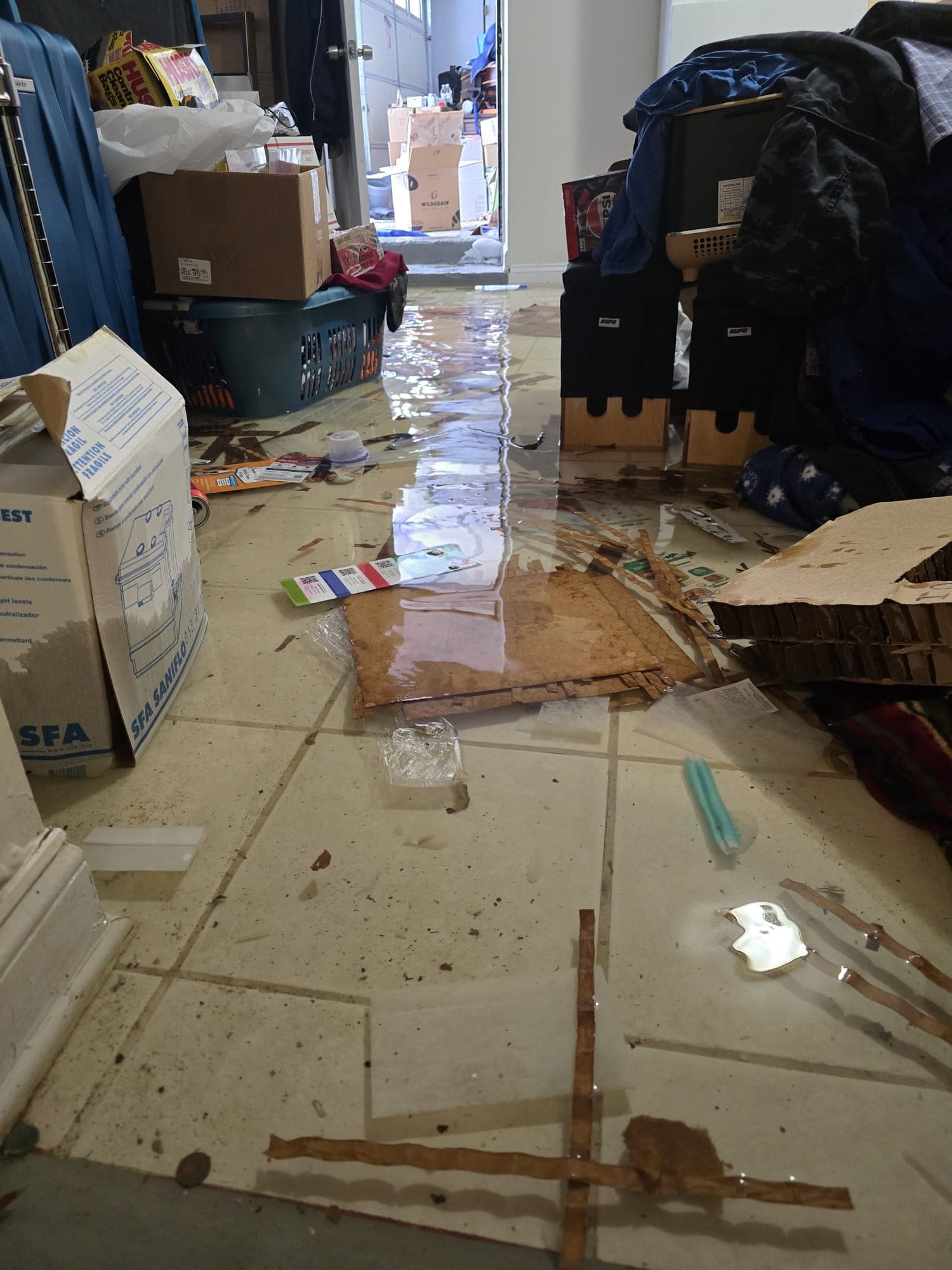
What counts as sewage water
Anything that came up through a toilet, floor drain, shower drain, or the sewer line is what the restoration standard calls Category 3 water. So is a septic overflow. So is floodwater from outside, because it has crossed streets, yards, and storm drains before it reached you. It does not matter how clear it looks. Cleanup is handled the same way for all of it.
What to stop doing right now
Every flush, every load of laundry, and every shower in the house adds to what is on the basement floor, because the blockage is downstream of all of them. Stop using water until a plumber has cleared the line or the municipal main is flowing again.
- Keep children and pets out of the area and close the door to it.
- Do not use a shop vac or household vacuum. It sprays fine droplets into the air and the vacuum is contaminated afterward.
- Do not run the furnace fan or a box fan pointed at the water. Moving air spreads what is in it.
- If you must go in to shut something off, wear rubber boots and gloves, and wash your hands and forearms with soap afterward. Cover any cuts first.
- Photograph the water, the drain it came from, and everything it touched, before anything is moved.
Who to call, and in what order
If the backup is inside your line, a plumber clears it. If neighbors have the same problem at the same time, the municipal main is likely the cause. Call the town or sewer authority, get the report number, and keep it. Some municipalities have a claims process for main backups and it starts with that call.
Sewer backup is generally excluded from standard homeowners policies unless you carry a water backup endorsement, which is inexpensive and common. Whether yours has it is a question for your declarations page or your agent, not for us. On covered losses we document the source and bill the carrier directly. A claim is not required to hire us, and many sewage cleanups are paid by the homeowner.
Then call for sewage cleanup. The line being cleared does not make the floor safe.
What can be saved and what can't
The rule is porous versus non-porous. Concrete, tile, sealed hardwood, metal, glass, and hard plastic can be cleaned and disinfected. Carpet and pad, cardboard, upholstered furniture, mattresses, particleboard, insulation, and the bottom section of drywall that touched the water are removed. It is not a judgment call. Bacteria in porous material cannot be reliably cleaned out of it.
Drywall is cut to a set height above the water line, usually to the next stud line, so the framing behind it can be cleaned and dried. Appliances that sat in the water need a technician to say whether they are safe to run.
How the cleanup goes
The crew works in protective gear with the area contained from the rest of the house. Standing water is extracted with equipment that is disinfected afterward. Porous materials go out in sealed bags. Hard surfaces are washed, then treated with an antimicrobial and allowed the dwell time on the label. Then the area is dried with air movers and dehumidifiers, with moisture readings each day, because wet framing behind a cleaned wall grows mold a week later.
When it reads dry, the area is checked again and you get the documentation: photos before and after, the readings, and the list of what was removed. That paperwork is what the adjuster, or the town, wants to see.
What the CDC says about sewage contact
The CDC's guidance on sewage contact is direct: it can cause stomach illness and skin and wound infections, and the protection is soap, gloves, boots, and keeping it off your hands and out of your mouth. That is why the job is done in gear and why the porous material leaves. It is not a reason to panic. It is a reason to leave the cleanup to a crew in protective gear.
If there is sewage on the floor now, call. Same-day emergency response, six days a week.
Related service
Sewage Cleanupin the Hudson Valley & North Jersey →Sewage backups and overflows cleaned to IICRC Category 3 standards: protective equipment, containment, removal of contaminated porous materials, EPA-registered disinfection, and lawful disposal.
Not sure what you're looking at?
Same-day emergency response for active water, Sundays included.