
Same-Day Emergency Response
Burst & Frozen Pipe Water Cleanup
Burst pipe, frozen line, or a failed appliance hose: stop the water, then dry what it soaked.
Serving Orange, Rockland, Westchester & Dutchess counties in NY and Bergen, Passaic, Essex & Hudson counties in North Jersey.
At a glance
Hudson Valley winters freeze pipes; appliance hoses fail in every season. Either way the steps are the same: shut the water down (we'll walk you to the main by phone), map where it spread with thermal imaging, open only what's wet, and dry the cavities before mold starts.
Content reviewed July 2026.
Call between 8am and 6pm, Sunday through Friday, and a person picks up. Closed Saturdays for Shabbat.
- IICRC Certified
- Licensed
- Bonded
- Insured
- Eco-Conscious Products
Same-day emergency response
Response promise
8 counties
NY & NJ service area
Since 2019
Locally owned & operated
IICRC Certified
Certification
Heavy rain in the forecast
Before and after a storm
We schedule crews around the rain forecast. A few things done before the storm save a basement, and a few things done right after save the insurance claim.
Before the rain
- Move stored boxes, rugs, and anything you care about off the basement floor.
- Test the sump pump by pouring a bucket of water into the pit. If it does not run, that is the problem to fix before the rain.
- Clear the window wells and the downspout outlets. Know where the main water shutoff and the electrical panel are.
If water gets in
- Do not go into standing water until the power to that area is off.
- Photograph the water line and everything it touched before you move or throw anything out.
- Call for extraction the same day. Wet drywall and carpet pad grow mold within days.
Full walkthrough: what to do when your basement floods in a storm. Water in the house now? Call (845) 262-6530. Same-day emergency response, six days a week.
The work
What's included
Cleanup and drying for burst and frozen pipes, plus the appliance failures that cause most indoor floods: washing machine hoses, water heaters, dishwasher and fridge lines. We trace, dry, document, and rebuild.
- Frozen and burst pipe cleanup through Hudson Valley winters
- Appliance failures too: washer hoses, water heaters, dishwasher and ice-maker lines
- Phone walk-through to your main shut-off before the crew arrives
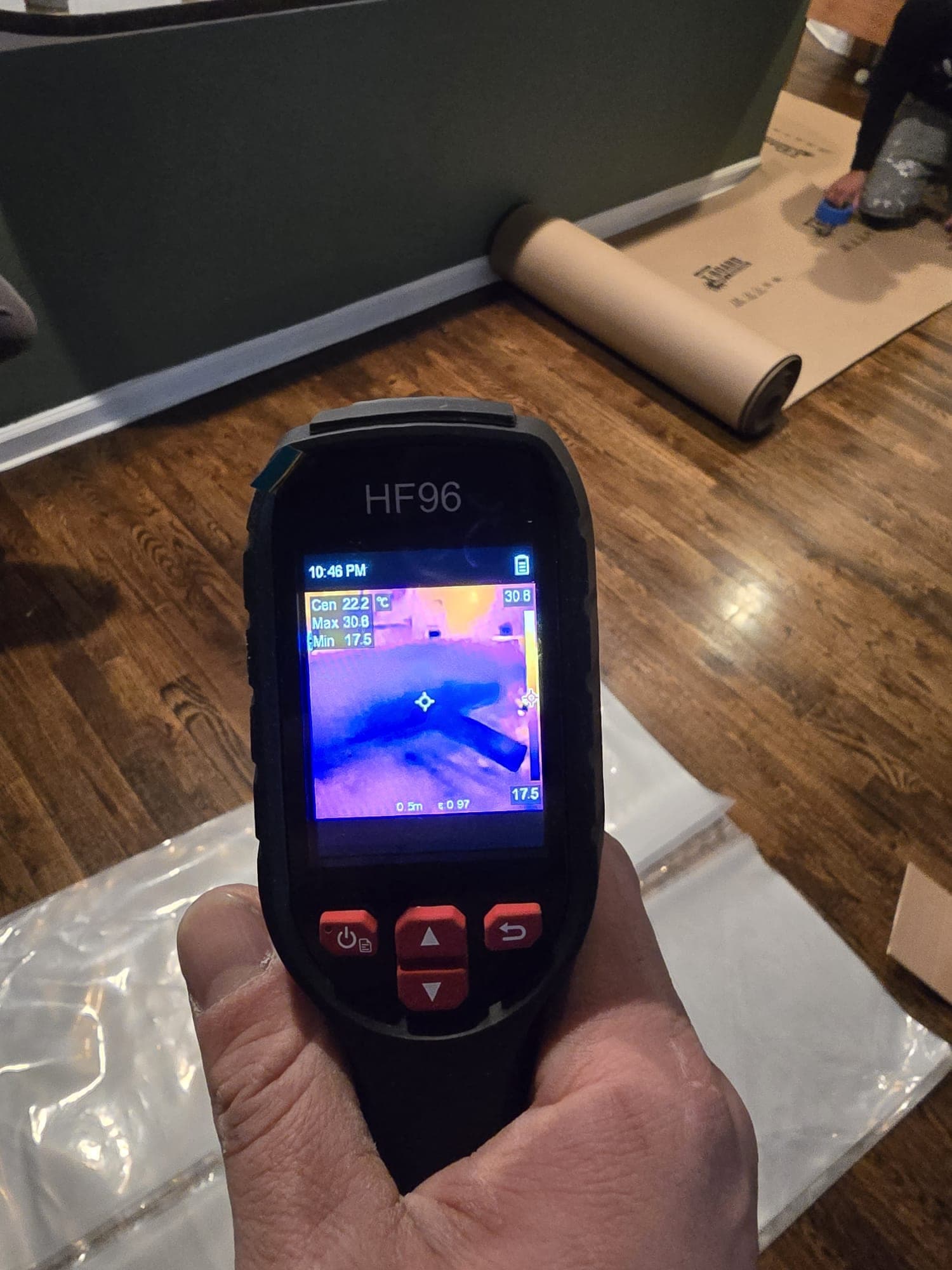
- Thermal imaging traces the water's path through walls and ceilings
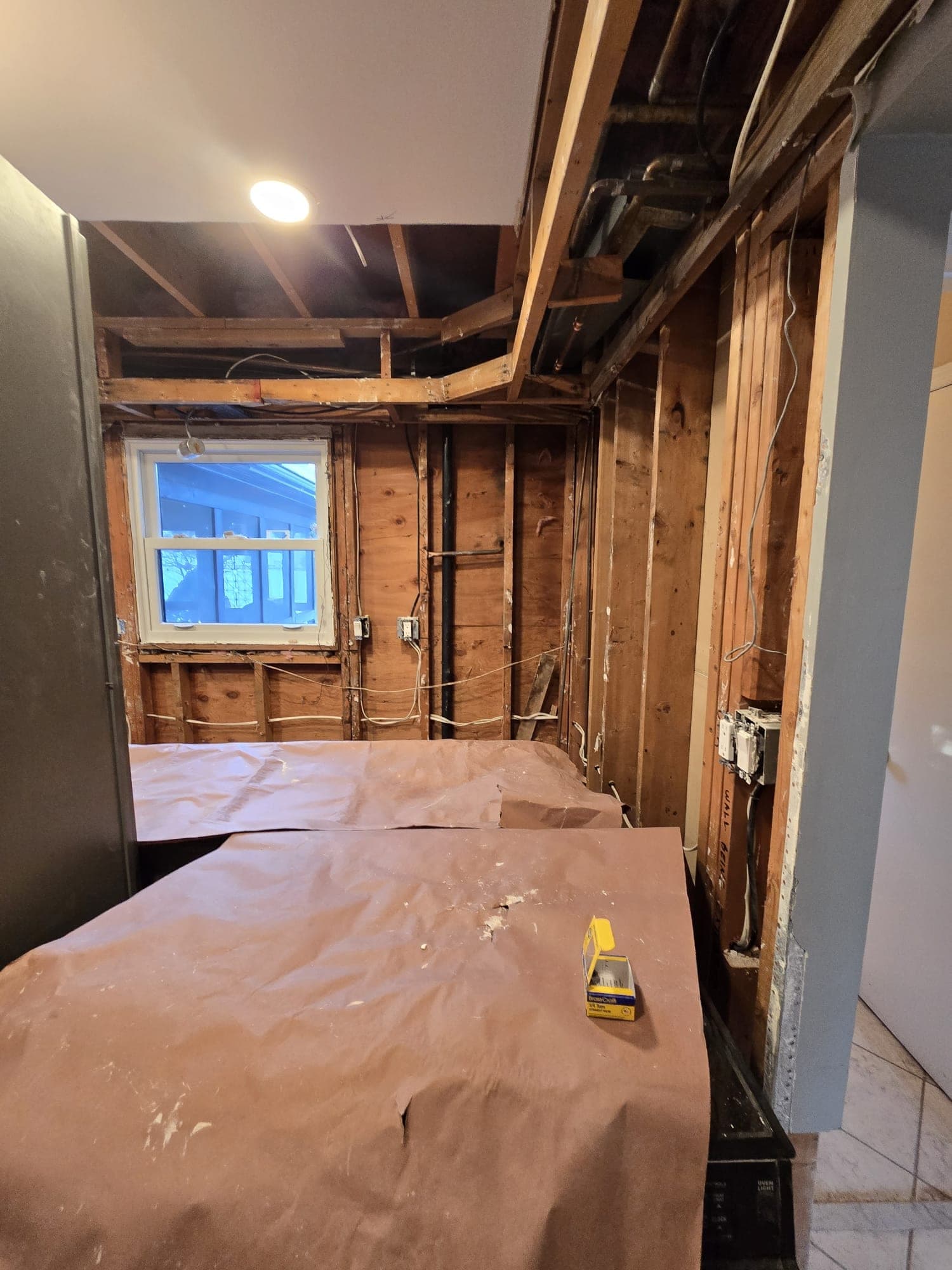
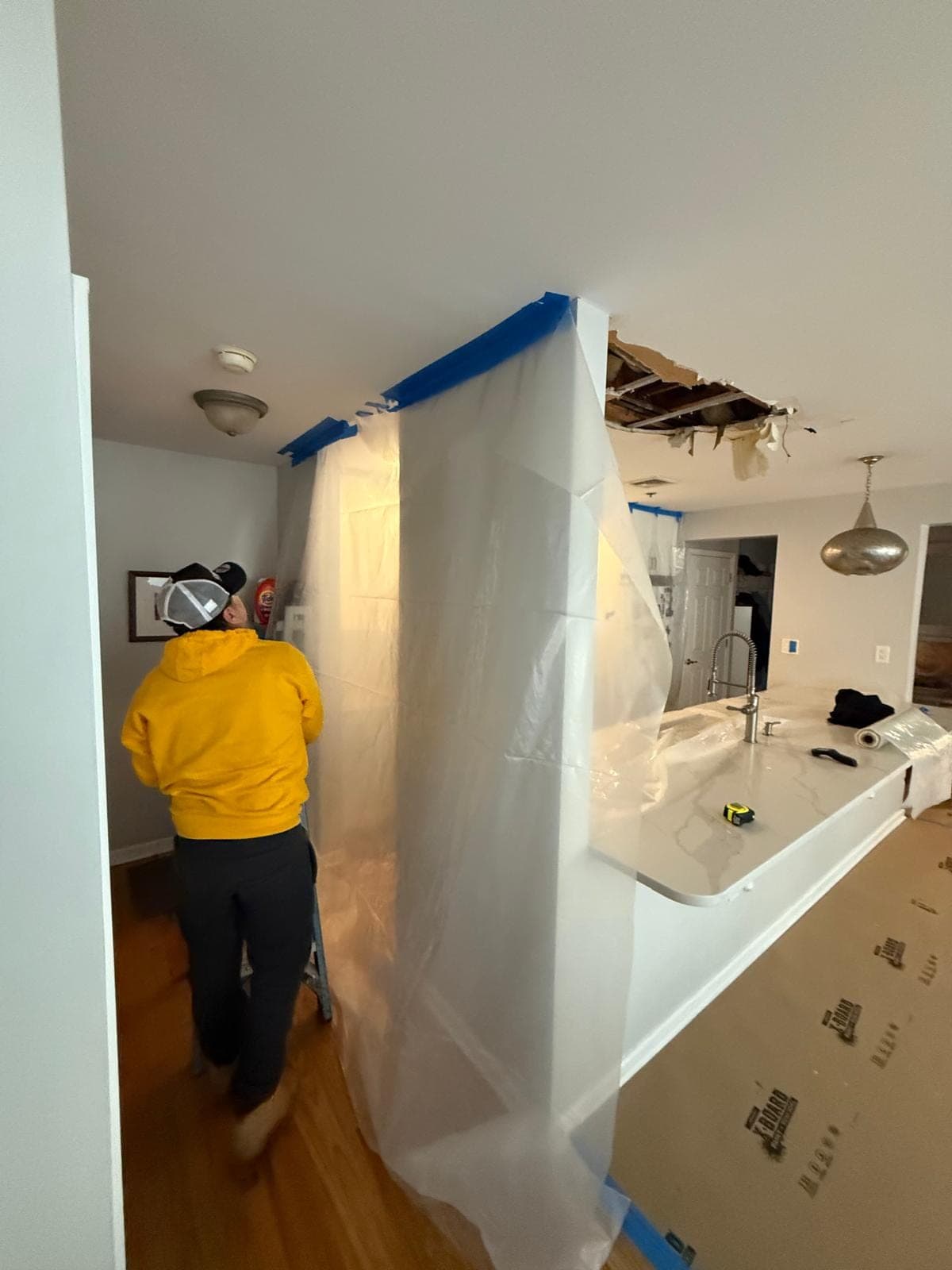
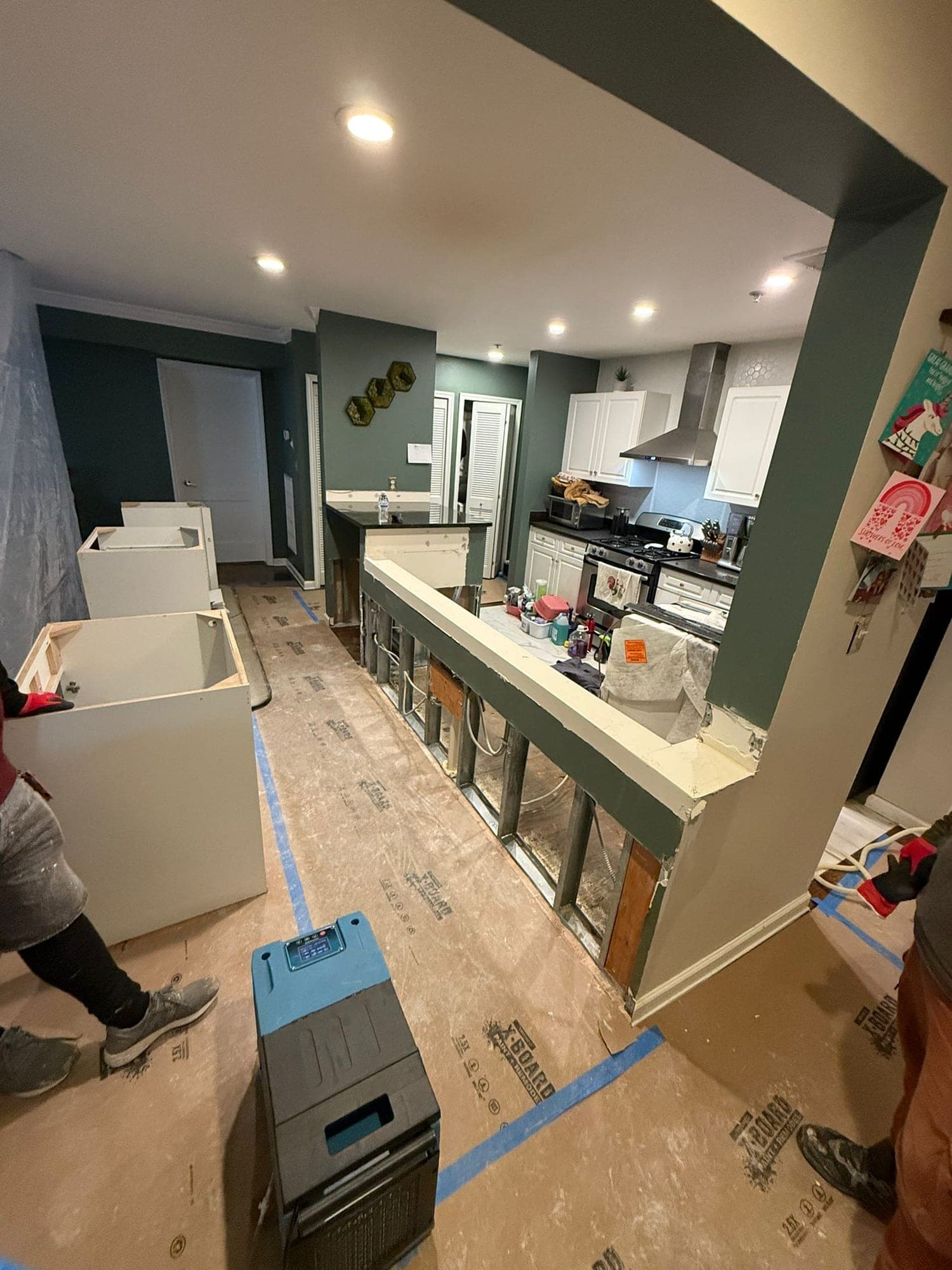
- Cavities opened cleanly and only as far as the water reached
- We dry while your plumber repairs, on one timeline and one insurance file
Process
What happens after you call.
- 01
Shut it down
The first job is to stop the water. We stay on the phone and walk you to the main shut-off. For a supply-side burst, closing that valve is the most useful thing you can do before we arrive.
- 02
Trace the water
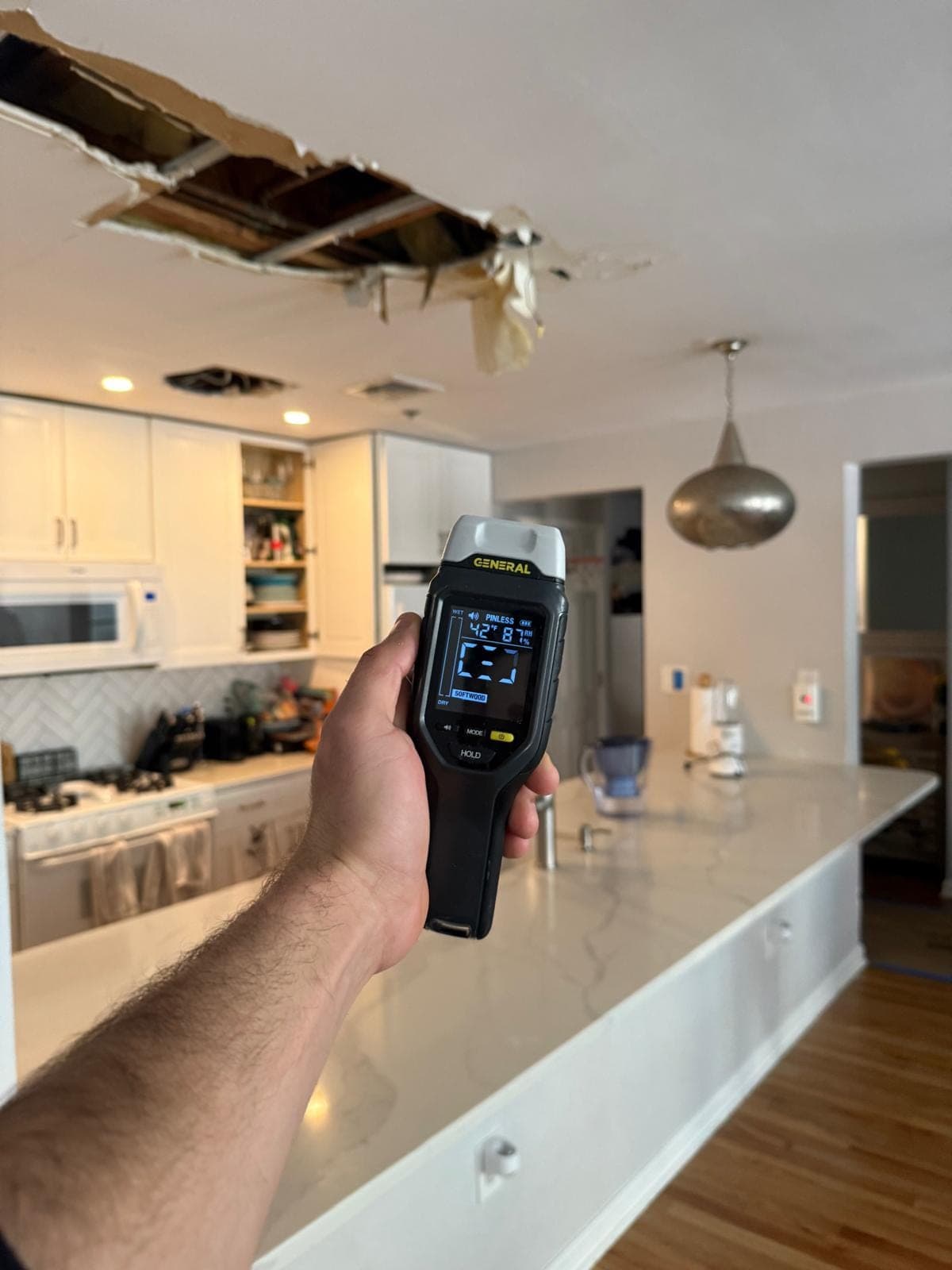
A pipe that burst inside a wall wets materials you can't see. Thermal imaging and moisture meters map where the water went down the stud bays, across the ceiling, and under the floor, so we open the wet sections and leave the dry ones alone.
- 03
Open & extract
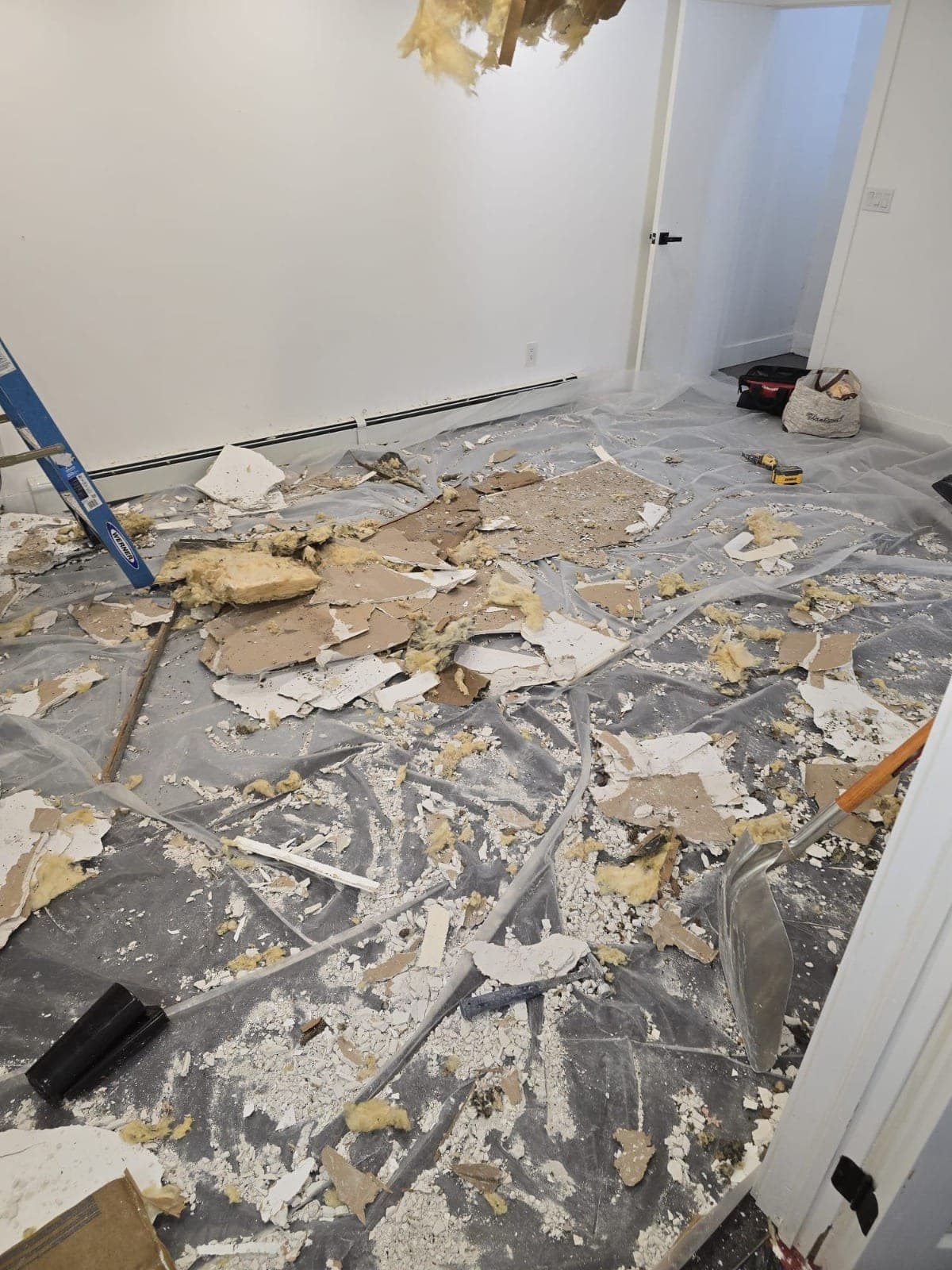
Controlled openings where the moisture map calls for them, extraction of standing water, and removal of saturated insulation. Wet fiberglass will not dry inside a closed wall.
- 04
Dry the cavities
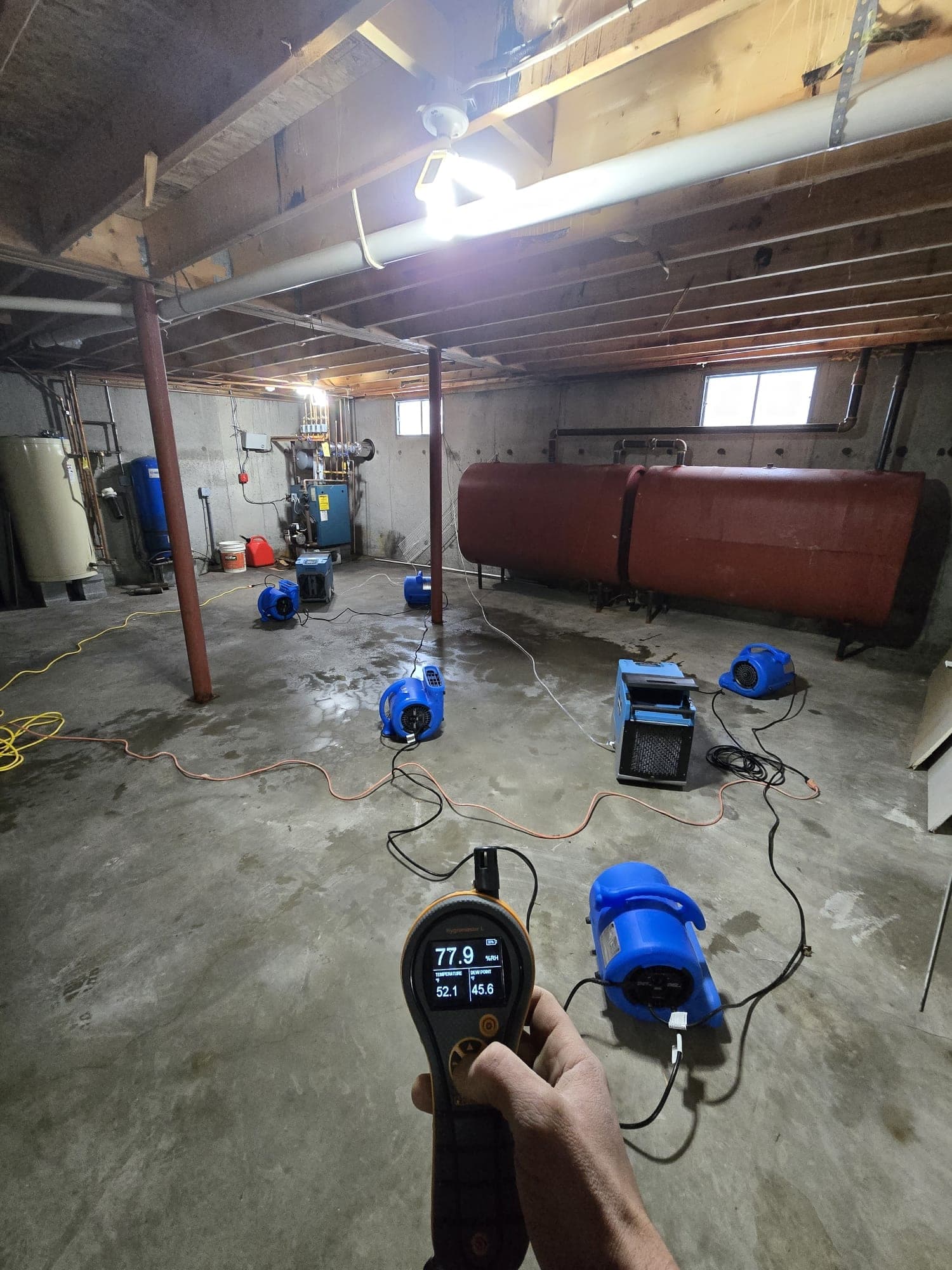
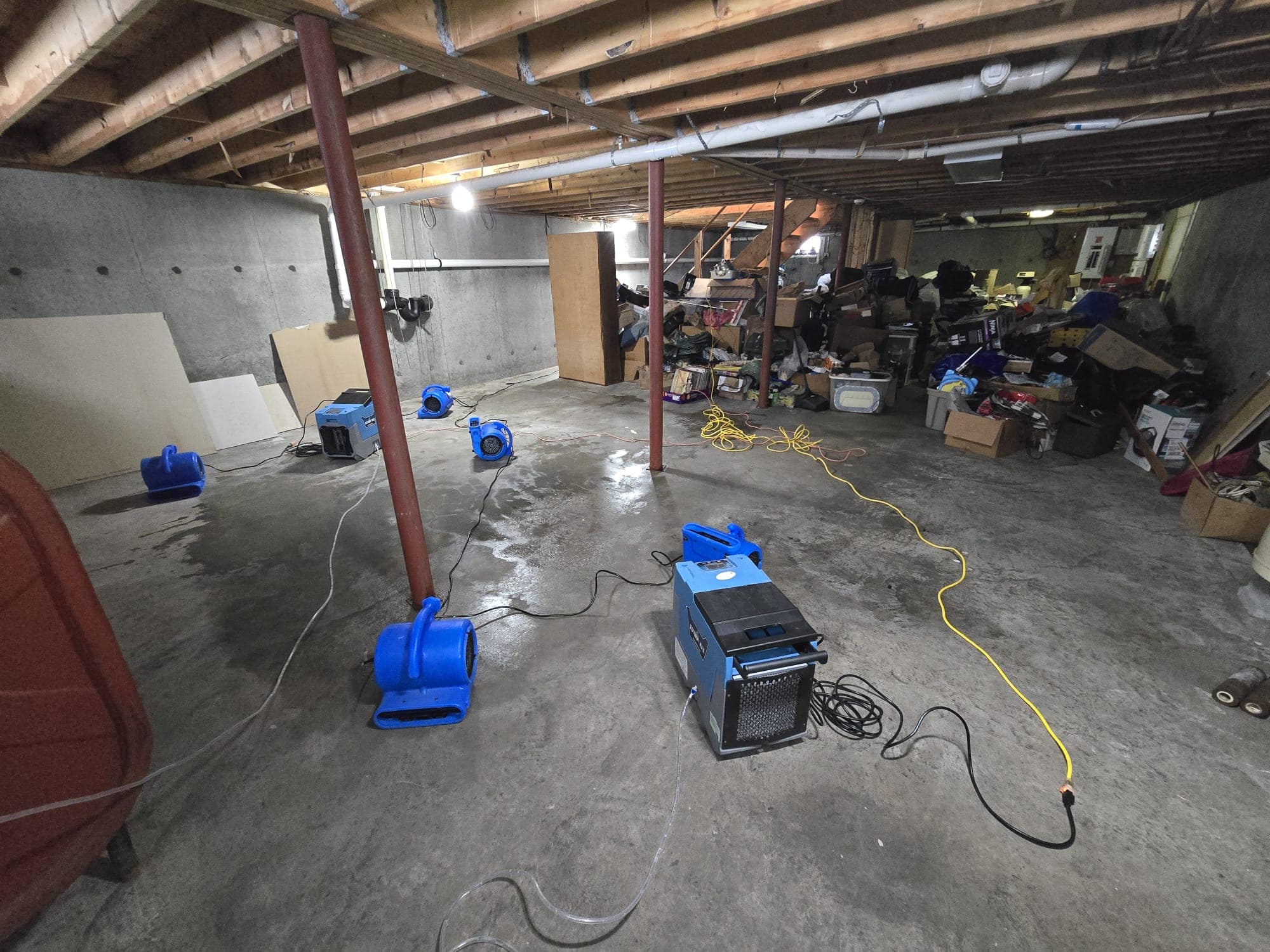
Directed airflow into the opened cavities plus dehumidification for the room, with daily meter readings on the framing until it hits dry standard. Nothing gets closed up while the studs still read wet.
- 05
Document & rebuild
Photos, moisture logs, and an itemized scope for the insurance claim. Then our build-back crew closes the walls, matches the paint, and puts the room back together.
Insurance
We work with your insurance, and we bill them directly
- 01
Call us
We answer, ask what happened, and get a crew moving. Same-day emergency response on active water.
- 02
We document everything
We take moisture readings and photos and write up a scope of work before drying starts, so your adjuster has the file from day one.
- 03
We bill your insurer directly
We work directly with your insurance company on covered water and mold claims, so you're not fronting the full cost and chasing reimbursement.
Your deductible is still yours to cover, and we'll tell you that number before any work starts rather than after. You also don't need a claim to hire us. Plenty of our jobs are paid directly by the homeowner, and after the free inspection we'll say which way makes more sense for the damage you have.
Common problems
What we get called about most.
A pipe froze in an exterior wall while you were away
The freeze-burst you find Sunday night after a weekend away, with water running for hours or days. We extract, open the wall along the wet path only, dry the framing, and document the timeline, because how long it ran is the first thing your adjuster will ask.
Ceiling bulging under the upstairs bathroom
That sagging bubble of paint is holding water. Don't poke it over the couch. Call and we'll drain it in a controlled way, find the supply or drain line that failed, and dry the joist bay so the repair stays drywall-deep.
Washing machine hose let go mid-cycle
A burst fill hose flows like an open faucet until someone finds it. Laundry rooms share walls with finished space, so we meter the neighboring rooms too, dry it all as one loss, and suggest the braided stainless hoses that make a repeat much less likely.
The water heater rusted out and quietly soaked the room
Tank failures often start as a slow weep before the bottom gives out. We dry the platform and the surrounding materials and report what the meters show. A leak that ran for weeks is a different claim than one that started yesterday, and the readings tell us which you have.
Who's showing up
Local and independent since 2019.
The person on the phone is the one planning your job, and the scope and moisture readings come from the crew that does the work.
- IICRC Certified
- Licensed
- Bonded
- Insured
- Eco-Conscious Products
Related services
More of our water damage services.
Part of our Water Damage Restoration service — see the full picture →
Emergency Water Removal →
Standing water pumped and extracted the same day, usually within hours of your call.
Basement Flood Cleanup →
Pumped out, dried, and explained: you'll know why it flooded before we leave.
Sewage Cleanup →
Sewage backups handled to IICRC Category 3 standards, with containment and full protective gear.
Storm Damage Cleanup →
Roof leaks, wind-driven rain, and flash flooding, cleaned up after the storm passes.
Structural Drying & Dehumidification →
Dehumidifiers, air movers, and daily moisture readings until the structure hits dry standard.
Restoration Repairs & Build-Back →
From dried-out studs to a room you'd never know flooded.
FAQ
Questions we get most.
Does homeowners insurance cover water damage?
Usually, yes, as long as the damage was sudden and accidental: a burst pipe, a failed water heater, a washing machine hose that split. Policies generally exclude gradual damage, like a slow leak that ran for months or deferred maintenance, and they exclude flooding from outside, which needs a separate flood policy. When we inspect, we document the cause of loss carefully, because that's the first thing the adjuster looks at.
Do I still have to pay my deductible?
Yes. The deductible is your agreed share of a covered loss, and it applies before insurance pays anything. Be wary of any contractor offering to waive or absorb it; that misrepresents the claim and can put you at risk. If the damage is small enough that filing makes no sense against your deductible, we'll say so after the free inspection.
What should I do in the first few hours after water damage?
Stop the water if you safely can, at the main shut-off or the fixture valve. If water is near outlets, cut power to that area at the breaker, but never stand in water to do it. Move what you can off wet floors, and don't run a household vacuum on standing water. Then call (845) 262-6530; the sooner extraction starts, the more we can save.
What should I do if my basement floods during a storm?
Stay out of the water until the power to that area is off. Photograph the water line and everything it touched before you move anything. Then call (845) 262-6530. We schedule crews around the rain forecast and respond the same day, six days a week. Rising water from outside is usually a flood policy rather than homeowners insurance, and a sewer backup is often a separate rider, so note where the water came in. Our storm flooding guide walks through the first hours step by step.
How do I shut off the water to my house?
Find the main shut-off valve now, before you need it. In most homes around here it's in the basement where the water line enters, near the meter: a round wheel handle or a lever. Turn the wheel clockwise, or turn the lever a quarter-turn so it sits across the pipe. For a single fixture, use the small valve under the sink or behind the toilet. If the main is stuck or you can't find it, call your water utility.
Will someone actually answer if I call in the middle of the night?
The line is answered 8am to 6pm, Sunday through Friday, and you get us rather than an answering service. If water comes in overnight, shut off the main valve if you can reach it safely, move what you can out of the wet area, and call when we open at 8am — morning emergency calls are dispatched first and get same-day response. If the situation is dangerous, call 911 or your utility company.
How do you find moisture I can't see?
With moisture meters and thermal imaging. Water moves through drywall, along subfloor, and into wall cavities that look fine from inside the room. The meters test the materials themselves, thermal imaging shows the cool damp areas behind walls and under floors, and we dry against what those readings show. A surface that feels dry tells you very little; the reading inside the material is what decides when drying is done.
Our work
Emergency? Call first
If water is on the floor, skip the form.
Call (845) 262-6530. We'll ask what happened, tell you what to do right now, and get a crew moving. The line is answered six days a week. Use the form for anything that can wait.
Same-Day Emergency Response. Closed Saturdays for Shabbat.