
5 min read
Water heater leaking or burst: first steps and cleanup
By the Strauss Cleaners crew·Updated September 2, 2026
A tank water heater holds 40 to 80 gallons, and when the tank fails it keeps refilling from the supply line until someone closes the valve. Most of these calls come from a utility room or a finished basement. Here is what to do in the first ten minutes and what happens after.
Short answer
Close the cold water valve on top of the heater, then turn off the gas or the breaker. Photograph the heater's label and the leak before you move anything. Replacing the heater is a plumber's job; ask your insurer how your policy treats the water damage it caused. Get the floor, walls, and anything under the tank dried within a day or two.
Shut it down, in this order
Close the cold water inlet valve on the pipe entering the top of the heater. That stops the refill. If you cannot find it or it will not turn, close the main water shutoff for the house. Then cut the energy: on a gas heater turn the control knob to Off, and on an electric heater switch off its breaker. An electric element running in an empty tank burns out, and standing in water near a live appliance is not worth the risk.
If the water is near an electrical panel or outlets, kill the breakers first and the valve second.
Where the water goes
A heater on a utility room floor with a working floor drain makes a mess and not much more. A heater in a finished basement, a closet off a hallway, or an attic is a different job. The water runs under the tank into the slab or subfloor, under vinyl and laminate, into the carpet in the next room, and down through a ceiling if the heater is on an upper floor. The damage you can see from the doorway is usually a fraction of what a moisture meter finds.
Check the rooms that share a wall with the heater and the room directly below it. Press on the baseboard and the bottom of the drywall. If it gives, it is wet.
What to photograph
Take a picture of the label on the side of the heater. The serial number encodes the manufacture date and adjusters ask for it. Then the leak point, whether that is the tank seam, a fitting, or the relief valve, and the spread of water on the floor and up the walls. Then each room it reached, before anything is moved, and the items on the floor.
The insurance side, in general terms
A tank that fails suddenly is the textbook sudden and accidental water loss, and insurers commonly treat the damage it causes to floors, walls, and contents differently from the heater itself, which is a maintenance item. A slow drip that ran for months and stained the floor is usually looked at differently again, because carriers treat long-term seepage as a separate question. How your own policy handles each of those is your insurer's decision, so ask your agent before you count on anything. We document the source and bill the carrier directly on covered claims, and if you would rather pay directly and skip the claim, that works too.
Our guide on water damage insurance claims covers the documentation step by step.
The cleanup
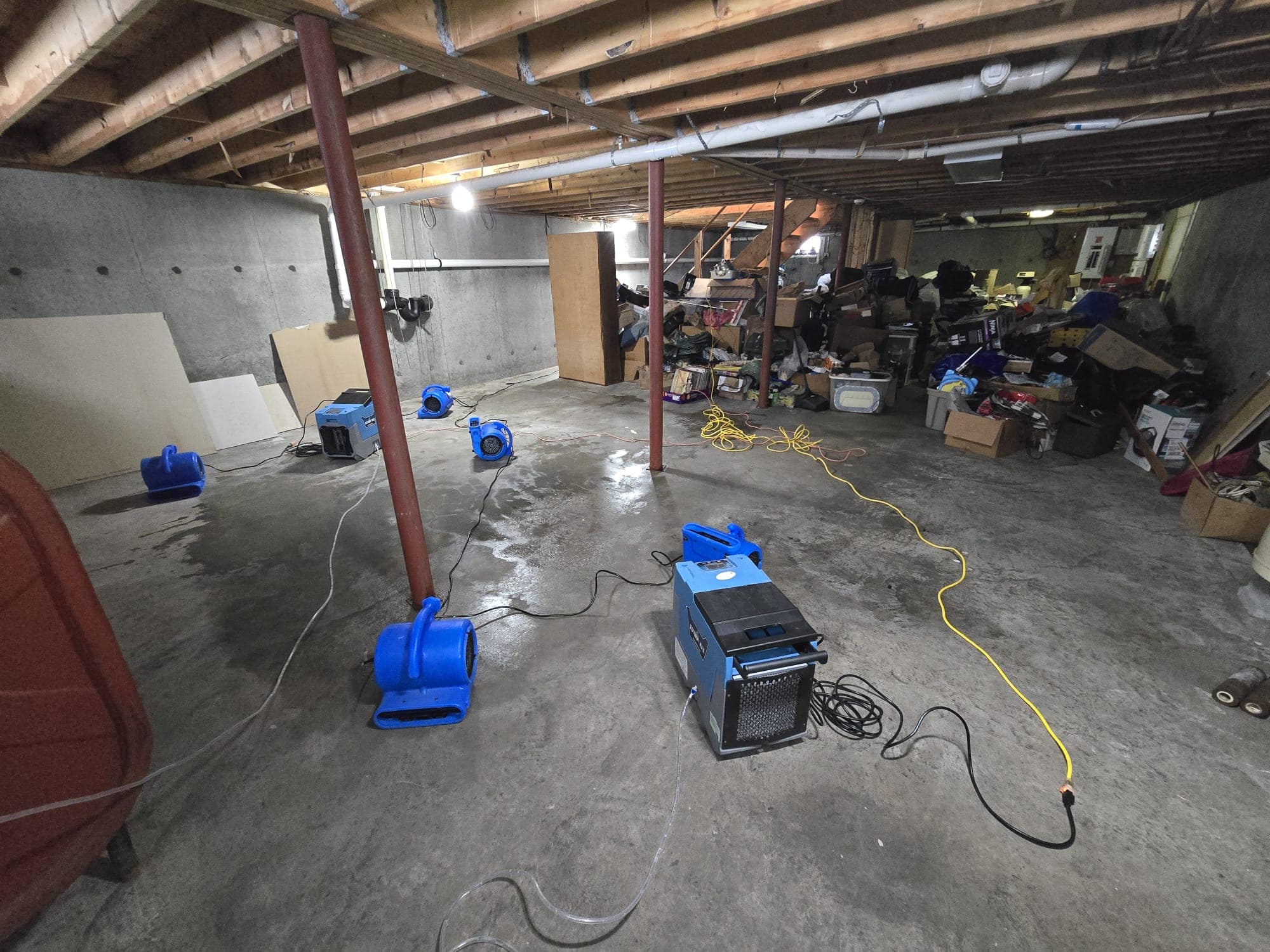
Standing water is extracted. Wet carpet pad comes out, and carpet is either dried in place or removed depending on how long it sat. Vinyl and laminate over a wet subfloor usually have to come up, because they trap the water underneath. Drywall that wicked water is cut back to dry material. Then air movers and dehumidifiers run until the slab, subfloor, and framing read dry on the meter, which typically takes several days.
Replacing the heater is a plumber's job and we are glad to coordinate the timing. Once the new one is in, a drain pan piped to a drain and a leak sensor on the floor are cheap and they turn the next failure into a puddle instead of a claim.
Why heaters fail
Most tank heaters last about ten to fifteen years. The steel tank corrodes from the inside once the sacrificial anode rod is used up, and the first sign is often a rust-colored puddle at the base. Fittings and the temperature and pressure relief valve fail too, and those are repairs rather than replacements. If your heater is past ten years old and you have never had the anode checked, have a plumber look at it before it fails.
If there is water on the floor now, call. Same-day emergency response, six days a week, and the inspection is free.
Related service
Water Damage Restorationin the Hudson Valley & North Jersey →Full-service water damage restoration: emergency water removal, mitigation and structural drying verified with moisture meters, cleanup, and complete build-back. IICRC-certified, same-day response, and we bill your insurance directly.
Water Damage in your town
Not sure what you're looking at?
Same-day emergency response for active water, Sundays included.