
6 min read
How to prevent basement flooding in NY & NJ
By the Strauss Cleaners crew·Updated July 28, 2026
Most of our basement customers call us after the flood, and the cause usually comes down to the same short list. This is that list. Most of it is cheap compared to one finished-basement flood, and all of it comes from what we find failing in Orange, Rockland, and Westchester counties and across North Jersey.
Short answer
Most basement floods trace to gutters, grading, or a sump pump that quit mid-storm. Clean the gutters, extend the downspouts, slope soil away from the house, test the sump and add a battery backup, and put water alarms near every failure point. On municipal sewer, add a backwater valve.
Where basement water comes from
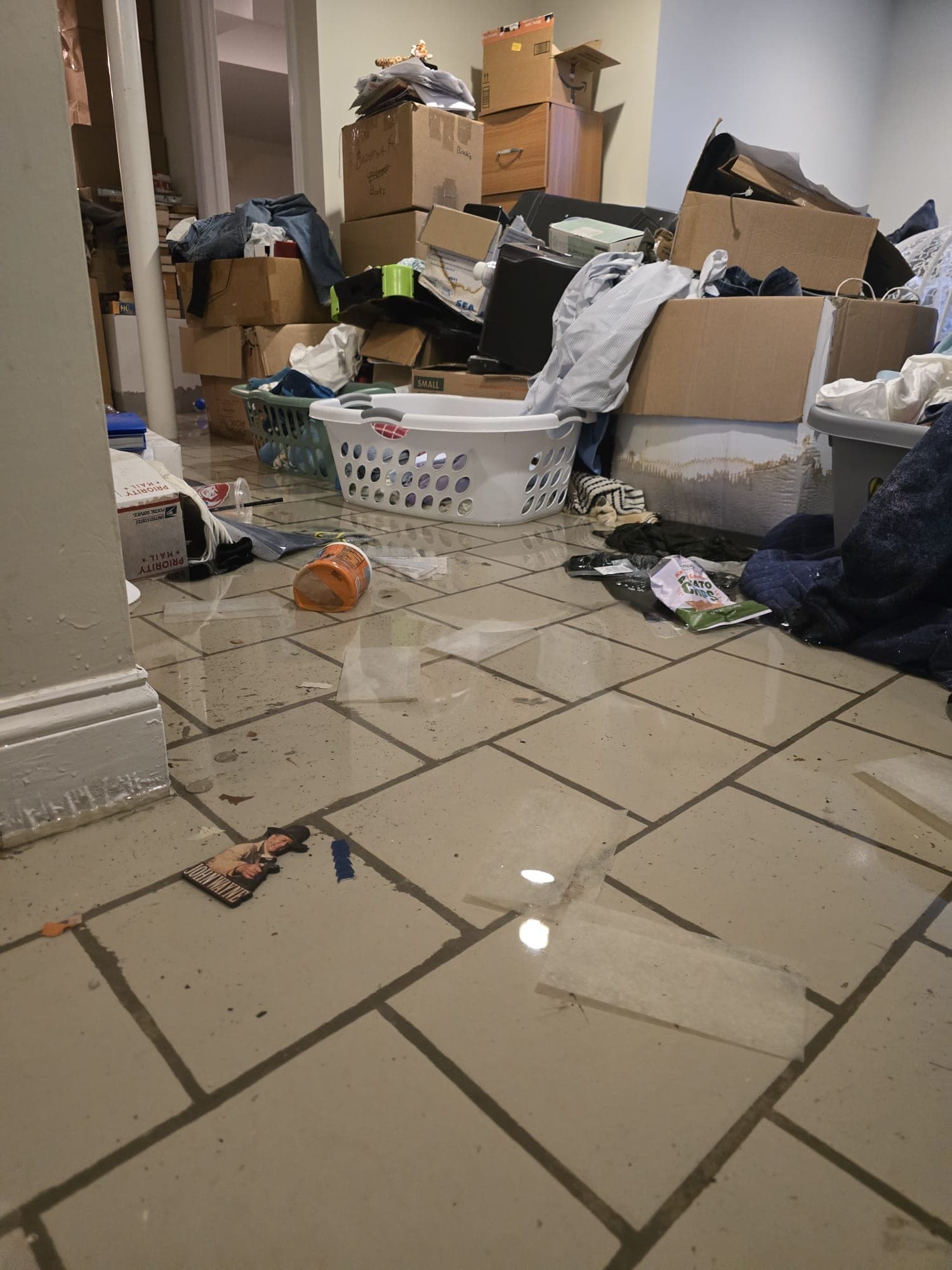
Basement floods have surprisingly few root causes: surface water that should have been routed away (gutters, downspouts, grading), groundwater that overwhelmed or outlived the sump system, sewer water that backed up through floor drains, and plumbing failures inside the house, meaning burst pipes and appliance lines above or in the basement.
Each one has a different fix, which is why 'waterproof the basement' as a single project so often disappoints. Work through the causes from cheapest fix to most expensive and you'll usually find yours.
Gutters and downspouts: the cheapest fix on this list
A lot of wet basements are roof-water problems. Clogged gutters overflow at the foundation, and downspouts that end at the wall put the whole roof's rainfall into the soil beside your basement. The fix costs almost nothing: clean the gutters spring and fall (add a summer check if you're under big trees), and extend every downspout so it discharges several feet away from the foundation, onto ground that slopes away.
When we pump out a basement after a summer downpour, the first thing we look at outside is where the downspouts end. It's the most common single finding, and the one homeowners can fix the same weekend.
Grading: the ground should fall away from the house
Soil settles over the years, especially in the backfill zone right against the foundation, and yards that once shed water start collecting it. The rule is simple: for the first several feet out from the wall, the ground should visibly slope away. Low spots, mulch beds built up into basins, and patios that pitch toward the house all send water to the one place it will always find a way in.
Regrading a trouble spot with a few wheelbarrows of soil is a modest job that outperforms far more expensive interior fixes, because it keeps water away from the foundation instead of dealing with it after it's inside.
The sump pump: test it before storm season
If your basement depends on a sump pump, that pump is a single point of failure, and the most common basement flood we clean up is a sump that quit during the storm. Test it a few times a year: lift the float or pour a bucket of water into the pit, and confirm it kicks on, pumps down, and shuts off. Listen for grinding. Check that the discharge line daylights somewhere downhill, and in winter make sure it hasn't frozen shut.
Then there's the failure testing can't catch: power. The storms that flood basements are the same storms that knock the power out, so a battery backup pump (or a water-powered backup where pressure allows) matters. Pumps wear out too. If yours is past roughly a decade and runs often, replace it before it fails on you.
A backwater valve if you're on municipal sewer
In heavy rain, aging and combined municipal sewer systems can surcharge. When the street main is full, flow reverses toward the lowest fixtures connected to it: your basement floor drain, laundry sink, or toilet. That's the worst kind of flood, because it's Category 3 sewage, and everything porous it touches has to come out under sewage cleanup protocols.
The engineered fix is a backwater valve on the building's sewer line: a one-way flap that lets your wastewater out but blocks the street's from coming back. It's a licensed-plumber job and, on flood-prone blocks, one of the highest-value protections a basement can have. If your neighborhood has a history of backups, ask a plumber about one before the next wet season.
Put water alarms where leaks start
Battery water alarms are inexpensive and take a minute to place. They sound off (or ping your phone, in the wifi versions) when the contacts get wet. Put one next to the sump pit, behind the washing machine, under the water heater, and near any basement bathroom. Most of the big losses we see weren't dramatic failures; they were slow ones that ran for hours or days because nobody was downstairs.
A water heater that fails while you're at work, or a washer hose leaking into a wall, gets caught in minutes instead of hours. While you're down there, replace rubber washing machine hoses with braided stainless ones. A burst hose is one of the failures we clean up every year.
The seasonal pattern in NY and NJ
Late winter and early spring bring snowmelt on frozen ground plus rain, which is when sumps get overwhelmed and yards stay saturated. Summer brings short, heavy downpours, the kind that overrun a clogged gutter and settled grading. Fall nor'easters bring the long soaking storms that surcharge sewers. Deep winter adds the freeze: burst pipes above basements and sump discharge lines frozen solid.
So walk the gutters and grading each spring and fall, test the sump before the spring melt and before hurricane remnants arrive, and winterize outdoor faucets and vulnerable pipe runs before the first hard freeze. Storm damage cleanup keeps us busy after every one of these seasons, and most of those jobs had a cheap fix on this list.
If it floods anyway
None of this makes a basement flood-proof. If you're standing at the top of the stairs looking at water, the steps are in our guide to the first 24 hours after water damage. Short version: stay out of water that could be electrically live or sewage-tainted, stop the source if you safely can, and call. Our basement flood cleanup crews pump out and dry below-grade spaces with equipment sized for them. Same-day response, six days a week: (845) 262-6530.
Related service
Basement Flood Cleanupin the Hudson Valley & North Jersey →Basement flood cleanup for finished and unfinished spaces: pump-out, contents triage, drying sized for below-grade rooms, and a straight answer about the sump, grading, or gutter problem that caused it.
Not sure what you're looking at?
Same-day emergency response for active water, Sundays included.