
Dutchess County, NY · ~45 min away
Mold Remediation & Removal in Hopewell Junction, NY
Sealed containment, removal of what's colonized, and a fix for the moisture behind it.
Dutchess County, NY · ~45 min away
Mold Remediation & Removal in Hopewell Junction, NY
Mold grows because something is wet, so the first job is finding the water. Removal happens under sealed containment, and the moisture source gets fixed before we call it done. Hopewell Junction is about 45 minutes out for us.
The subdivisions have block or poured foundations with finished lower levels, family rooms, and utility rooms with the water heater on the floor. A failed pump or heater soaks carpet and drywall in a room people use every day.
Free inspection with a written scope before any work begins. Covered claims are billed directly to your insurance carrier.
Process
How the job goes.
Containment goes up first, the affected material comes out second, and the moisture source gets fixed before we finish. Here's the short version; the service page explains each step and why the order matters.
- 01
Inspect & find the moisture
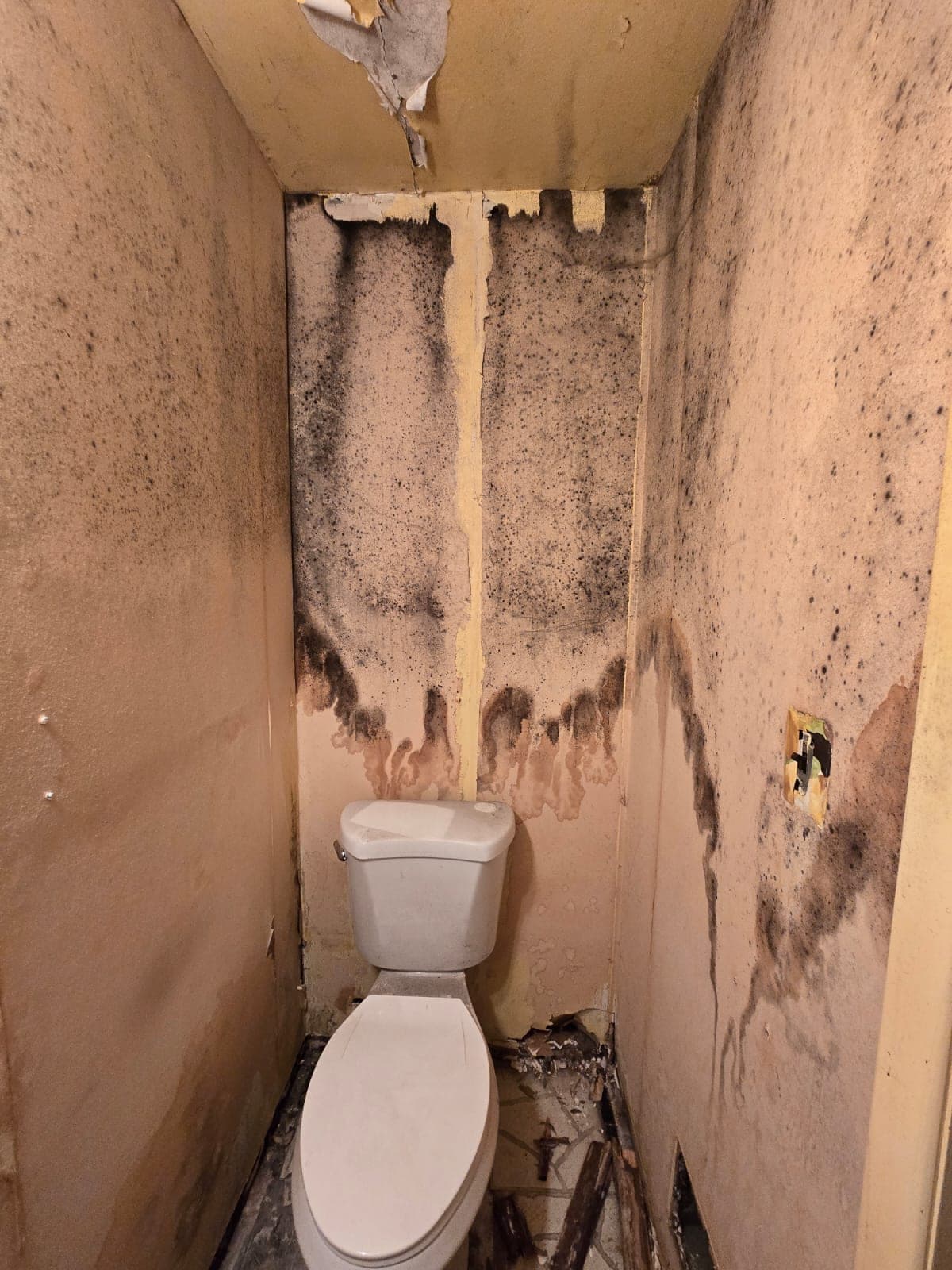
Every mold job starts as a water investigation. Moisture meters and thermal imaging trace where the water comes from: a leak, condensation, ground moisture, or a bath fan venting into the attic. Remove the mold without stopping the water and it grows back.
- 02
Contain the work area
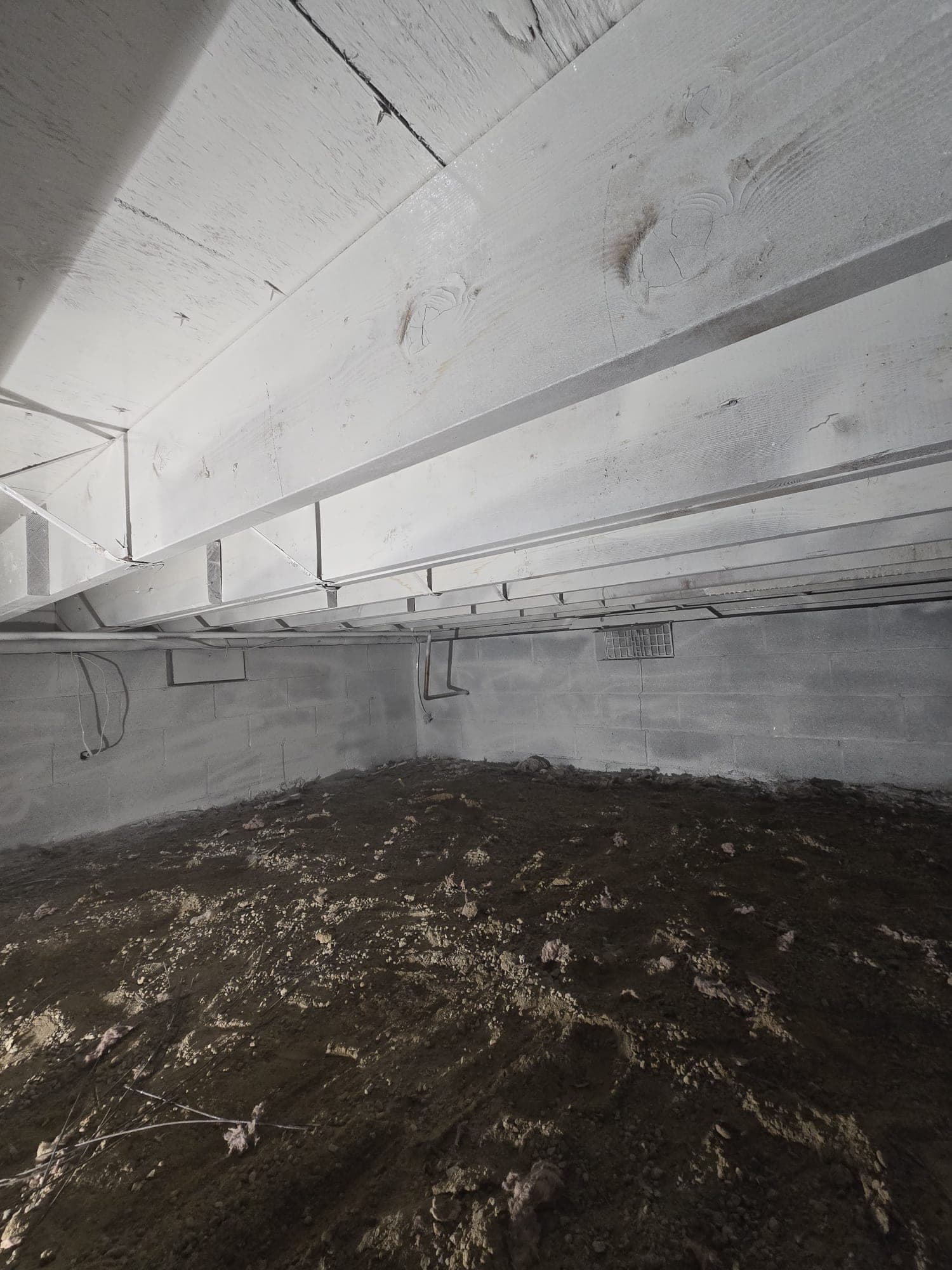
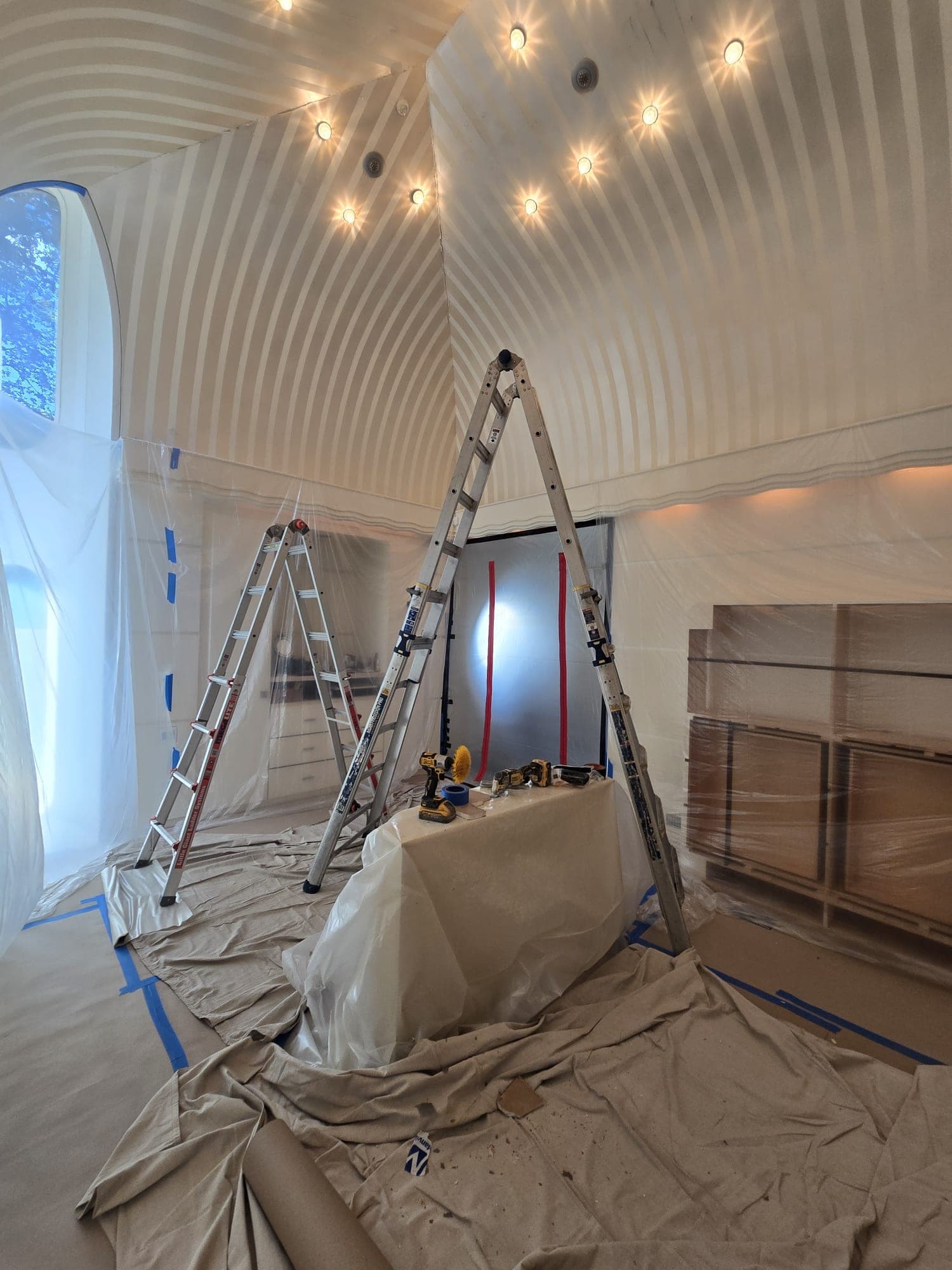
Plastic containment seals the affected area, and negative air machines with HEPA filtration keep airflow moving into the zone rather than out of it. Without containment, the work itself spreads spores into rooms that were clean.
- 03
Remove what's colonized
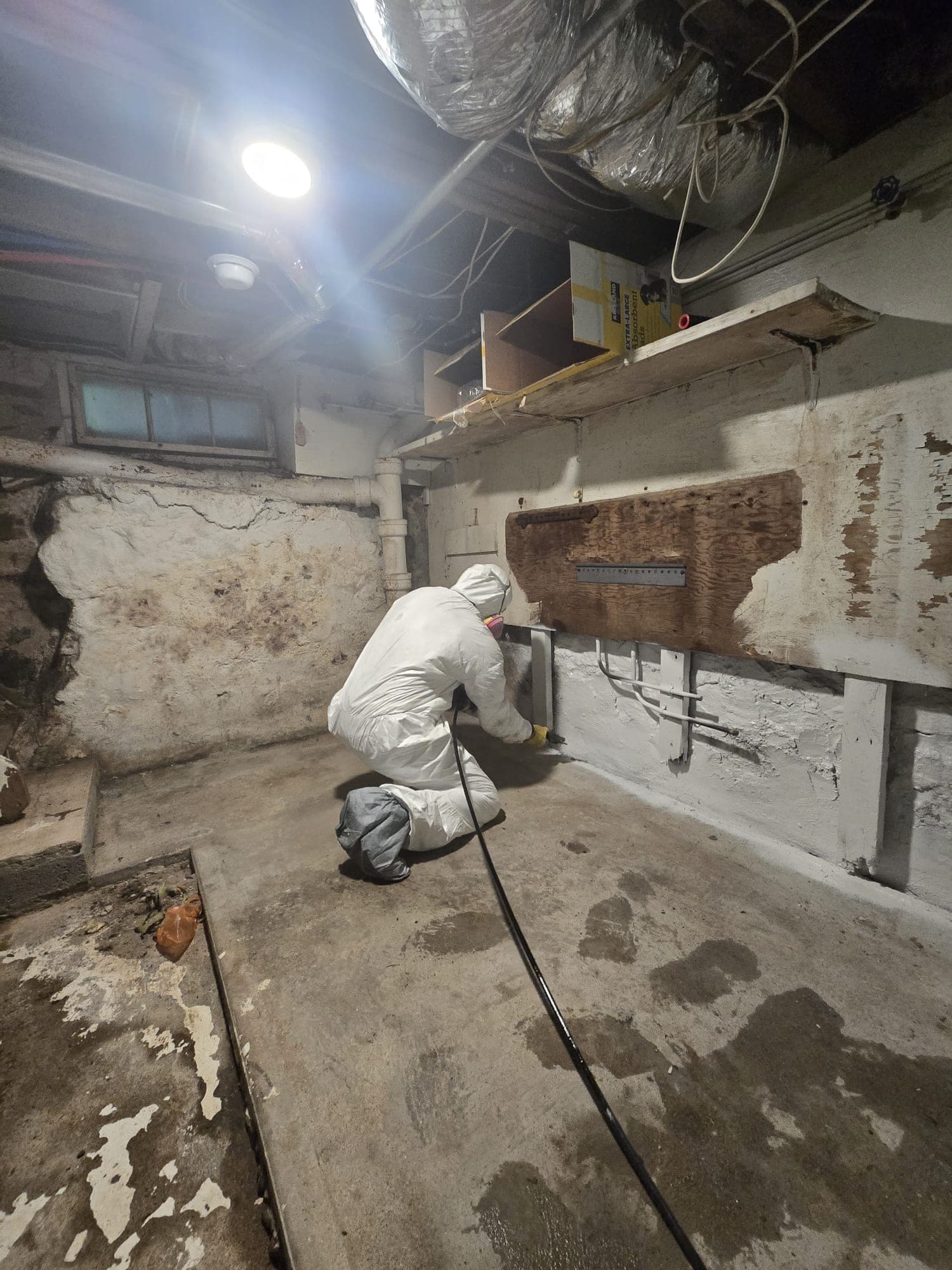
Porous materials with growth (drywall, insulation, carpet) get bagged inside containment and removed; they can't be reliably cleaned. Framing and other structural wood gets HEPA-vacuumed, cleaned, and treated as its condition calls for.
- 04
Clean the air & surfaces
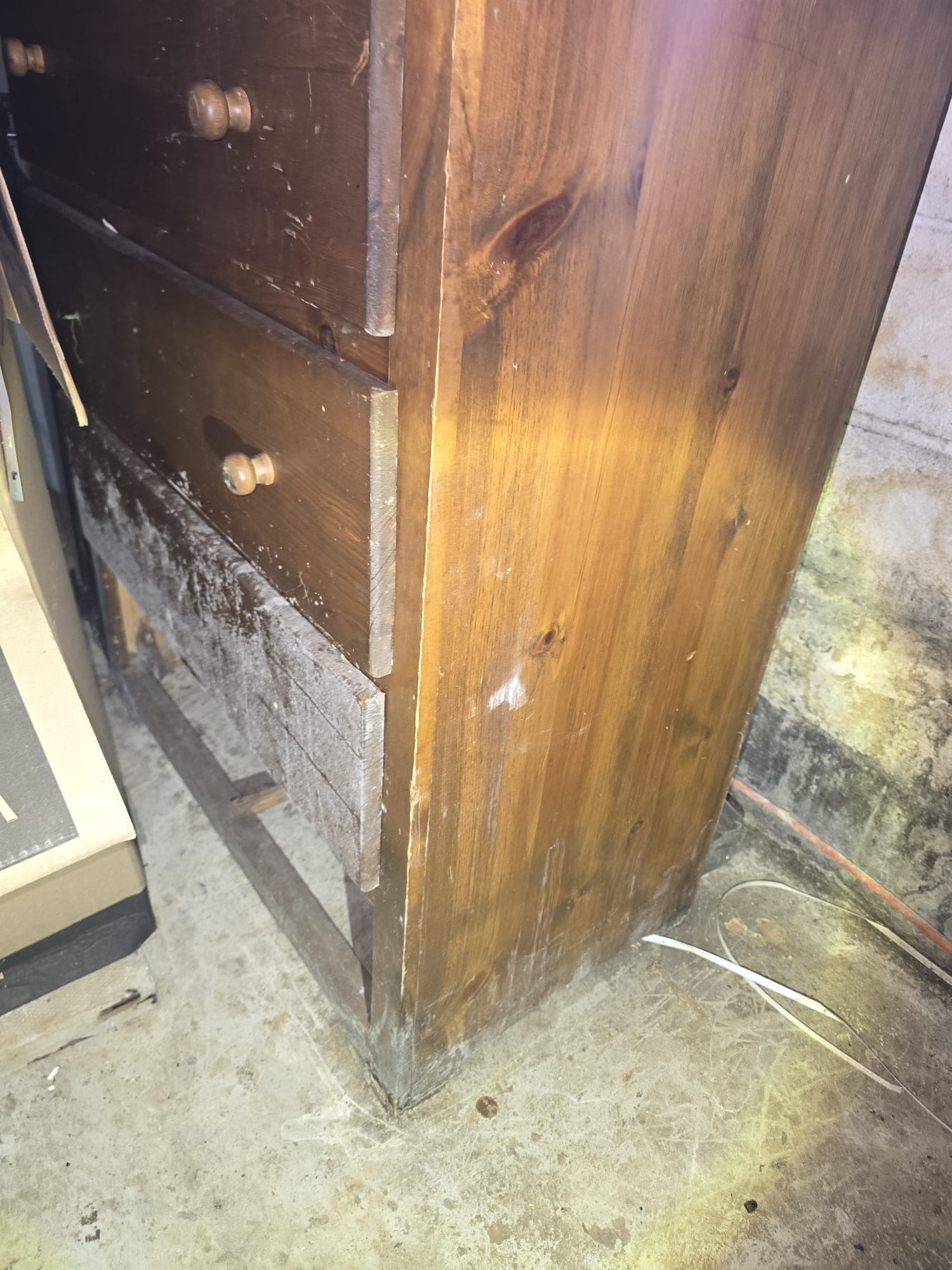
HEPA air scrubbers run throughout, then every surface in the containment gets HEPA-vacuumed and damp-wiped. The S520 standard for finishing is a work area that is visibly clean, dust-free, and odor-free, and that's what we clean to.
- 05
Fix the moisture source
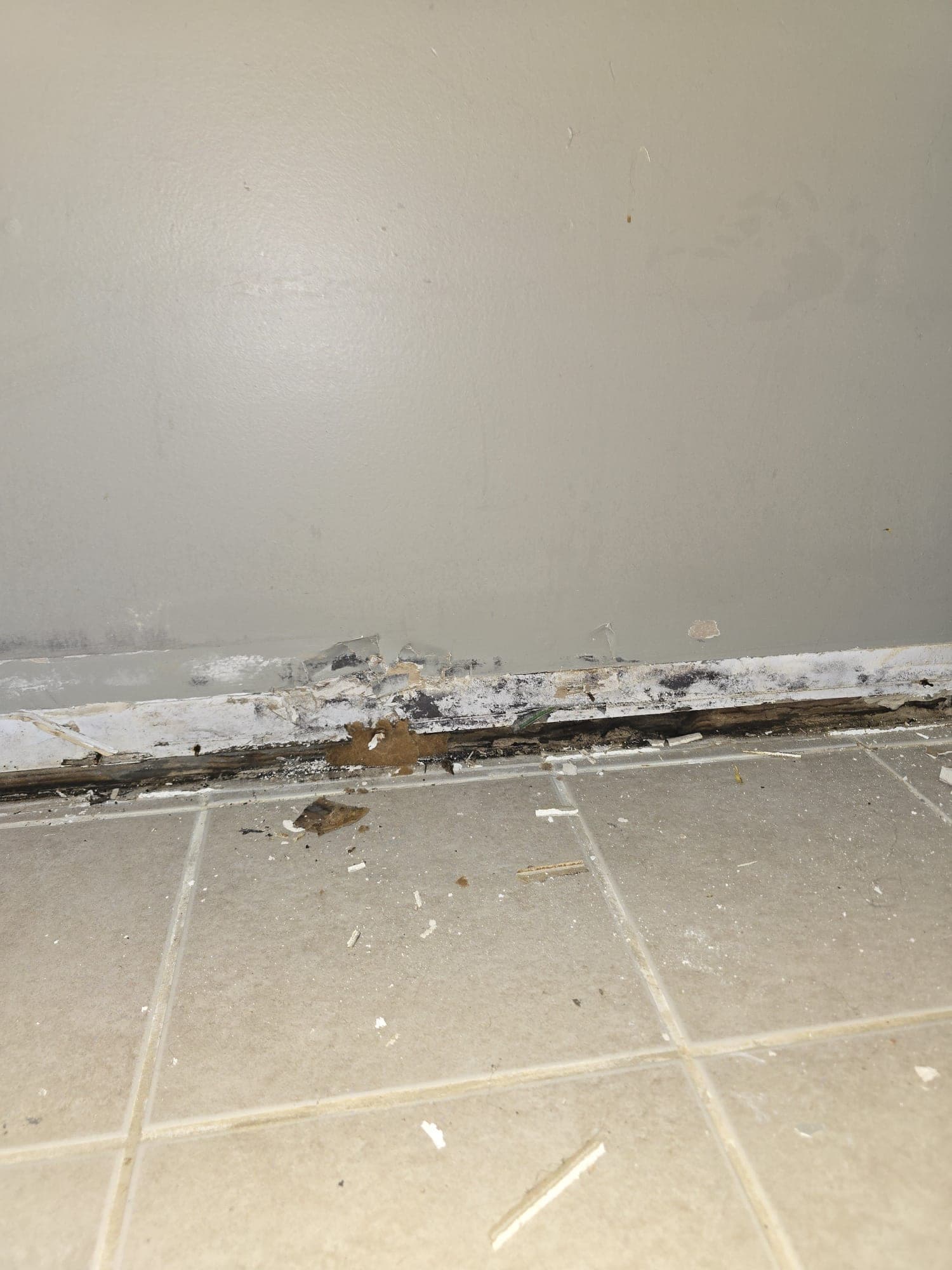
This is the repair that ends the problem: the leak fixed, the bath fan vented outside, the grading or gutter issue named in writing. We handle what's in our scope and tell you who to call for what isn't.
- 06
Verify
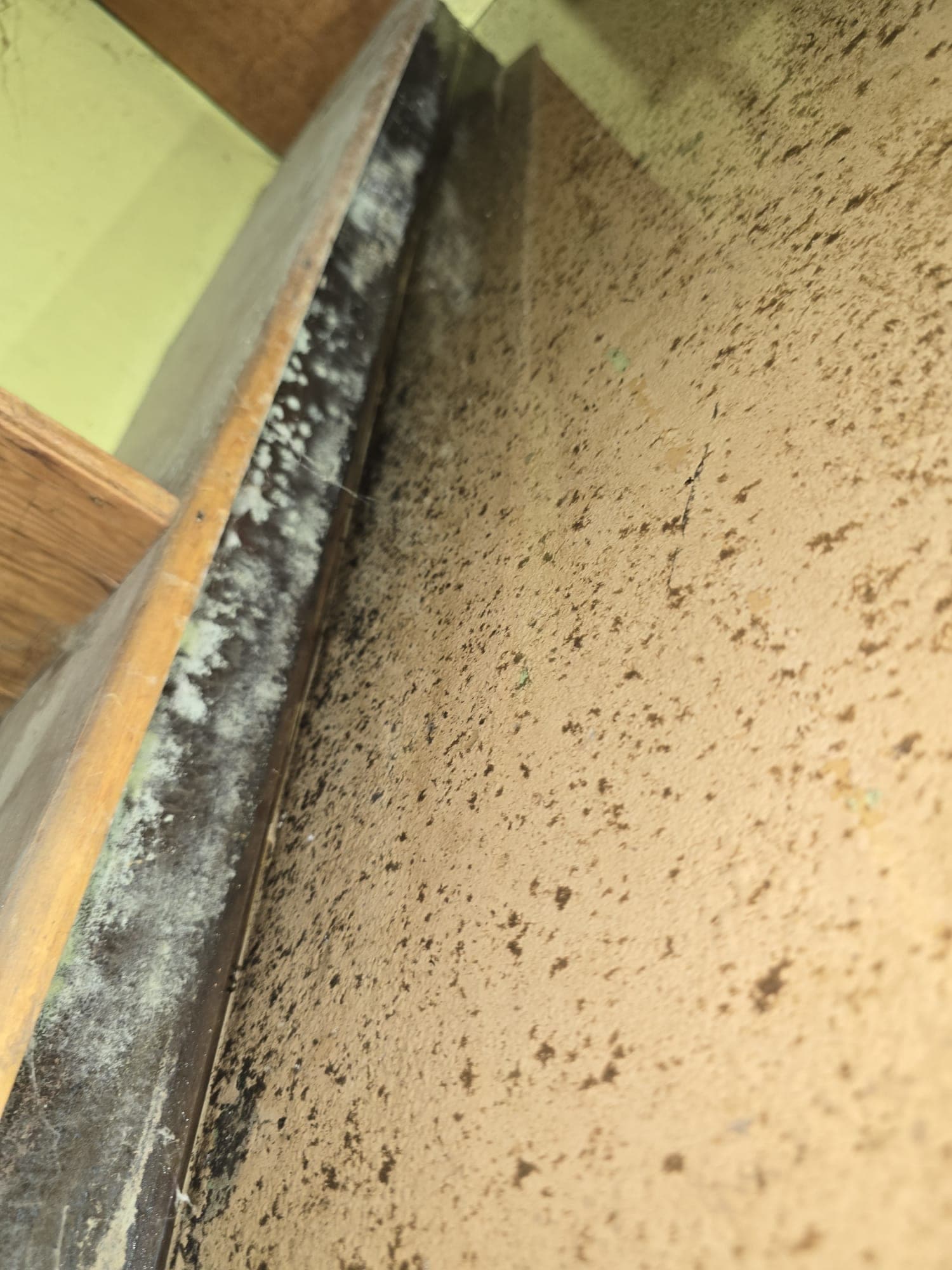
Final walkthrough against the written scope. If you want lab numbers behind the visual standard, we arrange third-party clearance testing, and that lab reports to you rather than to us.
Local knowledge
What we see in Hopewell Junction
The housing stock, the terrain, and the drainage in Hopewell Junction all change how we plan a job. Here's what we run into:
Getting to you
I-84 to the Taconic puts us at the crossroads in about 45 minutes. The subdivisions have driveways and room to stage equipment, and the rural roads toward Stormville and the lakes take a few more minutes.
Water & drainage
Clay holds water against the foundation instead of draining it, and the ledge under the eastern hills sheds runoff onto the lots below. Homes on wells and septic add a third problem: a saturated leach field backs up into the house.
On the ground
Much of East Fishkill sits on heavy clay with a seasonal high water table, and the upper reaches of Fishkill Creek and Sprout Creek run through it. That is why so many basements here have sump pumps, and why a pump that fails in March means a flooded lower level by morning.
Heavy rain in the forecast
After a storm floods the basement in Hopewell Junction: the mold clock
Storm water in a basement turns into a mold job when the drying waits. Here is what matters in the first day.
In the first day
- Wet materials start growing mold in 24 to 48 hours. Drying fast is the mold prevention.
- Do not run the furnace fan or box fans to dry the house. They move damp air and spores through every room.
- If a floor drain or toilet backed up with the rain, the water is contaminated and porous materials it touched have to come out.
Full walkthrough: what to do when your basement floods in a storm. Water in the house now? Call (845) 262-6530. Same-day emergency response, six days a week.
Common problems
The problems we're usually called about.
A musty basement or crawl space smell
That odor usually means microbial growth somewhere you can't see yet. We find the moisture behind it, whether that's ground vapor, seepage, or condensation on cold surfaces, and we scope the remediation to what's colonized rather than to the whole basement.
Mold found during a home sale inspection
One line in an inspection report can hold up a closing, usually with about two weeks to deal with it. We inspect quickly, scope only what's there, do the work under containment, and provide documentation, plus third-party clearance testing if the buyer's side wants numbers.
The previous 'mold guy' sprayed and painted over it
Encapsulant sprayed over live growth on a wet wall doesn't hold, because the water is still there. We open it up, remove what should have come out the first time, dry the area and fix the moisture source, and document the work this time around.
Black mold behind a wall, under a sink, or on the ceiling
The color doesn't change the job. Black mold removal follows the same steps as any other active growth: find the moisture, contain the area, remove what's colonized, clean and dry what stays. We do the mold cleanup and the repair to the wall or ceiling afterward, under one scope.
Insurance
We work with your insurance, and we bill them directly
- 01
Call us
We answer, ask what happened, and get a crew moving. Same-day emergency response on active water.
- 02
We document everything
We take moisture readings and photos and write up a scope of work before drying starts, so your adjuster has the file from day one.
- 03
We bill your insurer directly
We work directly with your insurance company on covered water and mold claims, so you're not fronting the full cost and chasing reimbursement.
Your deductible is still yours to cover. Your declarations page or your agent has the exact number, and we ask for it before any work starts rather than after. You also don't need a claim to hire us. Plenty of our jobs are paid directly by the homeowner, and after the free inspection you get a written estimate to make that decision with.
Not insurance advice. We're a restoration contractor, not a public adjuster or insurance agent. Coverage decisions belong to your insurer, so confirm anything about your policy with your agent or adjuster.
Who's showing up
Local and independent since 2019.
The person on the phone is the person planning the job. We're in Hopewell Junction every week.
- IICRC Certified
- Licensed
- Bonded
- Insured
- Eco-Conscious Products
FAQ
Questions we get most.
Will the mold come back after remediation?
Only if the moisture comes back. Mold needs water, so fixing the leak, the drainage, the ventilation, or the humidity is what keeps it gone. That's why our remediation includes finding the moisture source and not just cleaning the visible growth. Cleaning without the repair means doing the job over again. Afterward, keep indoor humidity down, run the bath fans, and call early about new leaks.
Can I clean up mold myself?
Yes, if it's small. The EPA's rule of thumb is about 10 square feet, roughly a 3-by-3 patch. Under that, a careful homeowner can handle it with gloves, an N95 mask, and detergent, as long as the moisture source gets fixed too. Call a professional when it's bigger, inside walls or the HVAC system, involved sewage, or when someone in the house has asthma or mold sensitivity. We'll tell you at the inspection if it's a DIY-sized job.
Does homeowners insurance cover water damage?
That's a question for your insurer, and we say so on purpose. We're a restoration contractor, not a public adjuster or insurance agent, and only your carrier can tell you what your policy covers. In general terms, homeowners policies treat sudden and accidental damage, like a burst pipe or a failed water heater, differently from a slow leak that ran for months, and flooding from outside is usually a separate policy. That's why the cause of loss matters. When we inspect, we photograph and log what the damage shows, and that record goes to your insurer for their decision. Call your agent or your carrier's claim line to confirm coverage before you count on it.
Is mold in my house dangerous?
Mold can irritate eyes, nose, and throat, trigger allergic reactions like sneezing and skin rash, and aggravate asthma in people who have it. Sensitivity varies a lot from person to person. That's the EPA's position and ours. It's worth taking seriously, and it's not a reason to panic. Mold is a moisture problem in the house, and it's a fixable one.
What's the difference between mold removal and mold remediation?
"Mold removal" is a misleading term. Spores exist naturally everywhere, indoors and out, so no company can remove all mold from a house. Remediation is the accurate word: contain the affected area, take out materials too far gone, clean what can be cleaned, filter the air, and fix the moisture problem that caused the growth. Skip that last step and the mold comes back no matter how thorough the cleanup was.
Service area
Hopewell Junction, NY — Dutchess County.
We're about 45 minutes out, six days a week. The homes run to 1960s-through-2000s subdivisions built around the old IBM East Fishkill plant, older hamlet houses at the crossroads, and lake and rural properties on wells and septic. We cover every block, including the Route 82 crossroads, Stormville, Hillside Lake. Hopewell Junction is known for the IBM plant that built the town, the Taconic State Parkway, Sylvan Lake, and the hamlets of Stormville and Wiccopee.
Also in Hopewell Junction
Mold Remediation in nearby towns
Free inspection
Start with a free inspection in Hopewell Junction.
Call or send the form. We look, we measure, and you get a written scope and a straight answer. Sometimes that answer is that the work can wait.
Office hours: Mon–Fri 8am–6pm · Sun 8am–6pm · Closed Saturdays.