
6 min read
Black mold removal: what has to happen, in order
By the Strauss Cleaners crew·Updated September 2, 2026
People call about black mold more than any other color, and the answer is the same for all of them: the color does not change the job. What matters is how far it has grown, what it grew into, and where the moisture came from. Here is what a proper removal involves, step by step.
Short answer
Black is a color, not a species, and removal is the same for any active mold. The order is: find and stop the moisture, contain the area, run HEPA negative air, remove colonized porous materials, clean hard surfaces, dry, verify, then rebuild. Painting over it or spraying it without containment does not remove it.
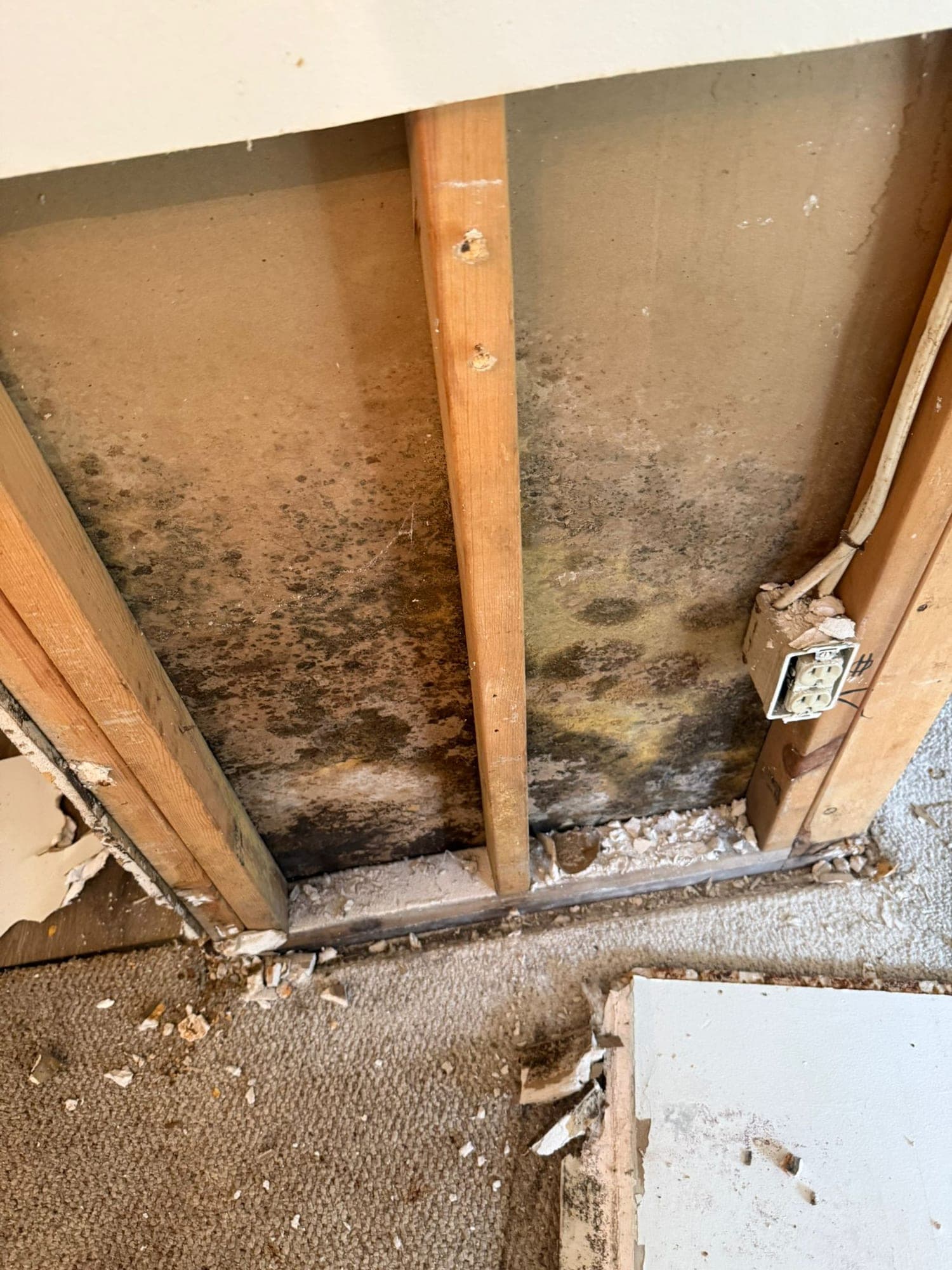
What 'black mold' means
Many common molds are black or dark green, and the one people usually mean, Stachybotrys, is one of them. The EPA's position is that you do not need to identify the species to deal with it, because all active mold indoors is removed the same way and none of it belongs in a living space. Our mold health facts guide covers what the EPA and CDC say about exposure. The short version for the removal: treat all of it as something to take out, and do not pay extra for a name.
When testing is worth it
Testing helps in three situations: the growth is hidden and you need to find it, someone in the home is sick and a doctor wants documentation, or the removal is finished and you want proof the air is clear. Testing a visible patch of mold to confirm it is mold is not useful. You can see it. A mold inspection with a moisture meter and a thermal camera finds where the water is, and that is the question that decides the job.
The removal, step by step
The order matters, because doing the steps out of order spreads spores or leaves the cause in place.
- Find and stop the moisture. A leak, a roof, a wet foundation wall, a bath fan venting into the attic, a humid crawlspace. Mold removed without this step comes back.
- Contain the work area with plastic sheeting sealed at the edges, with a zippered entry.
- Run a HEPA-filtered negative air machine so air flows into the contained area and out through the filter, not into the rest of the house.
- Remove colonized porous materials: drywall, insulation, ceiling tile, carpet, paper-faced anything. These go out in sealed bags. Cleaning them is not reliable.
- Clean the hard surfaces that stay, framing and masonry, by HEPA vacuuming and damp wiping. Heavily stained framing is sanded or media-blasted, then vacuumed again.
- Dry everything to normal moisture readings. Mold grows on wet material, and the drying is what keeps the area clear.
- Verify. A visual check at minimum, and a post-remediation air or surface test if the job was large or someone in the home is sensitive.
- Rebuild with new drywall and insulation once the area reads dry.
Removal versus remediation
Companies use both words and customers ask which they need. In practice they describe the same job. Removal is the physical part, taking the colonized material out. Remediation is the whole process, including the containment, the moisture fix, and the verification. Removal without the moisture fix is half the job.
What to refuse
A few things are sold as mold removal and do not work. Bleach on drywall lightens the stain while the growth stays in the paper and gypsum. Painting over it, even with a mold-resistant primer, seals in active growth. Fogging or spraying a room without removing the colonized material treats the surface and leaves the source. Any of these without containment also spreads spores through the house while it is being done.
Small patches on hard surfaces, under about ten square feet on tile or painted plaster, are a homeowner job with detergent and a fan. Our mold vs. mildew guide covers where that line is.
If you are looking at growth and want to know what it will take, call for a free inspection. If the answer is a cleaning tip and a better bath fan, that is what you will hear.
Related service
Mold Remediationin the Hudson Valley & North Jersey →Mold remediation built on IICRC S520 practice: sealed containment, HEPA-filtered negative air, physical removal of affected materials, and the moisture fix that keeps mold from coming back.
Mold in your town
Not sure what you're looking at?
The inspection is free. We bill insurers directly on covered claims, and you don't need a claim to hire us.