
Dutchess County, NY · ~40 min away
Mold Remediation & Removal in Beacon, NY
Sealed containment, removal of what's colonized, and a fix for the moisture behind it.
Dutchess County, NY · ~40 min away
Mold Remediation & Removal in Beacon, NY
Sealed containment, HEPA-filtered negative air, and physical removal of the affected material. When you ask what mold means for your health, we answer the way the EPA does. Beacon is about 40 minutes out for us.
I-84 across the bridge puts us in Beacon in about 40 minutes. Main Street parking is tight and many houses sit on steep, narrow side streets, so we stage from the truck and carry equipment in.
Free inspection with a written scope before any work begins. Covered claims are billed directly to your insurance carrier.
Local knowledge
What we see in Beacon
The housing stock, the terrain, and the drainage in Beacon all change how we plan a job. Here's what we run into:
Water & drainage
The city drops steeply from Mount Beacon to the river, so storm runoff moves fast downhill and collects in the low blocks near the creek and the rail line. Basements at the bottom of a slope take the neighborhood's water, not just their own roof's.
On the ground
Fishkill Creek runs through the city past the old mill buildings and drops to the Hudson, and it flooded hard during Irene and Lee in 2011. Buildings along the creek, including the converted factories, take water from the creek side before the street shows any.
The housing stock
The hillside houses are old, with stone and brick foundations that let groundwater through and plaster walls that hold moisture. Drying them is slower and more metered than a modern basement, and we open plaster only where the readings say to.
Process
How the job goes.
Containment goes up first, the affected material comes out second, and the moisture source gets fixed before we finish. Here's the short version; the service page explains each step and why the order matters.
- 01
Inspect & find the moisture
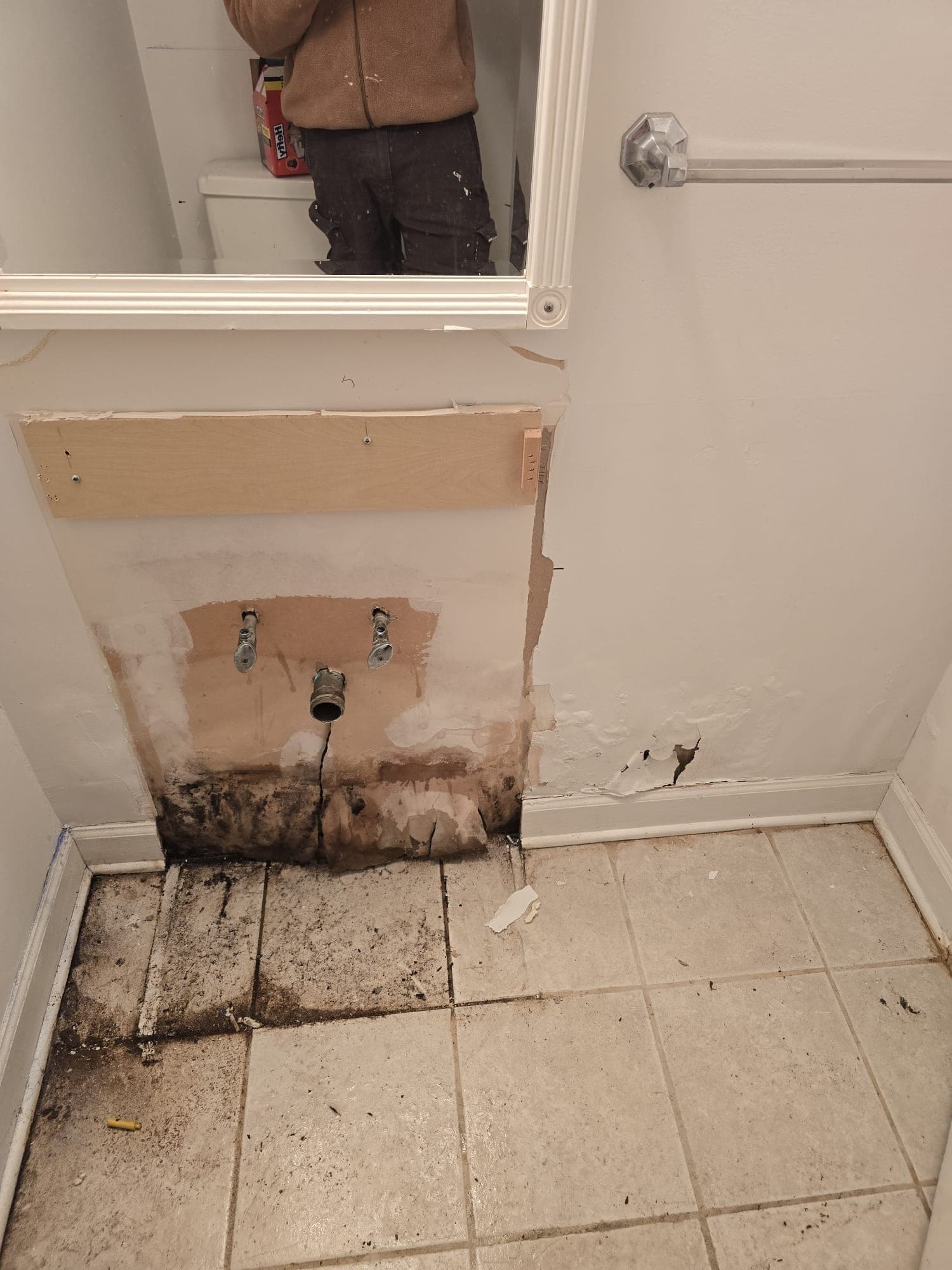
Every mold job starts as a water investigation. Moisture meters and thermal imaging trace where the water comes from: a leak, condensation, ground moisture, or a bath fan venting into the attic. Remove the mold without stopping the water and it grows back.
- 02
Contain the work area
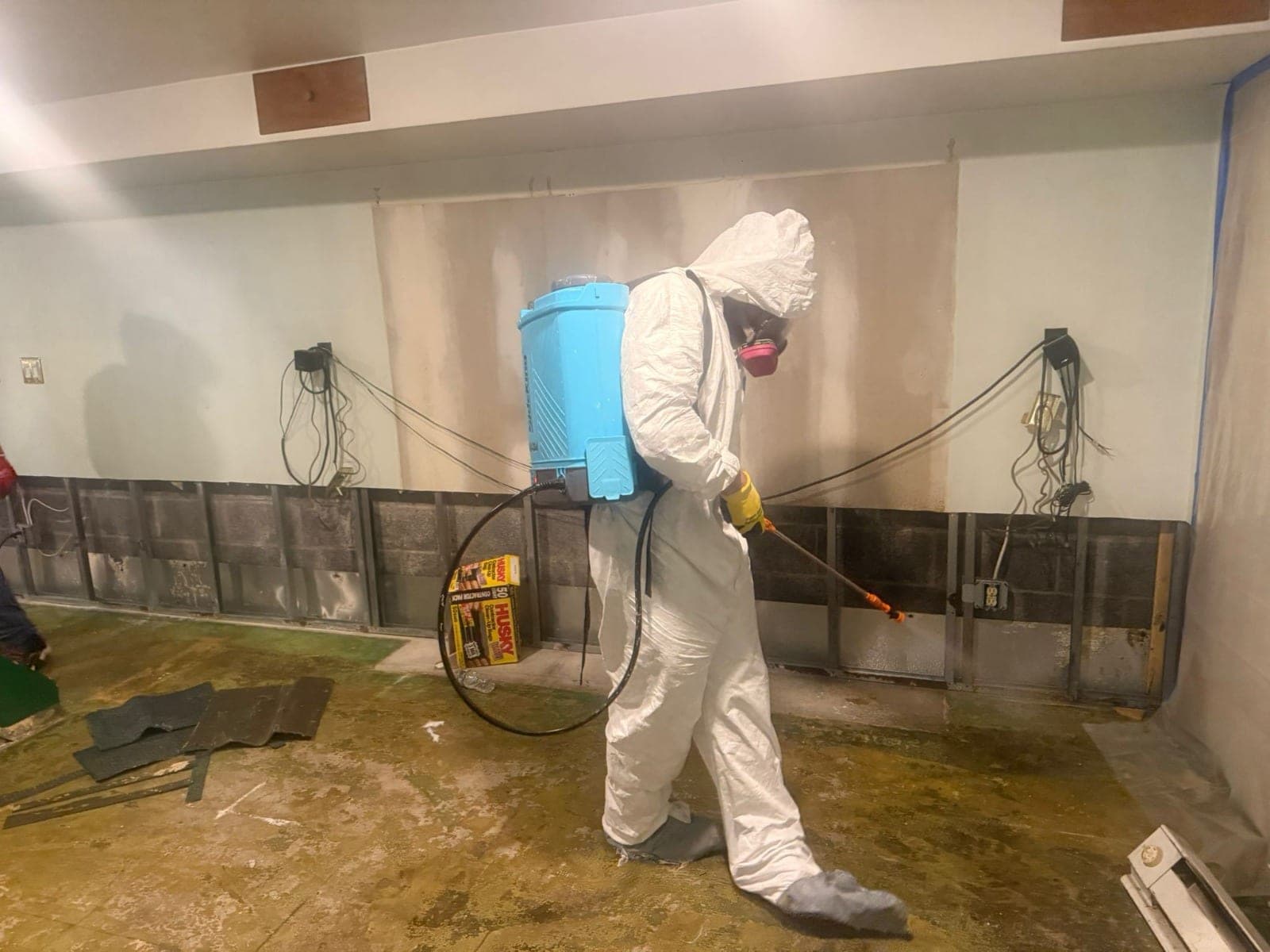
Plastic containment seals the affected area, and negative air machines with HEPA filtration keep airflow moving into the zone rather than out of it. Without containment, the work itself spreads spores into rooms that were clean.
- 03
Remove what's colonized
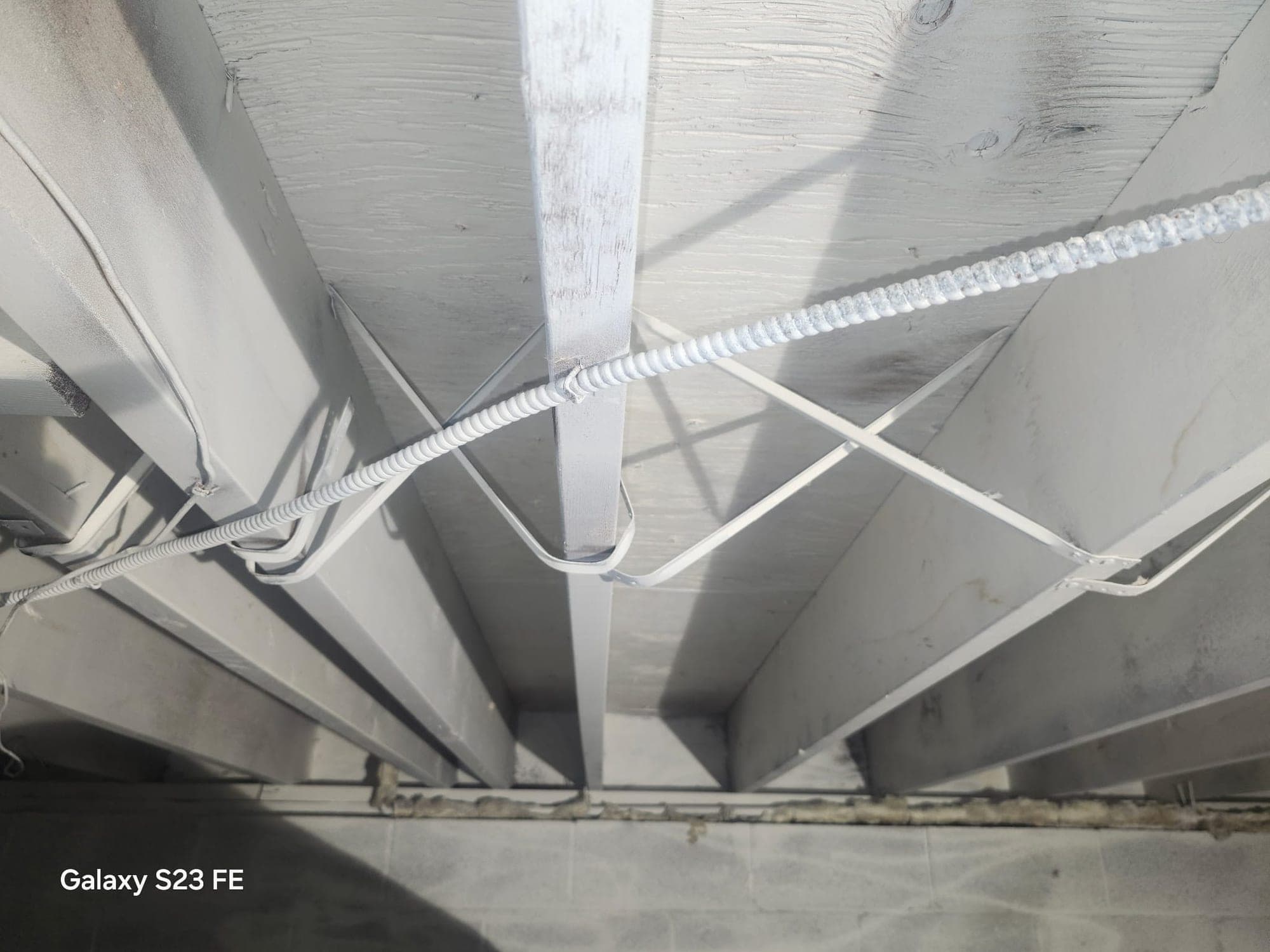
Porous materials with growth (drywall, insulation, carpet) get bagged inside containment and removed; they can't be reliably cleaned. Framing and other structural wood gets HEPA-vacuumed, cleaned, and treated as its condition calls for.
- 04
Clean the air & surfaces
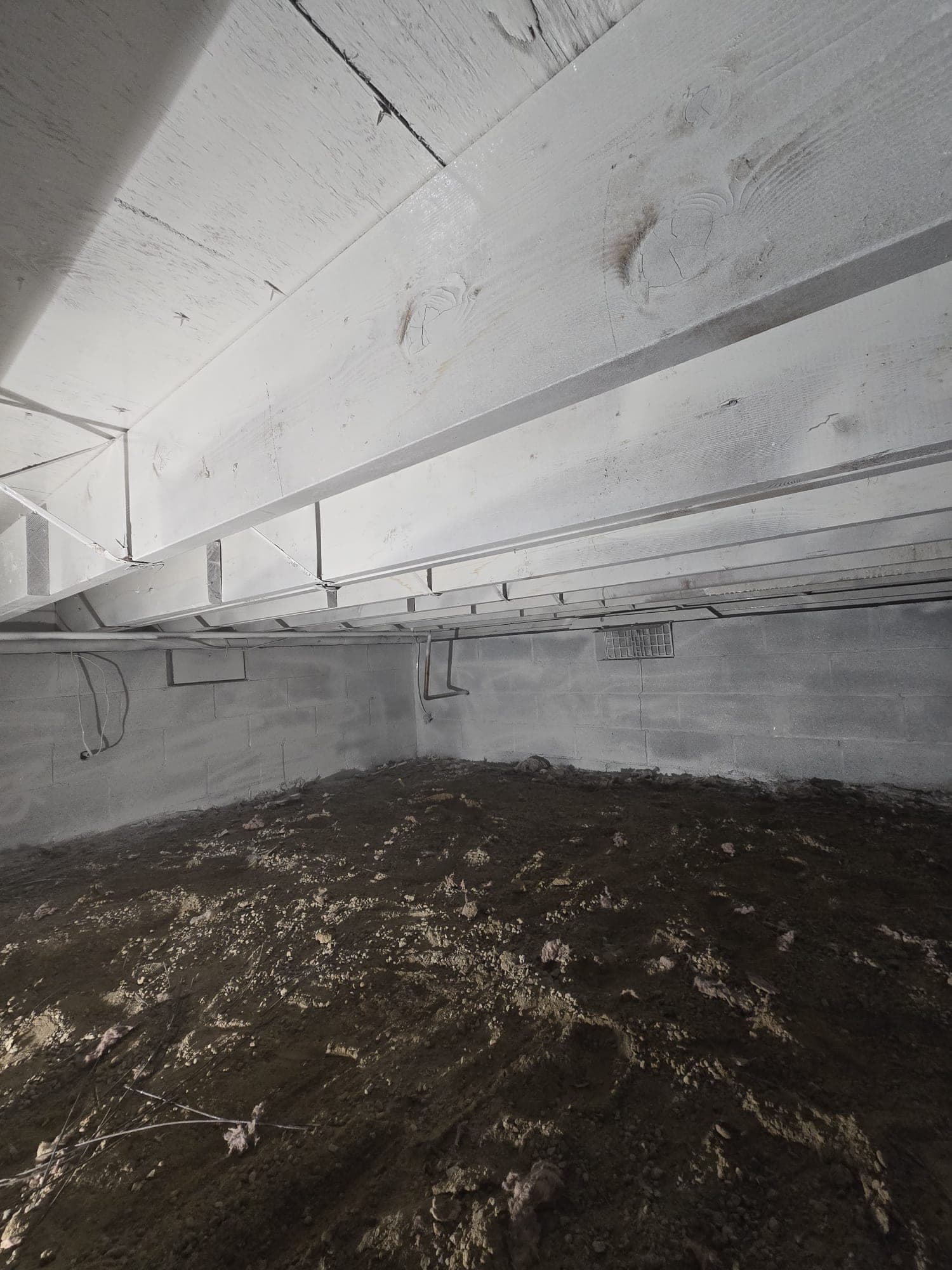
HEPA air scrubbers run throughout, then every surface in the containment gets HEPA-vacuumed and damp-wiped. The S520 standard for finishing is a work area that is visibly clean, dust-free, and odor-free, and that's what we clean to.
- 05
Fix the moisture source
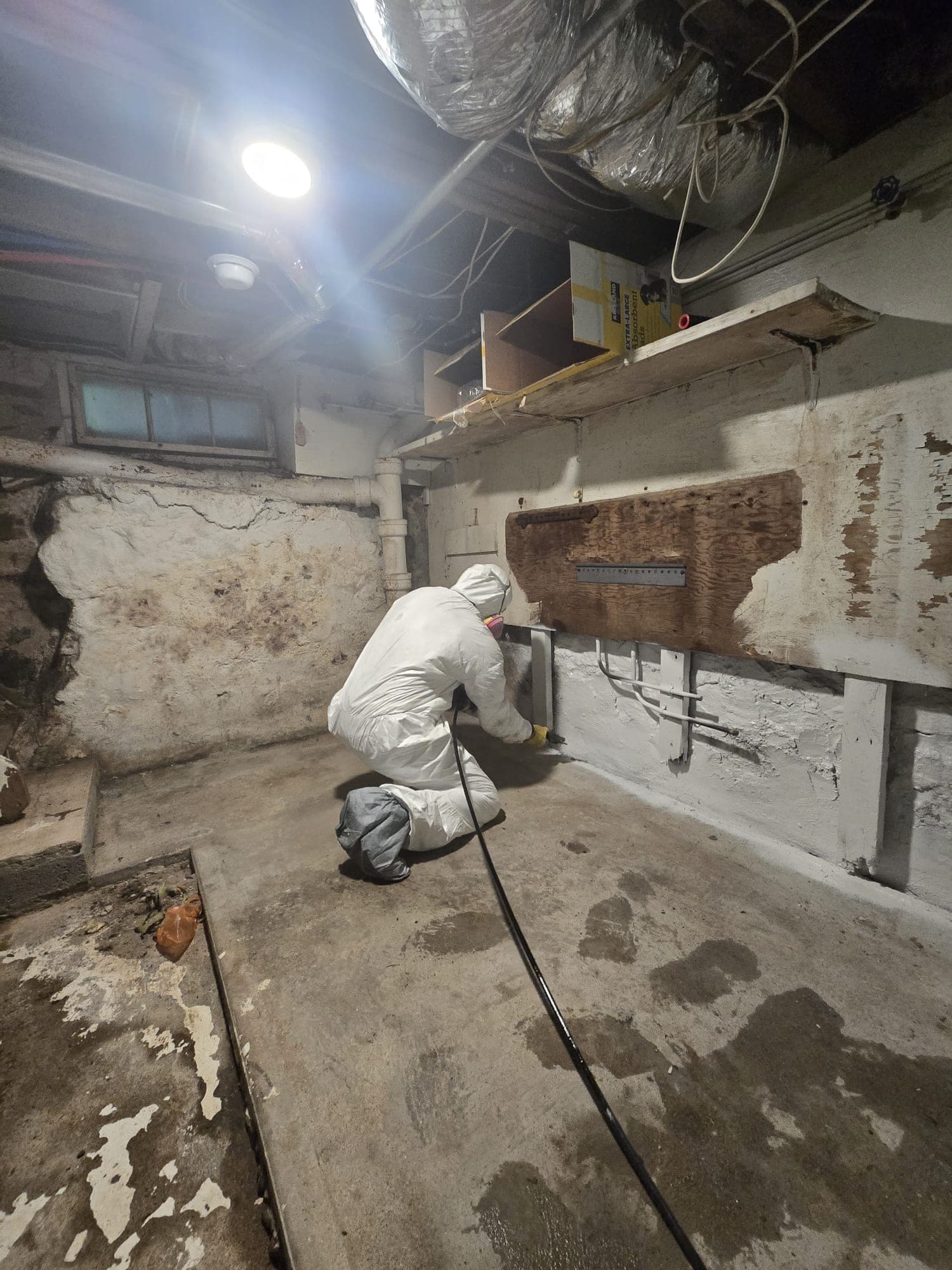
This is the repair that ends the problem: the leak fixed, the bath fan vented outside, the grading or gutter issue named in writing. We handle what's in our scope and tell you who to call for what isn't.
- 06
Verify
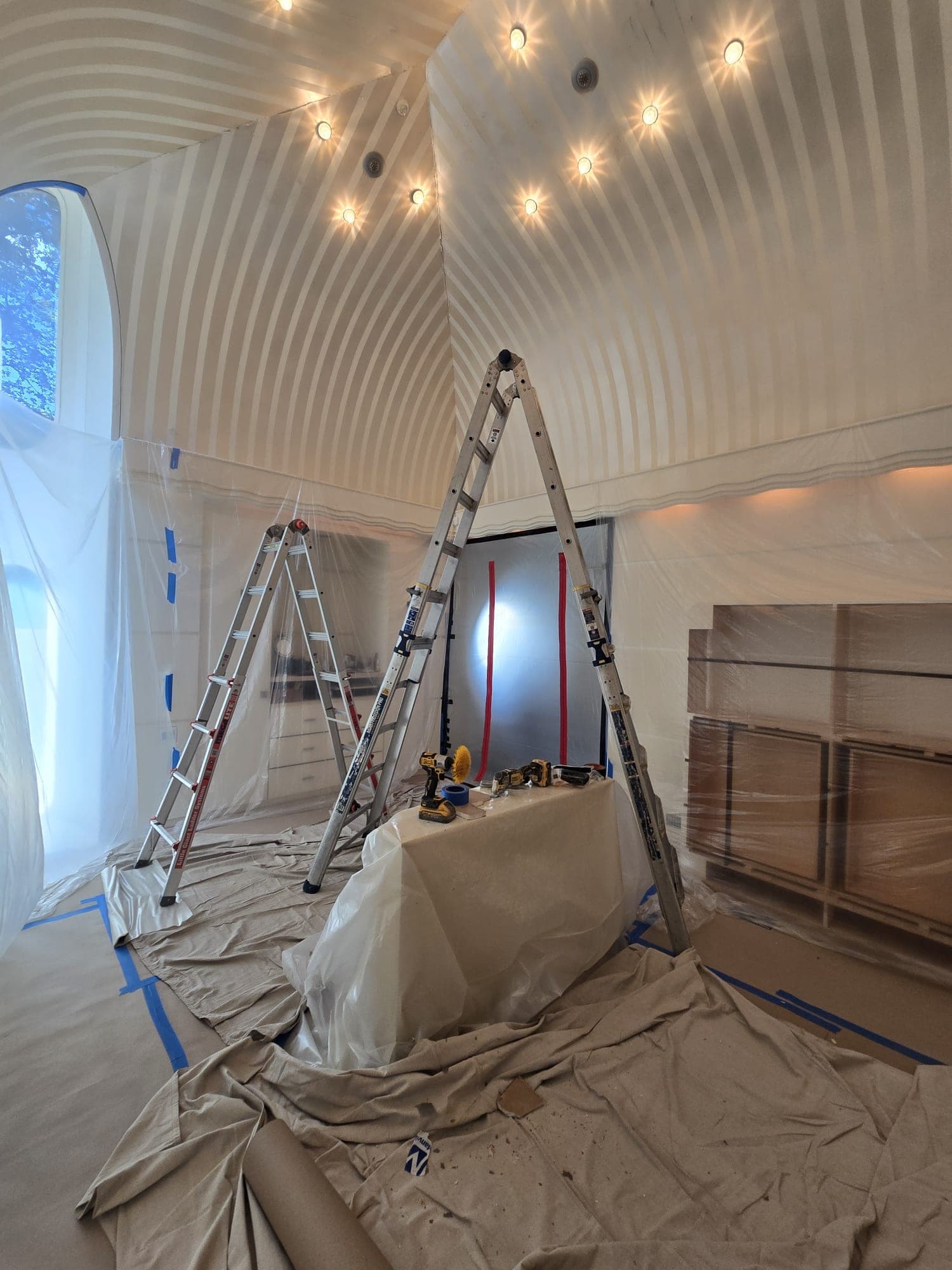
Final walkthrough against the written scope. If you want lab numbers behind the visual standard, we arrange third-party clearance testing, and that lab reports to you rather than to us.
Heavy rain in the forecast
After a storm floods the basement in Beacon: the mold clock
Storm water in a basement turns into a mold job when the drying waits. Here is what matters in the first day.
In the first day
- Wet materials start growing mold in 24 to 48 hours. Drying fast is the mold prevention.
- Do not run the furnace fan or box fans to dry the house. They move damp air and spores through every room.
- If a floor drain or toilet backed up with the rain, the water is contaminated and porous materials it touched have to come out.
Full walkthrough: what to do when your basement floods in a storm. Water in the house now? Call (845) 262-6530. Same-day emergency response, six days a week.
Common problems
The problems we're usually called about.
Attic sheathing turned dark after years of a bath fan venting up there
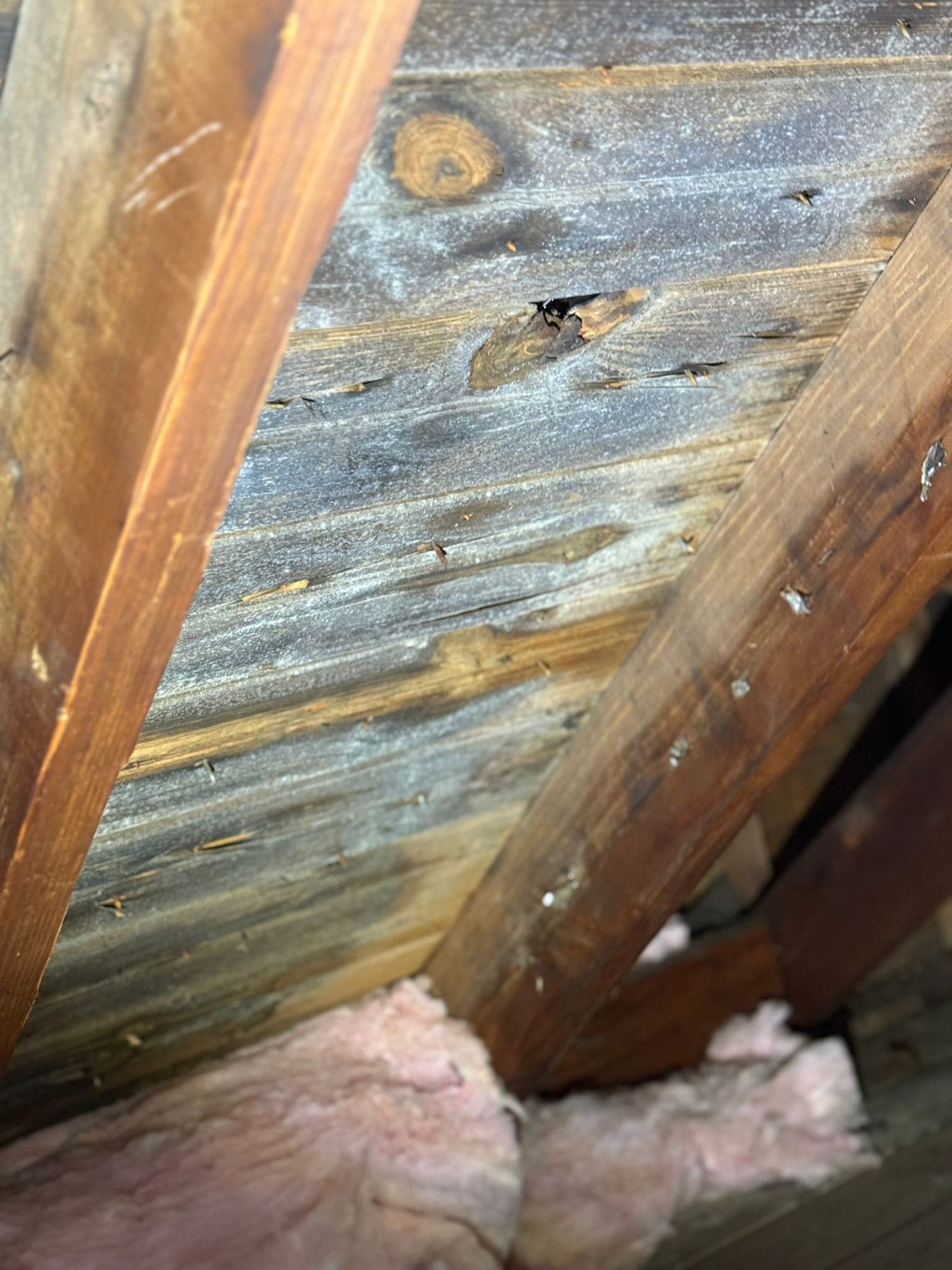
A bath fan pushing moist air into the attic grows mold across the underside of the roof deck. We remediate the sheathing, and the duct has to be rerouted outside as part of the job. Without that, the sheathing darkens again within a few winters.
Worried about what the kids are breathing
Mold can trigger allergy and asthma symptoms, and sensitivity varies from person to person. That's the EPA's position and ours. We'll tell you what we found, scope the work to match it, fix the moisture, and put the findings in writing.
Black spots on the bathroom ceiling that keep coming back
Almost always condensation from a fan that's undersized, unused, or venting into the attic. We remediate the growth, but the ventilation is the fix that keeps it gone, so we'll tell you what's wrong with yours and what it takes to correct it.
A musty basement or crawl space smell
That odor usually means microbial growth somewhere you can't see yet. We find the moisture behind it, whether that's ground vapor, seepage, or condensation on cold surfaces, and we scope the remediation to what's colonized rather than to the whole basement.
Insurance
We work with your insurance, and we bill them directly
- 01
Call us
We answer, ask what happened, and get a crew moving. Same-day emergency response on active water.
- 02
We document everything
We take moisture readings and photos and write up a scope of work before drying starts, so your adjuster has the file from day one.
- 03
We bill your insurer directly
We work directly with your insurance company on covered water and mold claims, so you're not fronting the full cost and chasing reimbursement.
Your deductible is still yours to cover. Your declarations page or your agent has the exact number, and we ask for it before any work starts rather than after. You also don't need a claim to hire us. Plenty of our jobs are paid directly by the homeowner, and after the free inspection you get a written estimate to make that decision with.
Not insurance advice. We're a restoration contractor, not a public adjuster or insurance agent. Coverage decisions belong to your insurer, so confirm anything about your policy with your agent or adjuster.
Who's showing up
Local and independent since 2019.
The person on the phone is the person planning the job. We're in Beacon every week.
- IICRC Certified
- Licensed
- Bonded
- Insured
- Eco-Conscious Products
FAQ
Questions we get most.
What's the difference between mold removal and mold remediation?
"Mold removal" is a misleading term. Spores exist naturally everywhere, indoors and out, so no company can remove all mold from a house. Remediation is the accurate word: contain the affected area, take out materials too far gone, clean what can be cleaned, filter the air, and fix the moisture problem that caused the growth. Skip that last step and the mold comes back no matter how thorough the cleanup was.
What is containment and why does it matter?
Containment keeps a mold problem in one room. Disturbing moldy material sends spores airborne, so before any demolition we seal the work area with plastic sheeting, cover HVAC vents, and run HEPA-filtered machines that hold the space under negative pressure, meaning air flows in and not out. Without it, cutting out moldy drywall spreads spores through the rest of the house.
How long does mold remediation take?
One to two days for a small, contained area like a patch behind a vanity or a closet wall. Multiple rooms, flooring removal, or a wet structure that has to be dried first runs several days to a week or more. Repairing the source and rebuilding usually add more time than the remediation itself. After the inspection you get a schedule with each of those steps laid out.
Will the mold come back after remediation?
Only if the moisture comes back. Mold needs water, so fixing the leak, the drainage, the ventilation, or the humidity is what keeps it gone. That's why our remediation includes finding the moisture source and not just cleaning the visible growth. Cleaning without the repair means doing the job over again. Afterward, keep indoor humidity down, run the bath fans, and call early about new leaks.
Can I clean up mold myself?
Yes, if it's small. The EPA's rule of thumb is about 10 square feet, roughly a 3-by-3 patch. Under that, a careful homeowner can handle it with gloves, an N95 mask, and detergent, as long as the moisture source gets fixed too. Call a professional when it's bigger, inside walls or the HVAC system, involved sewage, or when someone in the house has asthma or mold sensitivity. We'll tell you at the inspection if it's a DIY-sized job.
Service area
Beacon, NY — Dutchess County.
We're about 40 minutes out, six days a week. The homes run to 19th-century worker houses and rowhouses on the slopes below Mount Beacon, converted brick factory lofts along Fishkill Creek, and newer condos near the river. We cover every block, including Main Street, the East End near Fishkill Creek, the waterfront by the train station. Beacon is known for Dia Beacon in the old Nabisco box factory, a mile-long Main Street of brick storefronts, and the Mount Beacon trail.
Also in Beacon
Mold Remediation in nearby towns
Free inspection
Start with a free inspection in Beacon.
Call or send the form. We look, we measure, and you get a written scope and a straight answer. Sometimes that answer is that the work can wait.
Office hours: Mon–Fri 8am–6pm · Sun 8am–6pm · Closed Saturdays.