
5 min read
Dryer vent cleaning and fire safety: warning signs worth taking seriously
By the Strauss Cleaners crew·Updated July 28, 2026
A dryer vent fills up with lint, and lint burns. The appliance on the other end of it makes heat. That's the whole reason vent cleaning counts as a safety item. Here's how a vent gets to that point, how to spot it early, and what maintenance it needs.
Short answer
Lint is fuel and a clogged vent traps heat; that combination is how dryer fires start. Clean the full vent line about once a year, sooner if loads need a second cycle, the dryer or clothes run hot, or the outside flap barely moves when the dryer runs.
Why dryer vents start fires
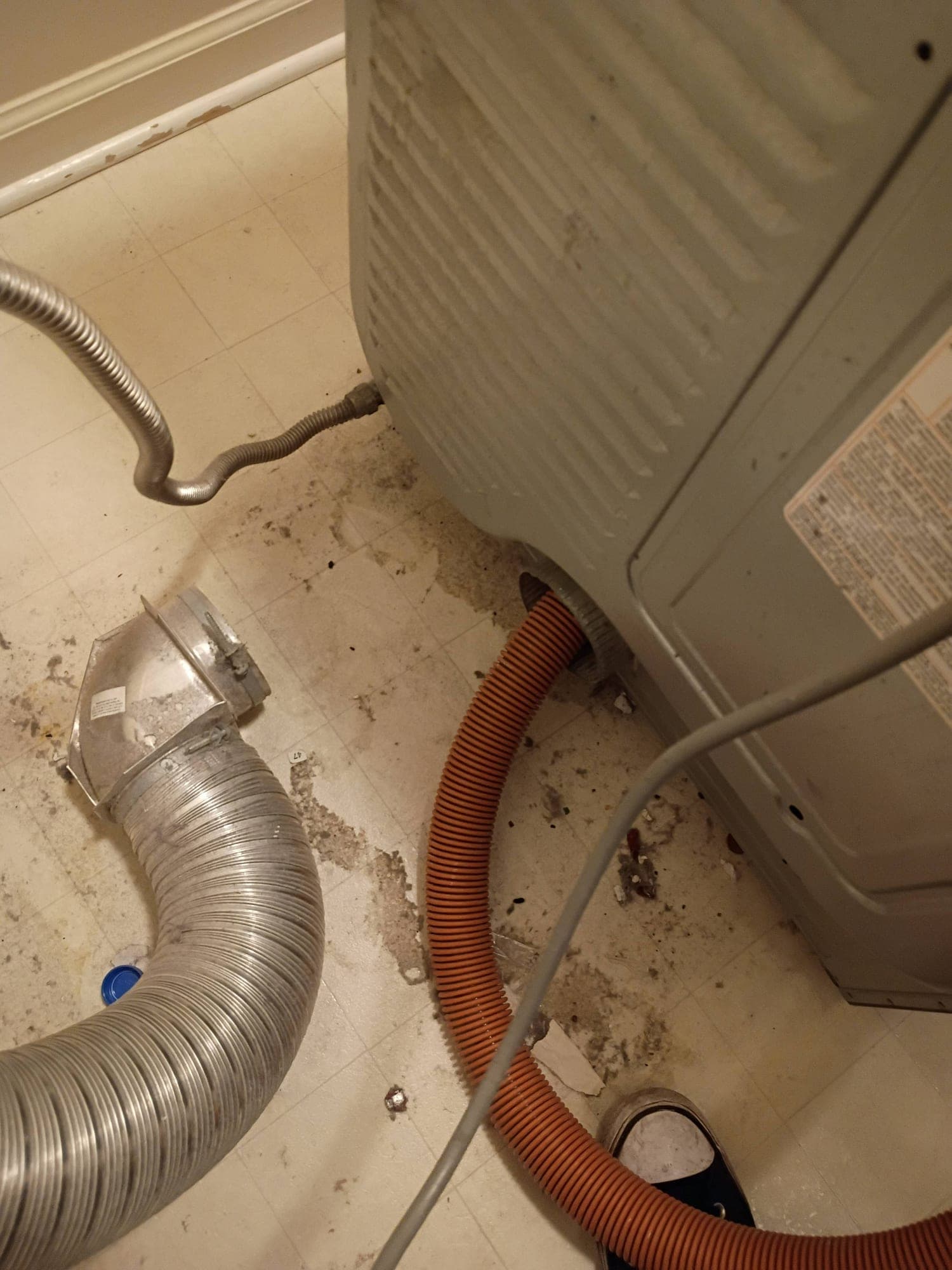
Three facts stack up. First, lint is extremely flammable: finely divided cotton and synthetic fiber, close to ideal tinder, and every load sends some of it past the lint screen into the vent line. Second, lint collects wherever airflow slows: the bends, the long horizontal runs, the exterior hood. Third, a restricted vent traps heat. The dryer can't exhaust its hot, moist air, temperatures inside the drum and cabinet climb, and the heating element cycles harder against the blockage.
The blockage that supplies the fuel is the same blockage driving the temperature up, in an appliance built to make heat. That's why the vent line needs cleaning on a schedule.
The warning signs of a restricted vent
A restricted vent shows symptoms well before it becomes dangerous. Any one of these is worth acting on:
- Loads take noticeably longer than they used to, or need a second cycle. The moist air can't get out, so the clothes stay damp.
- The dryer top, the laundry room, or the clothes themselves come out unusually hot.
- A burning or scorched smell while the dryer runs. Stop using it and get the vent checked before the next load.
- Lint collecting around the door seal, behind the machine, or at the exterior hood.
- The outside flap barely lifts, or no strong airflow at the exterior hood while the dryer runs.
- The laundry room turns humid mid-cycle; exhaust is backing up into the house instead of leaving it.
It's a moisture problem too
The fire risk gets the attention, but there's a second problem we see from the restoration side of our work. A dryer moves a lot of water out of your house as vapor. When a vent line is crushed, disconnected inside a wall, or venting into a crawl space or attic instead of outdoors, that moisture goes into the structure instead. A season or two later it shows up as condensation damage and mold in a wall cavity nobody can see.
We've handled mold remediation jobs whose root cause turned out to be a dryer duct that came apart behind the drywall. If your laundry area or the rooms around it smell musty, or a wall near the dryer shows staining, have someone check the wall as well as the vent.
Once a year, for most homes
For a typical household, cleaning the full vent line about once a year is the usual interval. It's the common guidance from fire-safety organizations, and it matches what we find in the field. Some homes need more: big families running daily loads, households with shedding pets, and homes where the vent run is long, has several elbows, or terminates on the roof. The longer the run and the more bends it has, the faster it loads up.
The material matters too. Rigid or semi-rigid metal duct is what should be behind your dryer; the old white vinyl and thin foil accordion-style flex hose catches lint in every ridge, crushes easily behind the machine, and is the worst offender in the clogged vents we clean. If we find it during a cleaning, we'll tell you. Replacing a transition hose is a small job that removes a standing risk.
What a full cleaning covers
A dryer vent cleaning should cover the whole path: the transition hose behind the machine, the full in-wall duct run with a rotary brush or air-driven tools, and the exterior hood and flap where lint mats and birds occasionally nest. Airflow gets confirmed at the outside termination afterward. Moving air at the hood is the pass-fail test, and you should see it before the crew leaves.
It's quick, and it pairs with air duct cleaning if the HVAC side is due, since it's one visit for both systems.
What you can do yourself between cleanings
The homeowner's share of this job is small and worth doing. Clean the lint screen every load. Occasionally vacuum the slot the screen sits in, where lint falls into the cabinet. Once a season, run the dryer and walk outside to watch the flap; strong, steady airflow means the line is clear. Keep the area behind the dryer uncrowded so the transition hose doesn't get crushed, and stop using the dryer if you smell anything burning.
One more habit from general fire-safety guidance: run the dryer while someone is home and awake rather than starting a load on your way out the door.
The bottom line
A dryer vent is a maintenance item where the stakes are high and the fix is cheap. Once a year, have the line cleaned end to end. In between, keep the screen clean and glance at the outside flap. If loads are running long or anything on the warning list sounds familiar, have it looked at now rather than after a winter of running against a clogged line. We can check it as part of any visit; ask when you book, or call (845) 262-6530.
Related service
Dryer Vent Cleaningin the Hudson Valley & North Jersey →Full-run dryer vent cleaning from the drum connection to the exterior termination. Lint buildup is a leading cause of home dryer fires, and it's also why towels take two cycles.
Not sure what you're looking at?
The inspection is free and the estimate comes in writing before any work starts.