
Orange County, NY · ~15 min away
Water Damage Restoration in Goshen, NY
Extraction, drying, documentation, and the rebuild after, all from one company.
Orange County, NY · ~15 min away
Water Damage Restoration in Goshen, NY
When extraction starts the same day, less drywall gets cut out and the flooring often dries in place. So we run same-day emergency response six days a week, and we keep drying until the meters read dry. Goshen is about 15 minutes out for us.
Goshen sits in the Wallkill valley, the river system that drains nearly half of Orange County and floods the black dirt farmland to the southwest. When a wet stretch raises the whole valley's water table, the older village cellars here take on water.
A person answers, not an answering service. Closed Saturdays. Covered claims are billed directly to your carrier.
Same-day emergency response
Response promise
8 counties
NY & NJ service area
Since 2019
Locally owned & operated
IICRC Certified
Certification
Local knowledge
What we see in Goshen
The housing stock, the terrain, and the drainage in Goshen all change how we plan a job. Here's what we run into:
The housing stock
The historic core has some of the oldest housing we service: stone and rubble foundations, hand-framed sills, plaster walls. Cellars in these homes were never meant to be dry by modern standards, so we separate long-running seepage from a new leak and tell you which one you have.
Getting to you
A straight 15-minute run up Route 17, so same-day response is routine here. For farm properties we plan for the outbuildings too, not just the house.
Water & drainage
The valley floor around Goshen is flat and slow-draining, the same post-glacial swampland that created the black dirt, so long rains keep the ground saturated and sump pumps here work harder and longer than in the hill towns.
Process
What happens after you call.
Every water loss runs the same way: we ask what happened on the phone, extract the same day, verify the drying with meters, and keep a documented file your adjuster can work from. Here's the short version. The service page covers each step.
- 01
Emergency call & triage
Call (845) 262-6530 and you reach the person dispatching the crew, not an answering service. We tell you what to shut off and what to move while we're on the road, and give you an arrival window: same day, usually within hours.
- 02
Inspect & map the moisture
Moisture meters and thermal imaging show how far the water spread: under flooring, behind baseboards, up into the drywall. You get a written scope of what's wet, what's salvageable, and what has to come out before any work starts.
- 03
Extract & remove
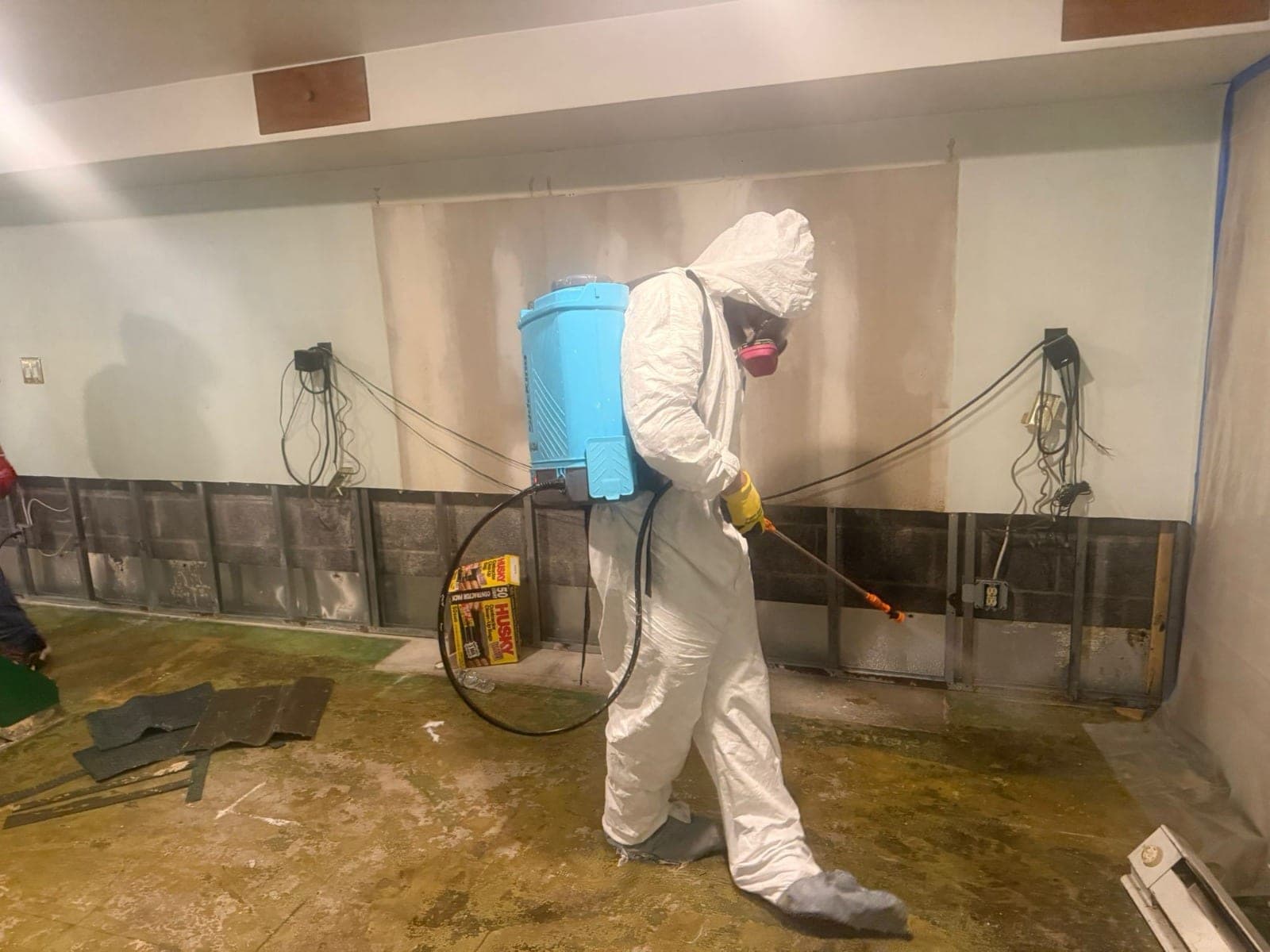
Truck-mounted extraction pulls standing water out fast. Soaked carpet pad, buckled flooring, and drywall that can't be saved come out on the same visit, because wet material left sitting for days is where mold starts.
- 04
Dry & monitor daily
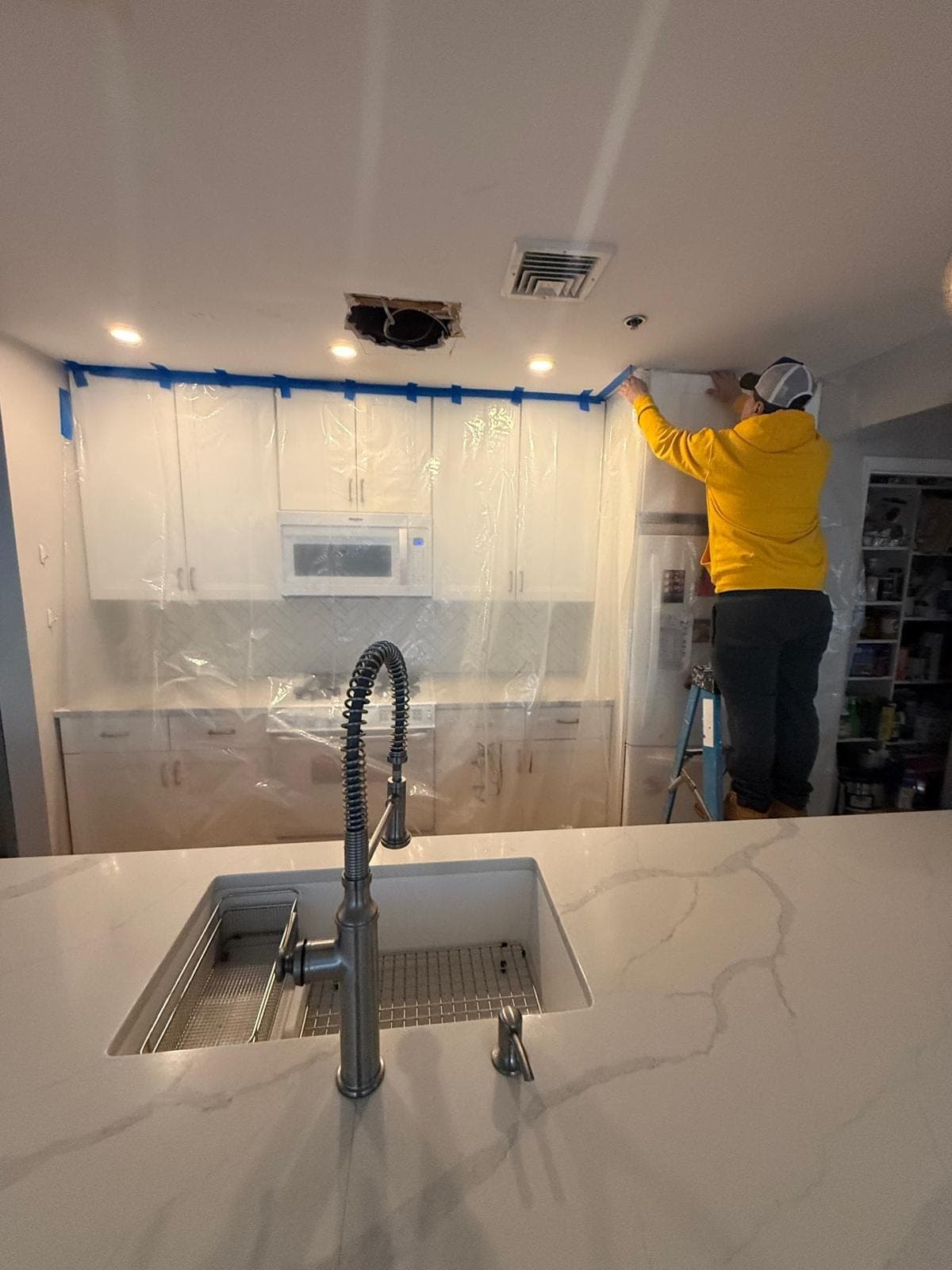
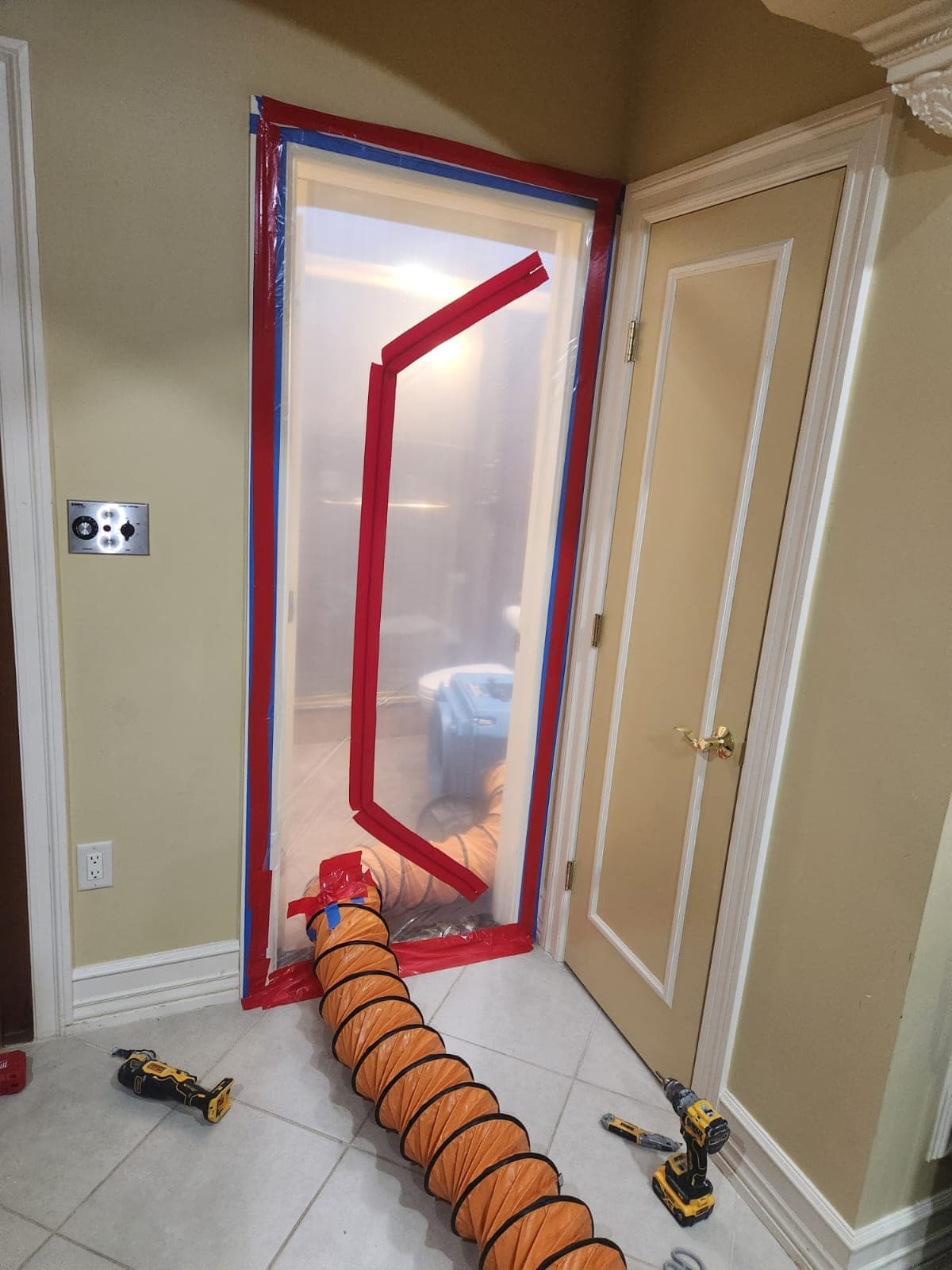
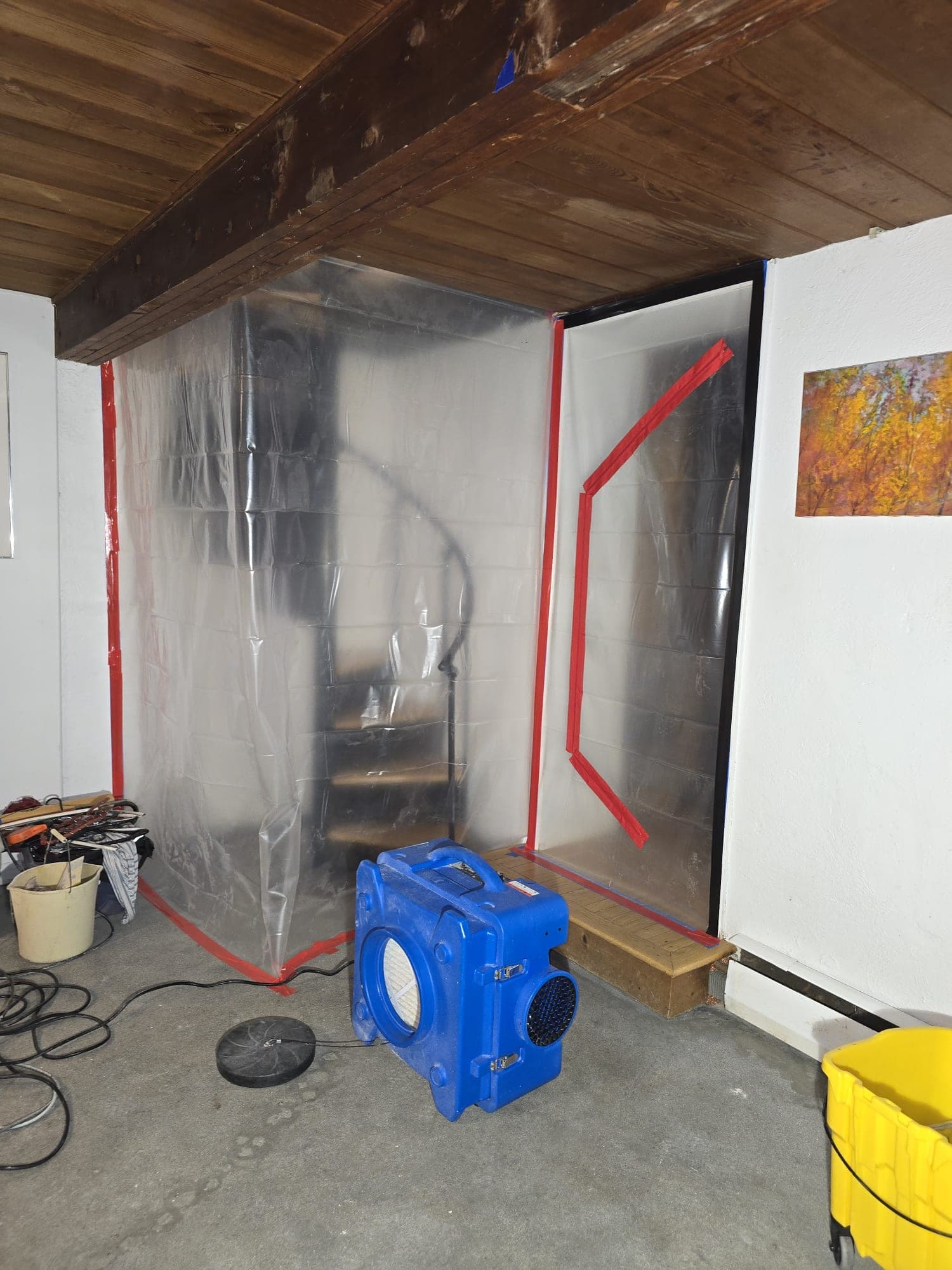
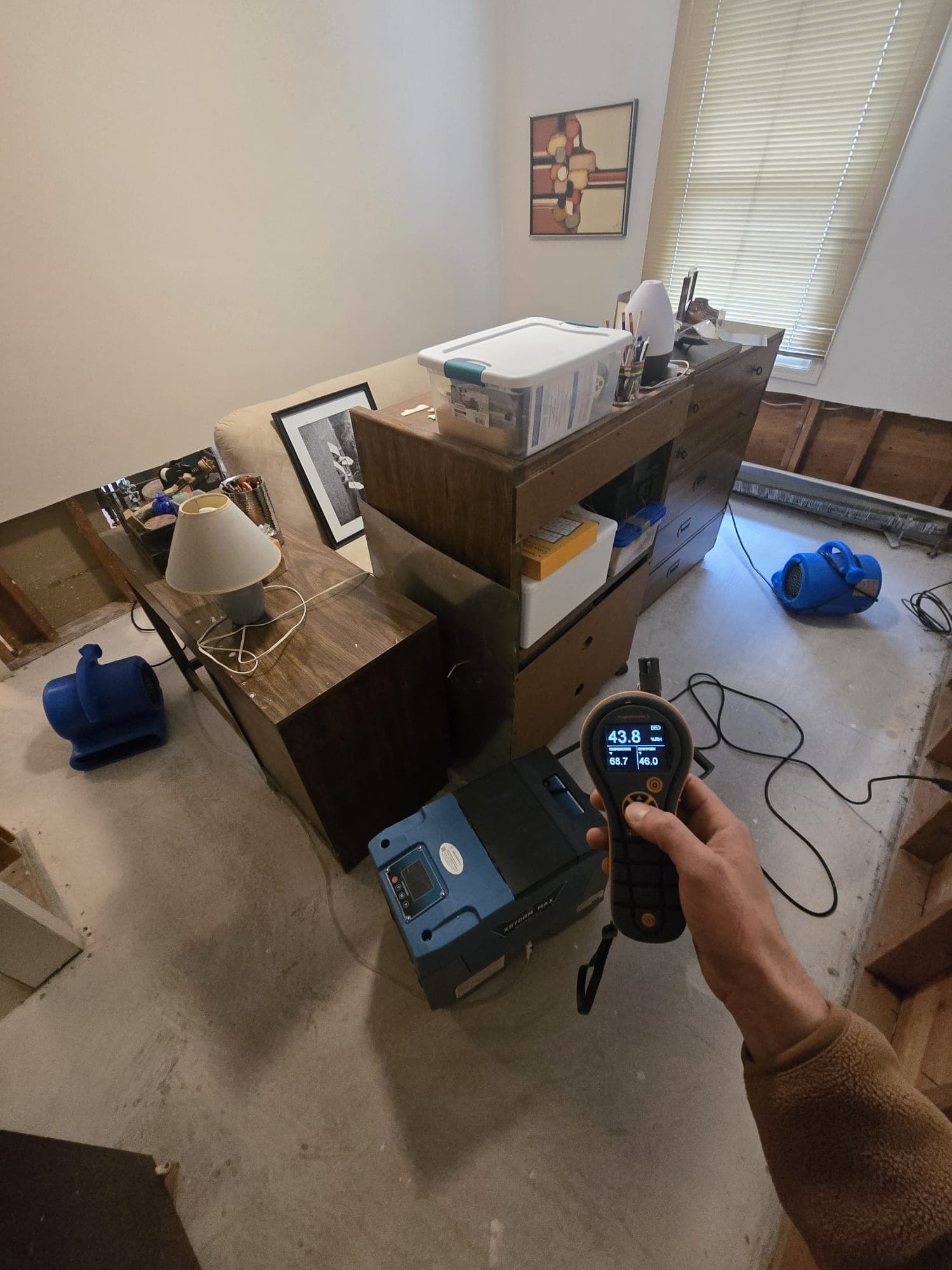
Commercial low-grain dehumidifiers and air movers, placed by measurement rather than guesswork. We check moisture readings daily and reposition equipment until the structure, not just the surface, reaches its dry standard.
- 05
Document the dry-out
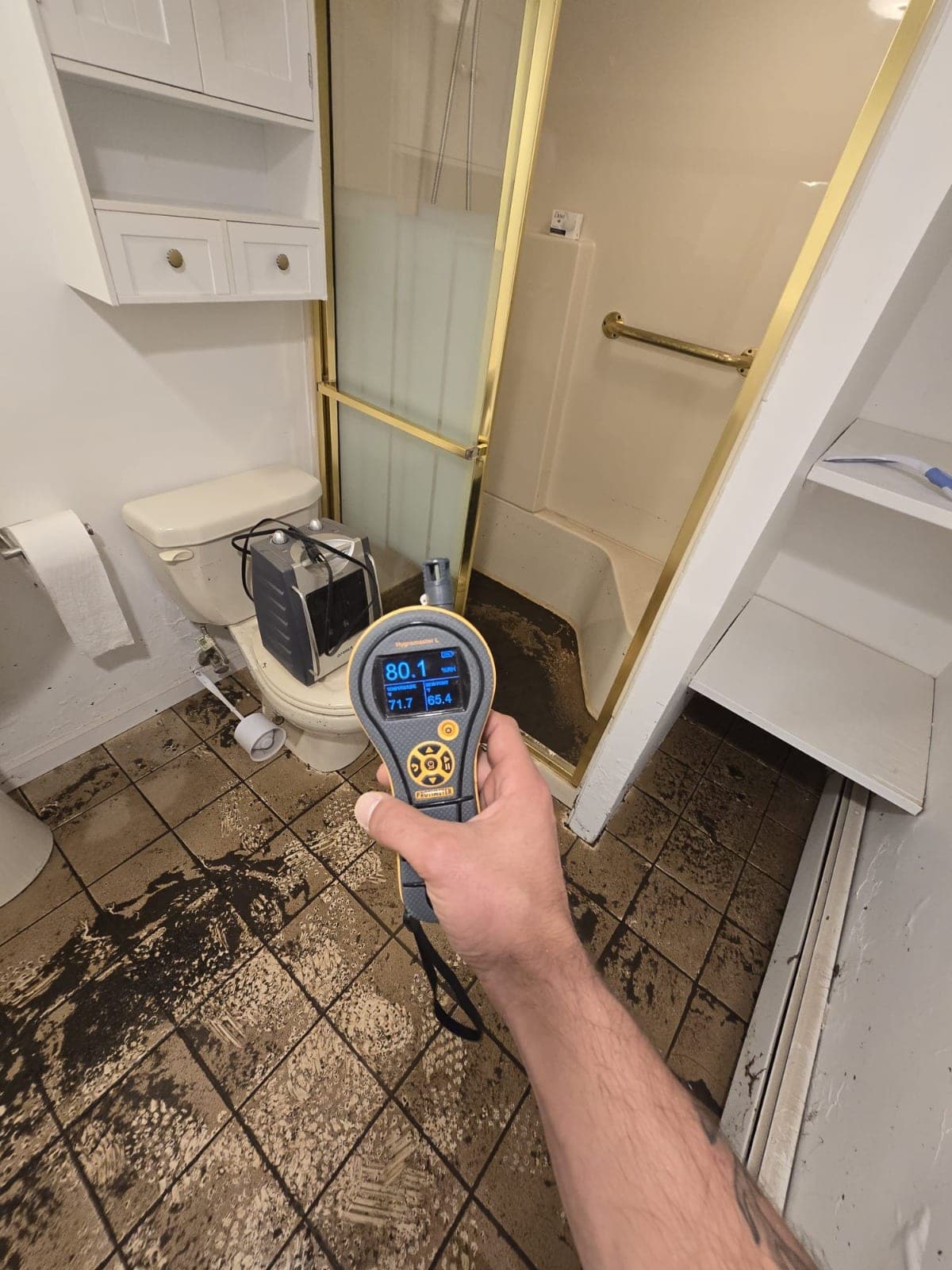
Readings, photos, and a list of every removed material go into a file your insurance adjuster can work from. We don't call it dry until the meters agree, and you get a copy of the drying log.
- 06
Build it back
Drywall, insulation, trim, flooring, and paint. The company that dried the structure rebuilds it, so nothing gets closed up wet and no part of the job falls between two contractors.
Heavy rain in the forecast
Before and after a storm in Goshen
We schedule crews around the rain forecast. A few steps before the storm can keep the basement dry, and a few steps right after protect the insurance claim.
Before the rain
- Move stored boxes, rugs, and anything you care about off the basement floor.
- Test the sump pump by pouring a bucket of water into the pit. If it does not run, that is the problem to fix before the rain.
- Clear the window wells and the downspout outlets. Know where the main water shutoff and the electrical panel are.
If water gets in
- Do not go into standing water until the power to that area is off.
- Photograph the water line and everything it touched before you move or throw anything out.
- Call for extraction the same day. Wet drywall and carpet pad grow mold within days.
Full walkthrough: what to do when your basement floods in a storm. Water in the house now? Call (845) 262-6530. Same-day emergency response, six days a week.
Common problems
The problems we're usually called about.
Wood floors cupping after a leak
Boards swell from the bottom and the edges rise. Caught early, controlled drying (sometimes with floor-drying mats) can bring hardwood back flat without replacement. Wait too long and the finish or the boards are done, so call as soon as you see the edges lifting.
A slow appliance line that leaked for months
Dishwasher, fridge line, or washing machine hose: a slow leak rots subfloor and grows mold out of sight. Insurers look at sudden bursts and long-term leaks differently, so we meter and photograph what the damage shows and put that record in your file for your carrier to work from.
Not sure whether it's dry
A past leak that 'seemed fine', a damp smell, a warm spot on the wall. A moisture inspection takes under an hour and gives you a reading either way. If it's dry, we tell you it's dry and leave.
Ceiling stain that keeps growing
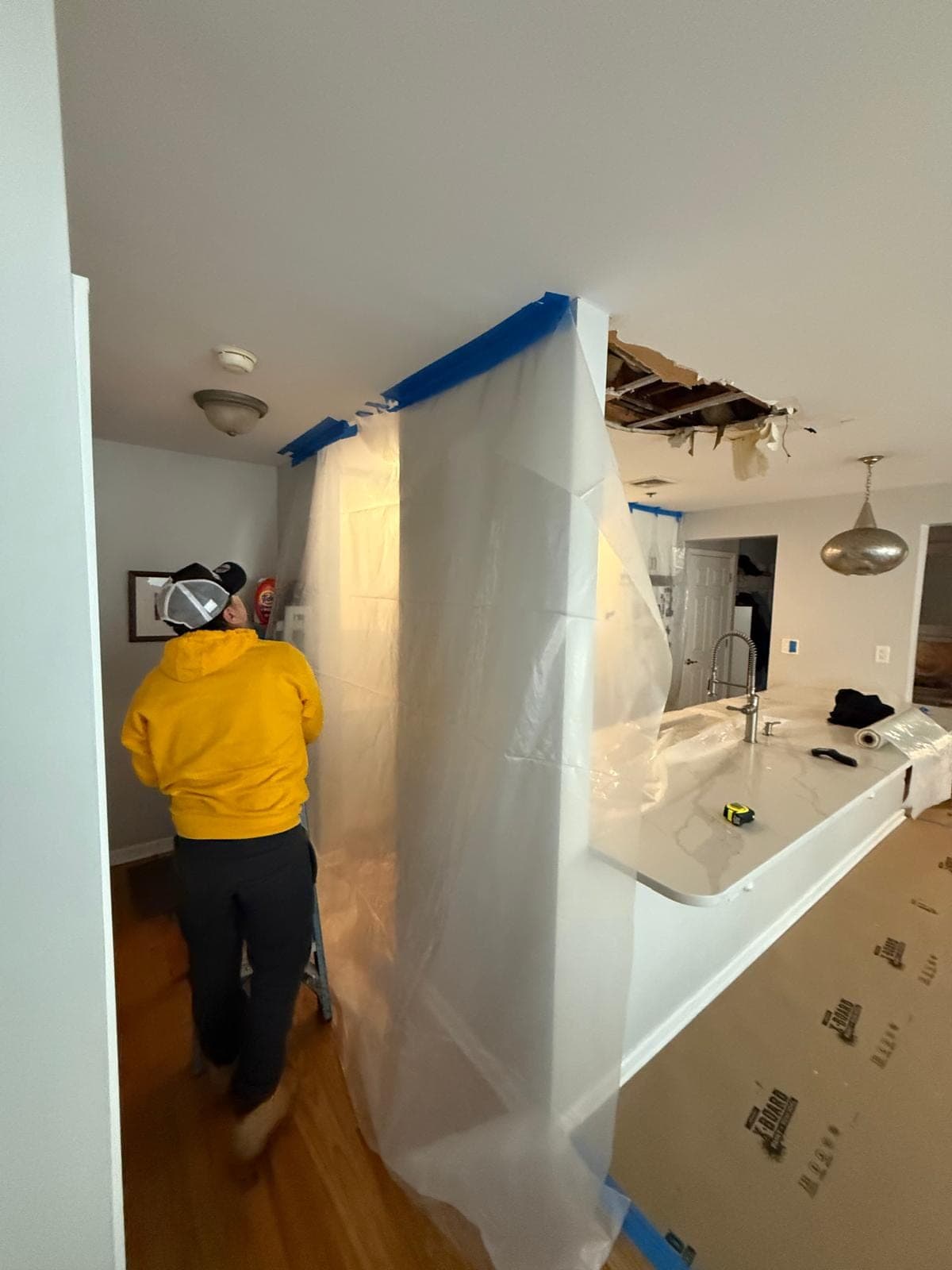
Usually an upstairs bathroom or a pipe run above it. Thermal imaging shows how far the water spread before we open anything, so the cut in your ceiling is as small as the damage allows. We find the leak first, so the repair holds.
Insurance
We work with your insurance, and we bill them directly
- 01
Call us
We answer, ask what happened, and get a crew moving. Same-day emergency response on active water.
- 02
We document everything
We take moisture readings and photos and write up a scope of work before drying starts, so your adjuster has the file from day one.
- 03
We bill your insurer directly
We work directly with your insurance company on covered water and mold claims, so you're not fronting the full cost and chasing reimbursement.
Your deductible is still yours to cover. Your declarations page or your agent has the exact number, and we ask for it before any work starts rather than after. You also don't need a claim to hire us. Plenty of our jobs are paid directly by the homeowner, and after the free inspection you get a written estimate to make that decision with.
Not insurance advice. We're a restoration contractor, not a public adjuster or insurance agent. Coverage decisions belong to your insurer, so confirm anything about your policy with your agent or adjuster.
Who's showing up
Local and independent since 2019.
The person on the phone is the person planning the job. We're in Goshen every week.
- IICRC Certified
- Licensed
- Bonded
- Insured
- Eco-Conscious Products
FAQ
Questions we get most.
Do you bill my insurance company directly?
Yes. On covered losses we bill your insurer directly, so you're not writing a large check and waiting for reimbursement. You pay your deductible and we settle the rest with the carrier, backed by the photos, moisture readings, and daily drying logs adjusters ask for. You don't need a claim to hire us, though. A lot of our residential work is paid directly by the homeowner.
How long does it take to dry out a house?
Three to five days for most homes. It depends on what got wet, since drywall and carpet dry faster than hardwood, plaster, or subfloor, and on how long the water sat first. We take moisture readings daily and keep equipment running until the wet materials match dry ones nearby, not until the surface feels dry. Pulling equipment early leaves moisture inside the wall.
How do you find moisture I can't see?
With moisture meters and thermal imaging. Water moves through drywall, along subfloor, and into wall cavities that look fine from inside the room. The meters test the materials themselves, thermal imaging shows the cool damp areas behind walls and under floors, and we dry against what those readings show. A surface that feels dry tells you very little; the reading inside the material is what decides when drying is done.
Will mold grow after water damage?
It can. Growth can start on wet materials within 24 to 72 hours, which is why drying should start the same day. If everything dried fast and completely, verified with moisture readings, mold is unlikely. If materials stayed damp inside walls or under floors, that's where growth shows up. A musty smell weeks after a leak usually means something didn't fully dry, and it's worth a look.
What should I do in the first few hours after water damage?
Stop the water if you safely can, at the main shut-off or the fixture valve. If water is near outlets, cut power to that area at the breaker, but never stand in water to do it. Move what you can off wet floors, and don't run a household vacuum on standing water. Then call (845) 262-6530; the sooner extraction starts, the more we can save.
Service area
Goshen, NY — Orange County.
We're about 15 minutes out, six days a week. The homes run to 18th- and 19th-century homes around the historic village core, farmhouses on former dairy land, and newer single-family subdivisions. We cover every block, including Village of Goshen, Church Park district, Arcadia Hills. Goshen is known for the Harness Racing Museum and Historic Track, the 1841 courthouse, and being Orange County's seat.
Water Damage Restoration in nearby towns
Emergency? Call first
Water on the floor in Goshen? Skip the form.
Call (845) 262-6530 and we start sorting it out on the phone while the crew loads, six days a week. The form is for anything that can wait a few hours. A person reads it and replies during business hours.
Same-Day Emergency Response. Closed Saturdays.